
Saturday, August 1, 2026
  • English
  • Français
  • فارسی
  • عربى
PODCASTS
NCRI Women Committee Women Resistance Freedom
  • Home
  • NEWS
    • Women’s News
    • Articles
    • Statements
  • PUBLICATIONS
    • Monthlies
    • Documents
    • Reference Library
  • ABOUT US
    • The NCRI Women’s Committee
    • Gender Equality
    • Women’s Platform
  • MARYAM RAJAVI
    • Maryam Rajavi
    • Maryam Rajavi Speeches
    • The Plan on Women’s Rights and Freedoms
    • Ten-Point Plan for the future of Iran
  • VANGUARDS
    • The Fallen for Freedom
    • Heroines in Chain
    • Women of Iranian Resistance
    • Famous Women
    • Women in History
  • EVENTS
    • IWD Conferences
    • Activities
    • IWD Speeches
    • Solidarity
  • VIDEO
    • Videos
    • IWD Videos
  • PODCAST
  • DONATE
  • CONTACT US
No Result
View All Result
NCRI Women Committee Women Resistance Freedom
  • Home
  • NEWS
    • Women’s News
    • Articles
    • Statements
  • PUBLICATIONS
    • Monthlies
    • Documents
    • Reference Library
  • ABOUT US
    • The NCRI Women’s Committee
    • Gender Equality
    • Women’s Platform
  • MARYAM RAJAVI
    • Maryam Rajavi
    • Maryam Rajavi Speeches
    • The Plan on Women’s Rights and Freedoms
    • Ten-Point Plan for the future of Iran
  • VANGUARDS
    • The Fallen for Freedom
    • Heroines in Chain
    • Women of Iranian Resistance
    • Famous Women
    • Women in History
  • EVENTS
    • IWD Conferences
    • Activities
    • IWD Speeches
    • Solidarity
  • VIDEO
    • Videos
    • IWD Videos
  • PODCAST
  • DONATE
  • CONTACT US
No Result
View All Result
NCRI Women Committee
No Result
View All Result
Home Articles
Feminization of Poverty in Iran Under War and Inflation

The Gendered Face of Poverty in Iran: How Women Bear the Heaviest Burden

May 10, 2025
in Articles

The Gendered Face of Poverty in Iran – In recent years, the economic crisis in Iran has deepened, with poverty now affecting over 30% of the population by the end of the Persian year 1403 (March 2025), according to official figures.

However, according to unofficial estimates, around 80% of the population in Iran lives below the poverty line and cannot consume 2,100 calories a day; this means over 72 million people are living in poverty in Iran.

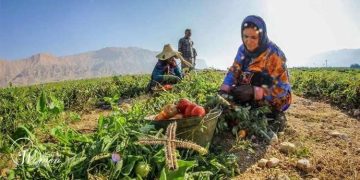
Yet behind this general statistic lies a harsher, more invisible truth: women in Iran are disproportionately impacted by poverty, both economically and socially, due to structural inequalities, legal discrimination, and systemic exclusion from the labor market.

A report by the Iranian Parliament’s Research Center (Majlis) confirms that by 1401 (March 2023), over 32 million Iranians lived below absolute poverty. This line is defined as the inability to afford necessities such as food, housing, healthcare, and education. But women, particularly female heads of households, rural women, and single mothers, face unique vulnerabilities that these figures only hint at.

Food Insecurity and Health: Women Eat Last

The article published on Bahar News in April 2025 highlights a sharp rise in food insecurity: 55% of urban households are unable to meet their nutritional needs, and the average daily calorie intake has dropped to 2,540 kcal, 60% of which comes from low-nutrition carbohydrates. But this burden does not fall equally.

In many Iranian households, especially in more traditional or rural settings, women often sacrifice their food portions for children or male family members.

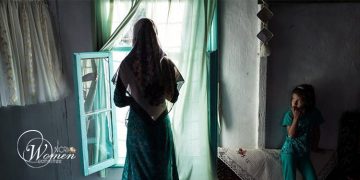
The Gendered Face of Poverty in Iran: How Women Bear the Heaviest Burden

According to a World Bank feature from March 2023, nearly 40% of Iran’s economically active women work informally, meaning they lack labor protections, pensions, or stable income. In families facing high food prices, where the cost of groceries consumed 58% of the minimum wage in January 2025, women are typically the first to reduce their consumption.

This malnutrition contributes to a rise in illnesses disproportionately affecting women.

The Iranian Ministry of Health has reported that by late 2023, more than 7 million people had type 2 diabetes, and over 10 million suffered from hypertension, conditions closely linked to poor diets. Women also suffer increased rates of osteoporosis, partly due to reduced dairy consumption caused by inflation (27–43% in dairy prices in 2024 alone).

Economic Dependency and Legal Disadvantage

Female-headed households—now making up over 12% of Iranian families—are among the most vulnerable. Many of these women are widowed or divorced, but others are de facto heads of households due to male partners’ unemployment, drug addiction, or imprisonment. Yet they face widespread legal and economic barriers to independence.

The Iranian regime’s labor laws, combined with patriarchal norms and systemic discrimination, exclude women from many sectors or subject them to exploitative conditions. According to the World Bank, Iran has one of the lowest female labor force participation rates in the Middle East, just 14% as of 2022. Women who work often earn significantly less than men and are far more likely to be in informal, insecure jobs such as home-based sewing, domestic work, or street vending.

This lack of income translates into reduced access to housing, health services, and even personal safety.

Shelters and safe havens for women fleeing domestic violence are few, underfunded, and closely monitored by the state. Many women stay in abusive relationships simply because they cannot afford to leave.

The Gendered Face of Poverty in Iran: How Women Bear the Heaviest Burden

Geographic Disparities Amplify Gender Gaps

In provinces like Sistan and Baluchestan in the southeast, and Hormozgan, Ilam, and Kohgiluyeh and Boyer-Ahmad in the southwest, poverty rates exceed 60%. These areas, already suffering from water shortages, underdeveloped infrastructure, and poor access to healthcare, are also home to some of the country’s most marginalized women.

In Sistan and Baluchestan, where nearly two-thirds of the population lives in poverty, girls often drop out of school early due to poverty-related pressures, including child marriage. The literacy rate for women here is significantly below the national average. Meanwhile, in urban centers like Tehran, Isfahan (central Iran), and Mazandaran (northern Iran), poverty rates are below 13%, reflecting massive inequality in access to services and opportunities.

Rural women in these poorer provinces often have no access to bank accounts, formal employment, or property rights. If their husbands die or abandon them, they are left without social protection and must rely on informal networks—or forced remarriage—for survival.

A Cycle of Dependency and Marginalization

The Iranian regime has failed to address the gendered dimensions of poverty. Monthly cash subsidies and the promised distribution of food vouchers—announced by the regime’s president, Masoud Pezeshkian, in his sixth month in office—have done little to alleviate the long-term pressures on women.

These blanket policies do not account for regional disparities or gender-specific needs. As the World Bank warns, general cash payments lose effectiveness in inflationary environments and often fail to reach informal workers, many of whom are women.

Amnesty International has also noted that women’s unpaid care labor remains invisible in national statistics and unrecognized in policy debates. Women are expected to care for children, the elderly, and sick family members, while having almost no public services to support them. This unpaid work is one of the biggest reasons women cannot engage in formal employment, making them more dependent on male relatives and more vulnerable to poverty when those men are absent or unable to work.

The Gendered Face of Poverty in Iran: How Women Bear the Heaviest Burden

Structural Solutions Needed, Not Slogans

As it stands, the Iranian regime’s refusal to confront the structural roots of gendered poverty is not merely negligent—it is deliberate.

By maintaining discriminatory laws, suppressing civil society voices, and denying women access to economic and legal independence, the regime perpetuates a system in which poverty is not an unfortunate consequence but a tool of control.

Temporary subsidies and rhetorical promises do nothing to dismantle the institutionalized inequality that keeps millions of women trapped in cycles of hardship. The truth is that this regime cannot be reformed; it is the root of the problem. Only a complete and permanent change in governance can create the conditions for justice, equality, and dignity for Iranian women.
Tags: Gender GapPovertyrural womenWomen Heads of Household
ShareTweetPinShareSendShare

Related Posts

The Hidden Victimization and Exploitation of Widows in Iran

July 23, 2026
The Hidden Victimization and Exploitation of Widows in Iran

Exploitation of widows in Iran Introduction: The survival of the mullahs' regime rests on two fundamental pillars: overt suppression in society and institutionalized misogyny within its laws. The...

Read moreDetails

Erased After Loss: The Untold Story of Widows in Iran

July 21, 2026
The Untold Story of Widows in Iran

Inside Iranian Regime's System of Discrimination Against Widows Welcome to another episode of podcasts of the Women's Committee of the National Council of Resistance of Iran. Imagine waking...

Read moreDetails

Widows in Iran: An Analysis of Legal Challenges and the Structure of Discrimination

July 17, 2026
Widows in Iran: An Analysis of Legal Challenges and the Structure of Discrimination

Introduction: In the political and legal structure governing Iran, misogyny and gender discrimination have been institutionalized as a fundamental principle, heavily impacting the fabric of family and society....

Read moreDetails

The Ineffectiveness of Population Policies in Iran: Economy, Aging, and the Overlooked Rights of Women

July 10, 2026
The Ineffectiveness of Population Policies in Iran: Economy, Aging, and the Overlooked Rights of Women

Abstract: A compilation of official data, media reports, and disclosures published in April, May, and June 2026 demonstrates that Iran is grappling with a multi-layered demographic crisis. This...

Read moreDetails

June 2026 Report: Working Iranian Women Erased from Labor Market

July 5, 2026
June 2026 Report: Working Iranian Women Erased from Labor Market

New Generation of Working Iranian Women Being Erased from the Labor Market June 2026 Report: Behind macroeconomic indicators and the dry labor market statistics lies the painful reality...

Read moreDetails
Next Post
Denied Treatment: The Silent Torture of Political Prisoners in Iran

Denied Treatment: The Silent Torture of Political Prisoners in Iran

Documents

Call for Immediate Action to Halt the Death Sentence of Arghavan Fallahi

Sign our Statement to Halt the Death Sentence of 25-Year-Old Political Prisoner Arghavan Fallahi

July 10, 2026

Statement Calling for Immediate Action to Halt the Death Sentence of 25-Year-Old Political Prisoner Arghavan Fallahi We express our profound...

The Ineffectiveness of Population Policies in Iran: Economy, Aging, and the Overlooked Rights of Women

The Ineffectiveness of Population Policies in Iran: Economy, Aging, and the Overlooked Rights of Women

July 10, 2026

Abstract: A compilation of official data, media reports, and disclosures published in April, May, and June 2026 demonstrates that Iran...

Crushed by Design: Structural Crises and Inequitable Policies Push Female-Headed Households to the Edge

Crushed by Design: Structural Crises and Inequitable Policies Push Female-Headed Households to the Edge

May 18, 2026

Introduction Life for the Iranian people under the religious dictatorship is fraught with hardship and peril from every perspective. Whether...

Monthlies

July 2026 Report: Death Sentences for Women Rising Up to Overthrow the Mullahs' Regime
Monthlies

July 2026 Report: Death Sentences for Women Rising Up to Overthrow the Mullahs’ Regime

July 31, 2026
June 2026 Report: Working Iranian Women Erased from Labor Market
Monthlies

June 2026 Report: Working Iranian Women Erased from Labor Market

July 5, 2026
May 2026 Report: The Enduring Resistance of Iranian Women
Monthlies

May 2026 Report: The Enduring Resistance of Iranian Women

May 31, 2026
April 2026 Report: Mass Arrests of Women: Targeted Repression in Time of Crisis
Monthlies

April 2026 Report: Mass Arrests of Women in Iran

April 30, 2026

Articles

The 1988 Massacre: The Greatest Unpunished Crime Against Humanity

The 1988 Massacre: The Greatest Unpunished Crime Against Humanity

July 28, 2026

The Glorious Epic of Resistance by PMOI Women in the Anti-Human Clerical Regime's Prisons The massacre of over 30,000 political...

The Hidden Victimization and Exploitation of Widows in Iran

The Hidden Victimization and Exploitation of Widows in Iran

July 23, 2026

Exploitation of widows in Iran Introduction: The survival of the mullahs' regime rests on two fundamental pillars: overt suppression in...

Widows in Iran: An Analysis of Legal Challenges and the Structure of Discrimination

Widows in Iran: An Analysis of Legal Challenges and the Structure of Discrimination

July 17, 2026

Introduction: In the political and legal structure governing Iran, misogyny and gender discrimination have been institutionalized as a fundamental principle,...

The Fallen for Freedom

Fatemeh Alizadeh, a 28-year-old pregnant woman
The Fallen for Freedom

Fatemeh Alizadeh

July 29, 2026
Sahar Bayat was killed on January 8, 2026
The Fallen for Freedom

Sahar Bayat

July 23, 2026
Saba Negahban, known as "Venus," was killed on Friday, January 9, 2026, by direct fire from the regime’s suppressive forces
The Fallen for Freedom

Saba Negahban

July 22, 2026
Parastou Namavar was fatally shot by Iranian regime forces
The Fallen for Freedom

Parastou Namavar

July 18, 2026

ABOUT US

NCRI Women Committee

We work extensively with Iranian women outside the country and maintain a permanent contact with women inside Iran. The Women’s Committee is actively involved with many women’s rights organizations and NGO’s and the Iranian diaspora.
The committee is a major source of much of the information received from inside Iran with regards to women. Attending UN Human Rights Council meetings and other international or regional conferences on women’s issues and engaging in a relentless battle against the Iranian regime’s misogyny are part of the activities of members and associates of the committee.

CATEGORIES

  • Activities
  • Articles
  • Documents
  • Famous Women
  • Heroines in Chain
  • IWD Conferences
  • IWD Speeches
  • IWD Videos
  • Maryam Rajavi
  • Maryam Rajavi Speeches
  • Monthlies
  • Podcast
  • Reference Library
  • Solidarity
  • Statements
  • The Fallen for Freedom
  • Videos
  • Women in History
  • Women in Leadership
  • Women of Iranian Resistance
  • Women's News

BROWSE BY TAG

Child marriage coronavirus education execution forced hijab Gender Gap Generation Equality Honor killings Iran Teachers Maryam Akbari Monfared Nurses Plan on Women's Rights and Freedoms Poverty Prisoners Protests rural women Saba Kord Afshari The girl child Violence against women Women's Leadership Women Heads of Household Zeinab Jalalian

The copyright of all the material published on this website has been registered under © 2016 the Women’s Committee of the National Council of Resistance of Iran. To obtain permission to copy, redistribute or publish the material published on this website, you should write to the NCRI Women’s Committee. Please include the link of the original article on our website, women.ncr-iran.org.

Welcome Back!

Login to your account below

Forgotten Password?

Retrieve your password

Please enter your username or email address to reset your password.

Log In

Add New Playlist

No Result
View All Result
  • Home
  • News
    • Women’s News
    • Articles
    • Statements
  • Publications
    • Monthlies
    • Documents
    • Reference Library
  • About Us
    • The NCRI Women’s Committee
    • Gender Equality
    • Women’s Platform
  • Maryam Rajavi
    • Maryam Rajavi
    • Maryam Rajavi Speeches
    • Ten Point Plan for Iran
    • The Plan on Women’s Rights and Freedoms
  • Vanguards
    • The Fallen for Freedom
    • Heroines in Chain
    • Women of Iranian Resistance
    • Famous Women
    • Women in History
  • Events
    • IWD Conferences
    • Activities
    • IWD Speeches
    • Solidarity
  • Video
    • Videos
    • IWD Videos
  • Podcast
  • DONATE
  • Contact us
  • فارسی
  • عربی
  • Français

The copyright of all the material published on this website has been registered under © 2016 the Women’s Committee of the National Council of Resistance of Iran. To obtain permission to copy, redistribute or publish the material published on this website, you should write to the NCRI Women’s Committee. Please include the link of the original article on our website, women.ncr-iran.org.