
Monday, April 20, 2026
  • English
  • Français
  • فارسی
  • عربى
PODCASTS
NCRI Women Committee Women Resistance Freedom
  • Home
  • NEWS
    • Women’s News
    • Articles
    • Statements
  • PUBLICATIONS
    • Monthlies
    • Documents
    • Reference Library
  • ABOUT US
    • The NCRI Women’s Committee
    • Gender Equality
    • Women’s Platform
  • MARYAM RAJAVI
    • Maryam Rajavi
    • Maryam Rajavi Speeches
    • The Plan on Women’s Rights and Freedoms
    • Ten-Point Plan for the future of Iran
  • VANGUARDS
    • The Fallen for Freedom
    • Heroines in Chain
    • Women of Iranian Resistance
    • Famous Women
    • Women in History
  • EVENTS
    • IWD Conferences
    • Activities
    • IWD Speeches
    • Solidarity
  • VIDEO
    • Videos
    • IWD Videos
  • PODCAST
  • DONATE
  • CONTACT US
No Result
View All Result
NCRI Women Committee Women Resistance Freedom
  • Home
  • NEWS
    • Women’s News
    • Articles
    • Statements
  • PUBLICATIONS
    • Monthlies
    • Documents
    • Reference Library
  • ABOUT US
    • The NCRI Women’s Committee
    • Gender Equality
    • Women’s Platform
  • MARYAM RAJAVI
    • Maryam Rajavi
    • Maryam Rajavi Speeches
    • The Plan on Women’s Rights and Freedoms
    • Ten-Point Plan for the future of Iran
  • VANGUARDS
    • The Fallen for Freedom
    • Heroines in Chain
    • Women of Iranian Resistance
    • Famous Women
    • Women in History
  • EVENTS
    • IWD Conferences
    • Activities
    • IWD Speeches
    • Solidarity
  • VIDEO
    • Videos
    • IWD Videos
  • PODCAST
  • DONATE
  • CONTACT US
No Result
View All Result
NCRI Women Committee
No Result
View All Result
Home Monthlies
Monthly Report September 2020: Hijab Campaigns seek widespread arrests

Monthly Report September 2020: Hijab Campaigns seek widespread arrests

October 4, 2020
in Monthlies

Hijab Campaigns seek widespread arrests among Iranian women

The world is mustering all their resources to fight and overcome the Coronavirus pandemic. Iran’s ruling regime, however, is concentrating all its resources on expanding the presence and activities of security forces.

Instead of finding ways to ensure compliance with hygiene protocols to check the rising number of casualties, the regime is focused on beefing up its armed forces.

The clerical regime’s red line is preempting the outbreak of street protests. This was best demonstrated in the developments of the past month:

  • Launching Revolutionary Guard Corps (IRGC) “hit squads” in all neighborhoods to crush any protest before inception.
  • Establishing a central headquarters intended ostensibly to fight thugs and hooligans, but originally to arrest protesters.
  • Handing down death sentences and carrying out the executions of detained protesters.
  • Ramping up control of social media posts, by arresting and summoning the users.
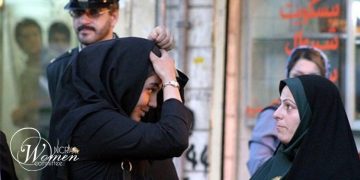
  • And finally, launching Hijab campaigns –-code-named Nazer—apparently to enforce the mandatory Hijab. However, they seek to arrest more women.

All these measures aim to suppress fundamental freedoms and terrorize the public in a bid to prevent eruption of any form of protest. Something that is spearheaded by women as the most dissatisfied sector of Iranian society.

	Handing down death sentences and carrying out the executions of detained protesters.

70% of the people of Iran oppose mandatory Hijab – expert

Iran is the only country in the world where women are flogged 74 lashes if they appear in public without covering their hair. In many cases, however, the punishment does not stop there.

The punishments also include widespread arrests and long-term prison sentences for “improper veiling” and “spread of corruption and prostitution.”

Saba Kord Afshari was sentenced to 24 years in prison for showing her opposition to the mandatory Hijab. She is presently serving her term in the women’s ward of Evin Prison.

Increasing pressure on Iranian society and women, however, has produced opposite results.

Mehdi Nassiri, former managing editor of the state-run Kayhan daily newspaper said this in a television interview on September 16, 2020: “70 percent of the people of Iran oppose mandatory enforcement of Hijab. Every year sees some 5 percent decrease in the number of women complying with the Hijab.”

“Even in religious cities like Qom, the majority of people oppose the mandatory Hijab.”

Resentment against the mandatory Hijab is extensive, compelling one of the Judiciary officials in Qazvin to acknowledge it. Nourollah Qodrati said there were 110 legislations, directives and ratified documents on Hijab the regime could not enforce. (The state-run Tasnim news agency – September 5, 2020)

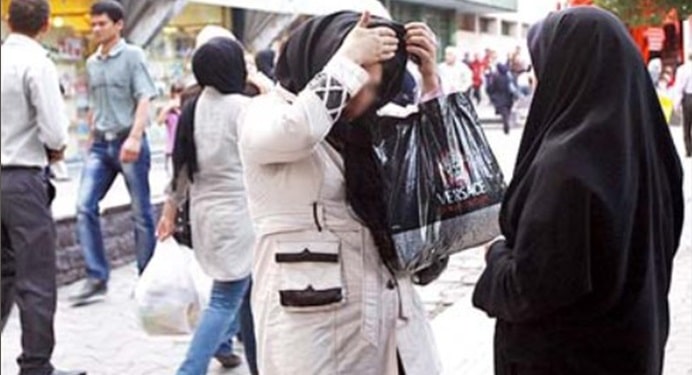
Call to make society unsafe for opponents of mandatory Hijab

The Friday Prayer Leader of Isfahan, central Iran, recently called for formation of special court branches to tackle “moral abnormalities.”

Yousef Tabatabaii-Nejad urged the authorities to grant greater powers to the State Security Force (SSF) to deal with Hijab offenders. His comments came in a meeting with a top Armed Forces’ security official and the SSF Commander of Isfahan Province. By “Hijab offenders” he meant women who oppose the mandatory Hijab and display their opposition in various forms.

Tabatabaii-Nejad said: “The social atmosphere must be made unsafe for these people whose number is scarce. But they must not be allowed to be relaxed in streets and parks while breaking the norms.” (The state-run Mehr news agency – October 2, 2020)

The mullah also called on the courts to support those who forbid evil and promote virtue. He refers to Bassij forces who target women in the streets, violently forcing them to observe their mandatory Hijab.
Call to make society unsafe for opponents of mandatory Hijab

Growing public resentment vs. escalating repression

The state media use the term “public distrust” to describe the volatile state of public detestation of the regime.

The mullahs spend all their time and energy to hold their grabs on power even if for one more day. To do so, they send young people to the gallows and boost the pressure on enchained prisoners. They deliberately expose them to the coronavirus to cause their gradual death.

To rein in the explosive public discontent, the regime has also resorted to worn-out measures, further proving its incompetence. The “Nazer” Hijab Campaigns send thousands of security forces to the streets to harass and arrest Iranian women and girls. The regime justifies its Hijab campaigns under the pretext of “moral security” and dealing with “improper veiling.”

The focus on Hijab campaigns is of special importance to the regime. The officials are all too familiar with the remarkable impact of Iranian women on anti-regime protests. They have experienced women’s presence in Resistance Units who lead and organize the regime’s opponents.

Growing public resentment vs. escalating repression

Nazer Hijab Campaigns 1 to 4

Acting SSF commander Qassem Rezaii recently announced the enforcement of four Nazer Plans. In addition to women removing their veil inside their cars, the Hijab campaigns will also deal with women who flout the mandatory Hijab code in shopping malls, major stores, recreation areas, walks, and the cyber space. (The state-run ROKNA news agency – September 20, 2020)

Rezaii said the SSF “works round the clock to fulfill its missions” in the Hijab Campaigns. He further explained: “The State Security Force has planned and executed four Hijab and Chastity plans. In Nazer 1 Plan, the SSF deals with individuals who violate the veiling code in their cars. The Nazer 2 Plan deals with women who remove their veil or do not properly observe it in shopping malls and major stores. Nazer 3 and 4 Plans focus on women who do not observe the veil in recreation areas, walks and also in the cyber space.”

Profile photos must comply with mandatory Hijab rules

Nazer 4 Plan has expanded the control of the mullahs’ Cyber Police (FATA). They monitor social media accounts on modelling, photography and art. Dozens of users of such accounts have been summoned in recent months. The charges leveled against them include dissemination of photos which “violate public chastity,” are “immoral” or “vulgar.”

One example of these interventions took place on September 27, 2020, in the city of Yazd, central Iran. The FATA Police entered the Instagram account of a user in her presence. They deleted all photos which displayed women who did not properly observe the veil. Then they changed the password and email of the account to prevent the user from accessing it. The Cyber Police also replaced the user’s profile photo with their own emblem which read: “Due to publication of photos which counter the religion, this page has been temporarily removed from the access of its administrator.”

Veiled profile photos, a requirement for online classes

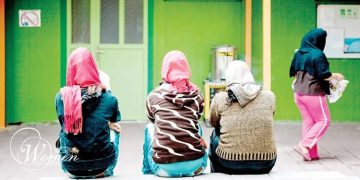
The clerical regime does not have any qualms about putting pressure on young girls. They require all female students to put veiled pictures of themselves in the profile of their accounts for online classes.

Simultaneous with the beginning of the new school year, parents of some students declared that they were being harassed. The principals and teachers of some schools pressured parents to change their daughters’ profile photos before they attend online classes. Changing the photos was the main requirement for participating in online classes during the pandemic.

Some parents said they received threats saying the school principal would subtract from their daughters’ grade for discipline.

A journalist tweeted: “They called from school and said since most mothers were members of the WhatsApp account, my profile photo must be with the Hijab!”

Veiled profile photos, a requirement for online classes

Network of state agencies enforcing the Hijab campaigns

The Women’s Committee of the National Council of Resistance of Iran (NCRI) has already published a pamphlet about the network of 27 state agencies enforcing the mandatory Hijab. This document thoroughly explains the role of each state agency in this vast network.

SSF Commander Hossein Ashtari revealed for the first time in December 2016, that 26 agencies were obliged to enforce the mandatory Hijab.

Then the Supreme Cultural Revolution Council adopted a supplement on September 2019, adding a new agency to the network. The network includes 10 ministries.

In the present volatile state of Iranian society, the regime seeks to ramp up repression through suppression of women. They send their repressive forces to the streets to crack down on women during their Hijab Campaigns.

Network of state agencies enforcing the Hijab campaigns

These suppressive measures, however, will only act as a catalyst expediting the eruption of anti-regime protests. They will lead to uprisings which will eventually overthrow the mullahs’ tyrannical regime.

The clerical regime sees women as subhuman and inferior. But Iranian women comprise an immense force for change that will deal the ultimate blow to topple the regime.

Tags: forced hijabViolence against women
ShareTweetPinShareSendShare

Related Posts

Zahra Hojjat Arrested Following Her Refusal to Allow Military Use of Her Center

March 26, 2026
Zahra Hojjat Arrested Following Her Refusal to Allow Military Use of Her Center

Zahra Hojjat, an advocate for girls with special needs and the director of the Hamdam Rehabilitation Institute in Mashhad, has been arrested by security forces and transferred to...

Read moreDetails

Report by Sara Hossain, Warns of Escalating Repression and Human Rights Violations in Iran

March 18, 2026
Report by Sara Hossain, Chair of the Independent International Fact-Finding Mission, Warns of Escalating Repression and Human Rights Violations in Iran

At the sixty-first session of the United Nations Human Rights Council, Sara Hossain, Chair of the Independent International Fact-Finding Mission on Iran, presented a comprehensive report outlining a...

Read moreDetails

A Report to CSW70: Gender-Based Discrimination Under Iranian Law

March 8, 2026
A Report to CSW70: Gender-Based Discrimination Under Iranian Law

Structural Inequality and State-Sanctioned Oppression of Women Gender-Based Discrimination Under Iranian Law” is the title of the NCRI Women’s Committee’s report to CSW70, as it focuses on “Ensuring...

Read moreDetails

Annual Report 2026: From Protests, to Uprising, and the Role of Iranian Women

March 3, 2026
Annual Report 2026: From Protests, to Uprising, and the Role of Iranian Women

On the eve of International Women’s Day 2026, the NCRI Women’s Committee presents its Annual Report 2026, offering a recap of events in 2025 as related to women’s...

Read moreDetails

From Tehran to Berlin: Women, Resistance, and a Nation at a Tipping Point

February 8, 2026
From Tehran to Berlin: Women, Resistance, and a Nation at a Tipping Point

From Tehran to Berlin: Women, Resistance, and a Nation at a Tipping Point. We're looking at a systemic calculated shift in strategy by the regime. Welcome to another...

Read moreDetails
Next Post
Maryam Akbari Monfared NCRI Women’s Committee Condemns the Arrest of Nasrin Sotoudeh Iran: International Conference “Women’s Leadership: an Imperative for A Free Iran and A Democratic Republic” Held on the Eve of International Women’s Day Goli Koohkan Life of Political Prisoner Somayeh Rashidi in Danger Call to Prevent the Appointment of an Apologist of the Iranian Regime to the UN Human Rights Council’s Advisory Committee Political prisoner Arghavan Fallahi Pakhshan Azizi Death Sentence upheld Criminal Chastity and Hijab law Deprivation of Visits Female political prisoners Maryam Akbari Monfared Evin Prison morality police protest women political prisoners 4 female prisoners Sharifeh Mohammadi Three Women Nika Shakarami improper veiling participation Masoumeh Senobari Roya Heshmati political prisoner Maryam Akbari Monfared Political prisoners Samira Sabzian female journalists European Parliament Peace Prize NCRI Women’s Committee calls to support women imprisoned in Iran poisoning Veil Watchers 11 political prisoners

Iran: Khamenei's representatives' threats pave the way for the brutal repression of women

Documents

A Report to CSW70: Gender-Based Discrimination Under Iranian Law

A Report to CSW70: Gender-Based Discrimination Under Iranian Law

March 8, 2026

Structural Inequality and State-Sanctioned Oppression of Women Gender-Based Discrimination Under Iranian Law” is the title of the NCRI Women’s Committee’s...

Annual Report 2026: From Protests, to Uprising, and the Role of Iranian Women

Annual Report 2026: From Protests, to Uprising, and the Role of Iranian Women

March 3, 2026

On the eve of International Women’s Day 2026, the NCRI Women’s Committee presents its Annual Report 2026, offering a recap...

Iranian women Who Lost Their Lives in Iran’s January 2026 Uprising

Iranian Women Who Lost Their Lives in Iran’s January 2026 Uprising

January 25, 2026

Names That Must Not Be Forgotten Iranian women played a central and courageous role in the January 2026 uprising, standing...

Monthlies

March 2026 Report: How Iranian Women Are Shaping the Resistance
Monthlies

March 2026 Report: Courage Under Fire

April 3, 2026
January 2026 Report: Women at the Core of the Uprising
Monthlies

January 2026 Report: Women at the Core of the Uprising

January 31, 2026
December 2025 Report: A Year in Review: Iranian Women’s Resistance Against Religious Dictatorship
Monthlies

December 2025 Report: A Year in Review: Iranian Women’s Resistance Against Religious Dictatorship

January 5, 2026
November 2025 Report: Under the Clerical Regime, Nowhere Is Safe for Women in Iran
Monthlies

November 2025 Report: Under the Clerical Regime, Nowhere Is Safe for Women in Iran

November 30, 2025

Articles

Mothers Who Gave Their Lives for Freedom during January 2026 Uprising in Iran

Mothers Who Gave Their Lives for Freedom during January 2026 Uprising in Iran

April 6, 2026

Among those killed during the January 2026 uprising in Iran there are mothers whose names stand out—women who took to...

Amid the harshest trials and tribulations, your inspiring voice made my steps more steadfast

Amid the harshest trials and tribulations, your inspiring voice made my steps more steadfast

April 5, 2026

A letter from Vahid Bani Amerian to Aziz, the mother of the martyred Rezaeis Ms. Zahra Norouzi, who is known...

Ferdows Mahboubi (Mother Mosanna): 50 Years of Dedication to PMOI

Ferdows Mahboubi (Mother Mosanna): 50 Years of Dedication to PMOI

April 2, 2026

Ferdows Mahboubi (Mother Mosanna), one of the steadfast supporters of the People's Mojahedin Organization of Iran (PMOI), passed away in...

The Fallen for Freedom

Sholeh Sotoudeh (Pregnant)
The Fallen for Freedom

Sholeh Sotoudeh (Pregnant)

April 19, 2026
Ghazal Aghaei Lindi was killed on January 9, 2026
The Fallen for Freedom

Ghazal Aghaei Lindi

April 16, 2026
Farzaneh Tavakkoli, a resident of Arak, was killed on January 9, 2026
The Fallen for Freedom

Farzaneh Tavakkoli

April 13, 2026
Shabnam Ferdowsi was killed on January 8, 2026, during the nationwide protests
The Fallen for Freedom

Shabnam Ferdowsi

April 12, 2026

ABOUT US

NCRI Women Committee

We work extensively with Iranian women outside the country and maintain a permanent contact with women inside Iran. The Women’s Committee is actively involved with many women’s rights organizations and NGO’s and the Iranian diaspora.
The committee is a major source of much of the information received from inside Iran with regards to women. Attending UN Human Rights Council meetings and other international or regional conferences on women’s issues and engaging in a relentless battle against the Iranian regime’s misogyny are part of the activities of members and associates of the committee.

CATEGORIES

  • Activities
  • Articles
  • Documents
  • Famous Women
  • Heroines in Chain
  • IWD Conferences
  • IWD Speeches
  • IWD Videos
  • Maryam Rajavi
  • Maryam Rajavi Speeches
  • Monthlies
  • Podcast
  • Reference Library
  • Solidarity
  • Statements
  • The Fallen for Freedom
  • Videos
  • Women in History
  • Women in Leadership
  • Women of Iranian Resistance
  • Women's News

BROWSE BY TAG

Child marriage coronavirus education execution forced hijab Gender Gap Generation Equality Honor killings Iran Teachers Maryam Akbari Monfared Nurses Plan on Women's Rights and Freedoms Poverty Prisoners Protests rural women Saba Kord Afshari The girl child Violence against women Women's Leadership Women Heads of Household Zeinab Jalalian

The copyright of all the material published on this website has been registered under © 2016 the Women’s Committee of the National Council of Resistance of Iran. To obtain permission to copy, redistribute or publish the material published on this website, you should write to the NCRI Women’s Committee. Please include the link of the original article on our website, women.ncr-iran.org.

Welcome Back!

Login to your account below

Forgotten Password?

Retrieve your password

Please enter your username or email address to reset your password.

Log In

Add New Playlist

No Result
View All Result
  • Home
  • News
    • Women’s News
    • Articles
    • Statements
  • Publications
    • Monthlies
    • Documents
    • Reference Library
  • About Us
    • The NCRI Women’s Committee
    • Gender Equality
    • Women’s Platform
  • Maryam Rajavi
    • Maryam Rajavi
    • Maryam Rajavi Speeches
    • Ten Point Plan for Iran
    • The Plan on Women’s Rights and Freedoms
  • Vanguards
    • The Fallen for Freedom
    • Heroines in Chain
    • Women of Iranian Resistance
    • Famous Women
    • Women in History
  • Events
    • IWD Conferences
    • Activities
    • IWD Speeches
    • Solidarity
  • Video
    • Videos
    • IWD Videos
  • Podcast
  • Donate
  • Contact us
  • فارسی
  • عربی
  • Français

The copyright of all the material published on this website has been registered under © 2016 the Women’s Committee of the National Council of Resistance of Iran. To obtain permission to copy, redistribute or publish the material published on this website, you should write to the NCRI Women’s Committee. Please include the link of the original article on our website, women.ncr-iran.org.