
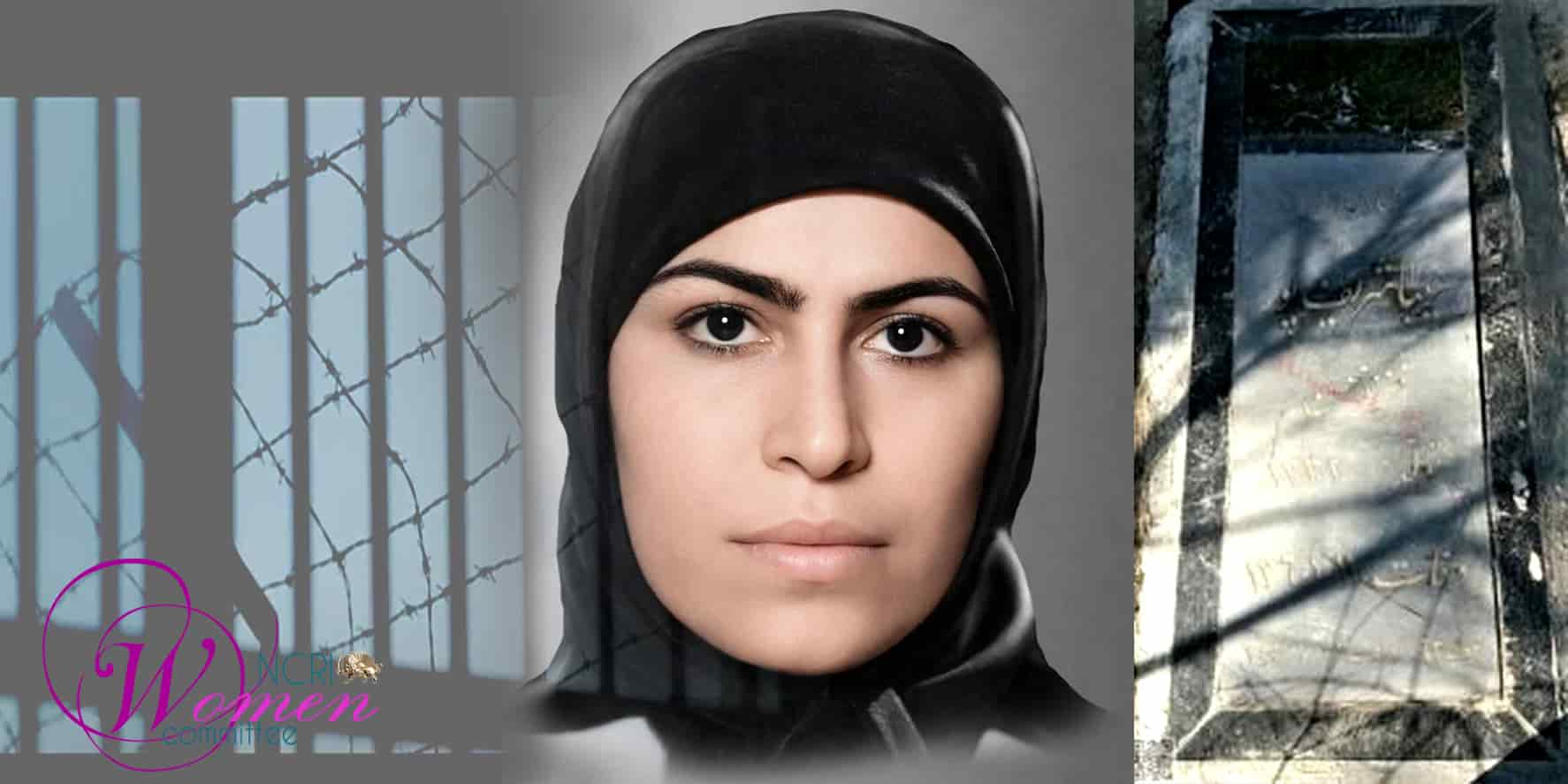
Prison Memoirs of Azam Haj-Heydari from The Price of Being Human — Part Twenty-Six
In this installment of Azam Haj-Heydari’s prison memoir, she recounts one of the most terrifying experiences of her time at Evin: being taken blindfolded, in the dead of winter, to a execution hill at Evin behind Section 209 where the traces of past executions were still visible on the frozen ground. As she realizes where she has been taken, the memory of women who were executed there comes flooding back.
Among them is Siba Sharifpour,[1] a close friend who endured severe torture without revealing her identity or compromising her convictions. Years later, when Azam is unexpectedly taken to identify a badly tortured prisoner, she realizes that the woman before her is Siba. The interrogators attempt to use the encounter to break her resistance, but Azam refuses to give them the answer they are seeking.
A Week of Mock Executions
Whenever the executioners and their underlings began shouting and making a commotion, we knew another raid was coming and prepared ourselves.
One day, we heard the ear-splitting roar of the prison guard Halvaei. From the basement beneath Ward 8, he was shouting, “Monafeghin (hypocrites), what do you have to say for yourselves? Anyone who has something to say, come here!”
He began banging on the ward door, then came inside and continued shouting. He went to the doors of all the rooms and repeated the same thing. No one paid any attention to him. I do not remember what had happened immediately beforehand, because we were always knocking on the doors and raising our demands—basic rights that every prisoner should have had.
When Halvaei got no response, he said, “Fine. If you have nothing to say, then we have something to say to you.” He ordered everyone to come out of the rooms.
We all left the ward. It was winter and bitterly cold. Evin, situated on the lower slopes of the Alborz mountains north of Tehran, is several degrees colder than the city itself. The girls had no shoes. Some managed to put on slippers, while others were given torn slippers that barely stayed on their feet. Then we were all marched away.
We had no idea where we were going. They took us outside blindfolded. As we walked, we realized that we were alongside the wall behind Section 209. From there, the ground began to slope upward. One after another, we climbed the incline until we reached a flat area at the top of the hill.
Everything was frozen. The biting cold seemed to penetrate to the marrow of our bones. We were all shaking violently. We had neither warm clothes nor even proper shoes.
When we reached the top, they separated us and had us stand individually, apart from one another. They said nothing about why they had brought us there or what they intended to do with us.
I looked through the bottom of my blindfold and saw that all the girls were standing one or two meters apart. From time to time, I could see the feet of one or two men as they walked past us, silently keeping watch.
I looked down at the ground beneath my feet. It was covered with spent Kalashnikov and pistol cartridges.
I became curious about where we were and why they had brought us there. I looked around carefully and, at one point, bent down, picked up several of the cartridges, and held them tightly in my fist.
I had discovered the secret of this place.
This was the infamous execution hill at Evin. The cartridges had been left behind from the nights when prisoners were brought there in groups of one or two hundred and executed by firing squad.
I looked more carefully. Now I could see traces of blood in places on the frozen ground and among the patches of snow.
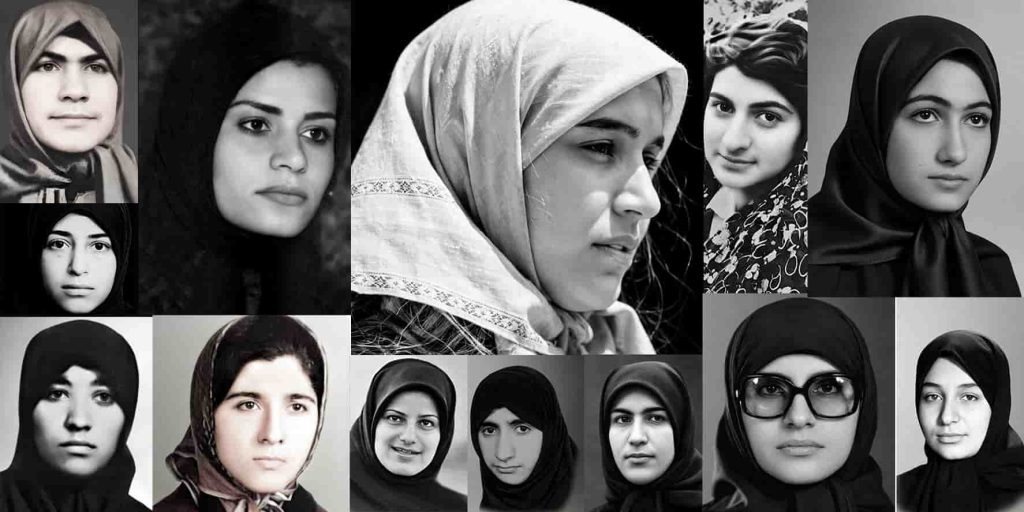
I touched the cartridges. Memories of Atiyeh Moharrer Khansari, Tahereh Moharrer Khansari, Fatemeh Asef, Zahra Nazari, Elaheh Orouji, who was pregnant when she was executed, Farideh Torabi,[2] Zahra Shabzendehdar, Homa Radmanesh, Azam Taghderah, Fatemeh and Zahra Samimi-motlaq, Helen Arfaei, Razieh Al-Taher, Ghodsieh Mohammadi, Shourangiz Tabatabaei (Dr. Masoumeh Karimian), Mahdokht Mohammadzadeh, and so many others came flooding back to me. Images of the women who had been executed passed relentlessly before my eyes.
I thought of Simin Hojabr. What a courageous woman she was! … And I thought of Siba Sharifpour, who had never given the interrogators her name until the very end.
Siba had been tortured so severely that her face had been completely transformed. She had a bachelor’s degree and was a high-school teacher. She was one of my closest friends, and in those moments, I could not stop thinking about her.
One day in September 1982, while I was in Evin, one of the girls whom I already knew and had worked with before came to me and said, “Azam, I saw someone who looked like Siba.”
The moment I heard Siba’s name, something inside me began to tremble.
“Where did you see her?”
With tears in her eyes and her voice choked with emotion, she said, “When I was taken for interrogation, they took me to where she was and wanted me to identify her.”
Siba was my friend. We had worked together for three years in political activities before June 20, 1981. By the middle of 1981, I had heard that Siba had been arrested, but I could find no trace of her in prison. I thought they had executed her.
That same day, around two in the afternoon, the loudspeaker came on. They were calling out names for interrogation.
I could not understand why they suspected this particular prisoner of being Siba. If they suspected that she was Siba Sharifpour, they should have called me to identify her as well.
The names continued to be called one after another. I counted them silently.
After the nineteenth name, there was a brief pause.
Then I heard: “Azam Haj-Heydari!”
I got to my feet and ran.
As soon as I left the ward, they took me to the line of prisoners being held at Section 209. A heavy silence descended over me. My heart was churning. God, where has Siba been all this time? Why are they only now bringing prisoners to identify her?
I was still thinking this when a man suddenly grabbed my chador and whispered in my ear:
“Before you go, understand this: when you get there, you will keep your mouth shut. You will say nothing. You will do exactly what I tell you.”
My heart was pounding as I reached the door of a cell.
The same interrogator took me inside and closed the door behind us. From behind me, he pulled off my blindfold and said, “Don’t forget what I told you! If you make one wrong move, I’ll put you right next to your dear friend! She gave them your name herself! Look how ridiculous it is for her to be your symbol of resistance! Look at what happens to people like you in the end. Save yourself!”
The executioners came up with this kind of rubbish and repeated the same tired phrases in an attempt to break prisoners psychologically and convince them that everything they believed in was meaningless and futile. In fact, when they wanted to break someone else, they would deliberately invoke the names of the most steadfast prisoners.
Although I had prepared myself to see Siba, no matter how intently I stared at her, I could not recognize her face. There was not a single uninjured part of it that could have identified her.
It was only her lips, which had always been smiling, that made me certain. I knew it was her.
The interrogator kept pressuring me. He beat me and cursed me, demanding that I tell him who she was.
But I kept saying, “I don’t know her.”
From the interrogator’s desperate shouting, I realized that he had been forced to bring one prisoner after another to identify her. That was how I understood that Siba had not even given them her own name.
Later, I learned that they were planning to execute her and were therefore determined to identify her so they could extract whatever information she had as well.
I studied her eyes and lips, trying to make absolutely sure.
When I stood beside her, a cable suddenly came down on my head like a hammer. The interrogator shouted, “Why did you go over there? Didn’t I tell you not to move?”
“You told me to find out who this person was,” I replied. “So, I came closer to see her!”
I was trying to see whether she would give me some kind of sign.
Suddenly, her hand moved and touched my trousers, but she did not have the strength to grasp them.
I stood there for several minutes, choking back my tears. Then I said, “I don’t know her. Take me back.”
The interrogator said, “You’ll regret saying you don’t know her! She herself said she was with you…”
Then came the same old words the interrogators always used.
I remained silent until they took me back to the ward.
To be continued…
[1] Siba Sharifpour, a 28-year-old PMOI member, was a teacher and activist in Tehran. She was arrested for her association with the PMOI and subjected to severe torture by Khomeini’s executioners. They demanded that she renounce her political position and her association with the organization, but she refused to submit. After enduring extensive torture, she was executed on January 2, 1982. Her grave is in Behesht-e Zahra Cemetery, Section 92, Row 73, Grave 3.
[2] Farideh Torabi (Farah Bayat), a 26-year-old PMOI member, was executed at Evin Prison on July 17, 1982.