
The massacre of 1988 remains a secret whose full truth has yet to be revealed. In that massacre, which primarily targeted political prisoners affiliated with the PMOI and began on July 19, 1988, the clerical regime committed an unprecedented crime against its political opponents. Khomeini had issued the order for the massacre beforehand in his own handwriting, without dating it. His intention was to complete the unfinished slaughter of PMOI members that had begun in 1981 and 1982.
In that edict, Khomeini commanded the execution of all imprisoned PMOI members who remained steadfast in their political position, writing:
“…Those who in prisons throughout the country persist and continue to persist in their hypocritical position are waging war against God and are condemned to death… Showing mercy to the PMOI is naïveté… Whoever, at any stage, remains in the position of hypocrisy deserves a death sentence. Swiftly destroy the enemies of Islam!”
Khomeini and his regime then cut off the prisons’ communications with the outside world and attempted, through silence, concealment, and absolute censorship, to prevent anyone from learning about the massacre. But on August 31, 1988, Mr. Massoud Rajavi, the leader of the Iranian Resistance, warned Javier Pérez de Cuéllar, Secretary-General of the United Nations, in a telegram about Khomeini’s massacre of political prisoners.
The PMOI has so far announced the figure of 30,000 PMOI members killed in the massacre of 1988. This merciless slaughter was carried out against all prisoners who remained steadfast and had not denied their PMOI identity. PMOI prisoners whose sentences had ended and who should have been released were also targeted. Even prisoners who had already been released were rearrested so that they could be forced to declare their political identity.
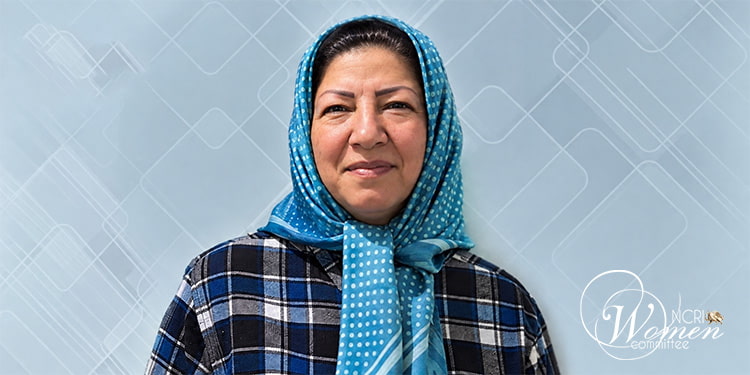
In the present account, you will read a glimpse of the bitter truth of the 1988 massacre through the testimony of Ms. Batoul Majani, a former political prisoner who was rearrested during the massacre. In a conversation with Simay-e Azadi, the satellite television network of the Iranian Resistance, Ms. Majani described what she witnessed during the massacre of PMOI prisoners, providing a vivid picture of this genocide and crime against humanity.
It is worth noting that seven members of Ms. Majani’s family were executed by the clerical regime. She spent seven years imprisoned in Khomeini’s prisons and was arrested four times, including in 1981 and June 1982. She endured the brutal torture inflicted by Khomeini’s Revolutionary Guards and witnessed shocking events during her years in captivity, some of which she recounts below.
The Martyrs of Batoul Majani’s Family
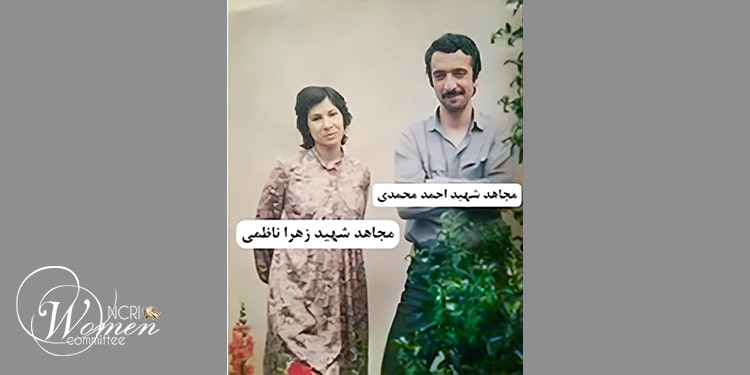
My maternal uncle, Ali Kharaqani, was killed under torture in 1981. Before that, he had spent five years in the Shah’s prisons. My maternal cousin, Ahmad Mohammadi, was executed in 1981. Gholamreza Mohammadi, Abdolrasoul Majani, and Zahra Nazemi were also among those executed in the 1988 massacre. Amir and Farah Aghayan were siblings and my maternal cousins. Farah was imprisoned in Evin, while Amir and Zahra Nazemi were imprisoned in Semnan.
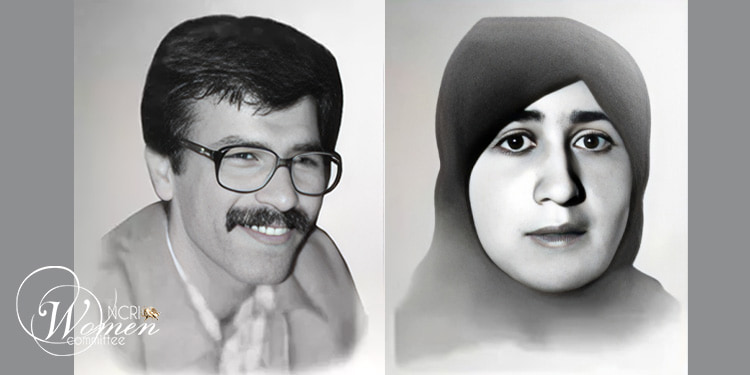
According to one of my relatives who was imprisoned in Semnan, out of the 40 prisoners there, 37 were executed, including Zahra Nazemi, who had a five-year sentence, and Amir Aghayan, who had received a three-year sentence.
The three prisoners who remained were also next in line for execution, but after the statements made by Mr. Montazeri, the authorities stopped the executions. When Farah and Amir’s father was informed that his two children had been executed, the poor man suffered a heart attack on the spot and died.
The Massacre and the Rearrest of Released Prisoners
On July 27, 1988, I was at home when intelligence agents stormed into our house. After ransacking the place, they took me away. When I reached the end of our street, I saw that they had brought a minibus with them, and one of them was holding a list—the names of prisoners who had earlier been released.
They gave me a blindfold and put me on the minibus. From there, they went from neighborhood to neighborhood and address to address, picking up people who had previously been imprisoned and later released. Once the minibus was full, they took us during the night to the Joint Committee Prison.
The following day, they took us for interrogation—beatings, and torture all over again…
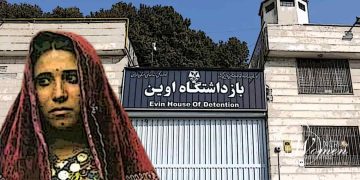
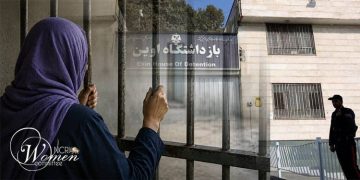
We spent two weeks in the Joint Committee Prison. After two weeks, they transferred us to Evin Prison, to a ward called, “Asayeshgah,” where all the cells were solitary confinement.
After we had been there for two days, they called us and told us to get ready for court. When I came out of my cell, I saw a very large number of prisoners standing in line. I was surprised. In previous years, when I had gone to court during my earlier periods of imprisonment, they had never taken people to court in such large groups.
As we stood one behind another, all blindfolded, I asked the woman standing in front of me, “What’s going on here?”
She said, “They’re taking us to court for the massacre.”
I asked, “What do you mean? What happened?”
She said, “Where have you been that you don’t know?”
I told her, “They took me from my home and brought me here.”
Then I asked about my cousin, Farah Aghayan. I asked whether she knew what had happened to her.
The woman said, “Yes. They had them in a locked room. There were 35 of the resistant girls there. The Guards kept going into their room and beating them with boots, batons, and whatever else they had. Then they took all of them away. They were among the first group to leave the ward, and they were all executed.”
As the line moved forward, we reached a hall where I saw a huge number of people. The women were on one side and the men on the other. There were so many of us that they seated us in two or three rows one after another.
One by one, they took us to court and then brought us back out and lined us up.
When my turn came, they read my file and began shouting and making a commotion:
“She’s a hypocrite! She’s been arrested several times, gone back out, and returned…”
Afterward, they took me back to a cell. The route from the hall led into a corridor. At the end of the corridor were many old cells, and after their hearings, each of us was placed in one of them.
When I looked inside my cell, I saw that many of the prisoners had written their names on the walls, along with dates and messages, poems, or other words, saying farewell.
It was an incredibly painful scene. The walls were covered with these writings. It was obvious that many people had entered and left that cell.
Late that night, they took me back to “Asayeshgah” ward.
“Mistaken” Executions
I also want to recount a memory that my late husband, Hamid Khallaq-Doust, told me about the court proceedings.
Hamid said that on the day they took them to court, they had one line for those designated for execution and another for those who were supposed to return to the wards.
He said that after he went through the hearing, they placed him in the execution line.
After some time, another Guard came and said, “Those sitting on this side, move to the other side, and those on the other side, come over here,” and he switched everyone around.
As a result, the prisoners who had been in the other group were taken away and executed, while the line Hamid had been standing in was sent back to the ward.
After the executions had been completed, Nasserian (Mohammad Moghisei), the notorious prison official who had gone into the ward and seen Hamid, said to him:
“Why are you still alive? You should have been executed by now.”
Zahra Kiaei, a Young Prisoner Who Remained Steadfast
I have a memory of Zahra Kiaei. In 1982, when I was in the corridors of Evin’s torture chambers, they kept me behind the door of a torture-chamber for nine days and nights.
One of those nights, they brought in a 19-year-old girl whose feet had been battered and torn apart by flogging. I told her, “Put your feet on my knee so I can give you a massage.”
I massaged her calves for a while and managed to calm her down a little.
Zahra told me, “I don’t have anything to tie my hair with.”
I said, “I have a scarf and a hair clip. I can give you one of them.”
I gave her the hair clip so she could tie her hair back.
Later, when I saw Zahra again, she told me that after that night they had taken her away and tortured her severely. Her torture was so brutal that the bone in her leg was visible through the sole of her foot.
We saw each other again in the prison infirmary. My own feet were injured too, and I spent about two months in the infirmary. They were taking Zahra away for surgery.
Before she went, she told me, “Batoul, be careful. When I come back from surgery, come quickly and wake me up. They’re taking me in for an operation, and when they put us under anesthesia, they come and try to extract confessions from us about things we haven’t admitted to. We have to wake up quickly, because they did this to us the previous time.”
Zahra Kiaei had been sentenced to death. They were constantly pressuring her to give a televised confession so that her sentence would be reduced.
But she did not surrender. She stood her ground and continued to resist. After three or four years, her death sentence was reduced to 15 years.
But later, during the 1988 massacre, she was executed at the age of 25.
Nahid Afshar, a Young Supporter of the PMOI
One of the young PMOI supporters who had been arrested during the September 27, 1981 crackdown was only 12 years old when she was arrested. Her name was Nahid Afshar.
She told me, “I was arrested with two of my friends, who were 14 years old. They executed the two of them, but they kept me alive.”
They would take her away and beat her. Once, she told me that while she was being tortured, she said, “My heart hurts,” simply to make them stop beating her.
The interrogator asked her, “Which side is your heart on?”
Nahid mistakenly said, “The right,” because she did not know which side the heart was on.
The interrogator then said viciously, “I’m going to beat you so badly that your heart will hurt, and then you’ll learn which side it’s on.”
Nahid’s interrogators and torturers put enormous pressure on her to break her. According to her own account, they had even taken her to a Guard’s home for nine months and kept her there so they could work on breaking her. Yet she still came back.
They kept this poor child in lower Ward 246, where one of the rooms was occupied by the splintered band of mercenaries and traitors, so they could work on her and break her. But whenever she got the chance, she would quickly come over to our rooms.
They sentenced her to death, and like Zahra Kiaei, she resisted for several years. She grew up inside the prison.
After some time, her sentence was reduced to 15 years. The day they announced the new sentence, the prisoners were so happy that this child had been saved that they celebrated.
Unfortunately, however, Nahid Afshar was also executed in the 1988 massacre.
Of 1,200 Female Prisoners, only 80 Remained
When I entered prison in 1982, there were 1,200 of us in our ward. When I returned to the ward in 1988, I saw that out of all those prisoners, only 80 remained.
At my mother’s first visit, she came dressed in black with my brothers and told me that five members of our family had been killed in the massacre.
Finally, I should mention that when my family was summoned to collect the belongings of those who had been killed, the authorities also wanted to make them sign a commitment not to hold any memorial ceremonies.
My family refused. They would not sign.
Fortunately, when they returned to the neighborhood, they decorated and put lights in the entire street and showered it with flowers for a full week. Our home became a gathering place for families who had lost their loved ones and were unable to hold memorial ceremonies.
They said that 60 young people from our neighborhood had been executed.
My mother used to tell me that everyone would come to our house to mourn.
Afterward, the interrogator called me and said, “Your mother has driven us crazy.”
I replied, “You executed her child. What exactly do you expect from her?”