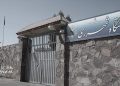


Mastoureh Ardalan(c. 1805–1848) stands as one of the most remarkable intellectual figures of nineteenth-century Iran and Kurdistan. A historian, writer, and poet, she is widely regarded as one of the earliest women historians in Iranian history. Born in Sanandaj, the cultural and political heart of Kurdistan at the time, Mastoureh grew up at the intersection of power, learning, and literature.
Born into a Family of Power and Letters
Mastoureh Ardalan was born into the influential Ardalan dynasty, a ruling family that governed Kurdistan for centuries and played a central role in the region’s political and cultural life. This privileged background afforded her access to education—an opportunity rarely available to women of her era.
From a young age, she mastered Persian and Arabic and developed a deep familiarity with classical literature, poetry, and historical writing. These foundations later shaped her enduring intellectual legacy.
Marriage to Khosrow Khan Ardalan and Life at the Center of History
Mastoureh’s marriage to Khosrow Khan Ardalan, the ruler of Kurdistan, placed her at the very core of nineteenth-century political life. Yet she was far more than the wife of a governor. She was a keen observer, an independent thinker, and a perceptive chronicler of her time.
Following Khosrow Khan’s death, her life entered a period of profound transformation. Witnessing the decline of Ardalan power and the increasing intervention of the Qajar central government, Mastoureh turned decisively to writing—determined to record the history she had lived through.

Tarikh-e Ardalan: History Through a Woman’s Lens
Mastoureh Ardalan’s most significant work, Tarikh-e Ardalan (The History of Ardalan), is a landmark in Iranian historiography. The book is notable not only for its historical value, but also for its distinctly female perspective, a rarity in nineteenth-century historical writing.
With clear, elegant prose—at times infused with poetic reflection—she recounts the history of the Ardalan dynasty, the structure of power in Kurdistan, relations with the Qajar state, and the political struggles of the era. Her narrative blends history, personal experience, and social insight, offering a perspective largely absent from official chronicles.
Mastoureh Ardalan as Poet: Emotion and Reflection
Alongside her historical work, Mastoureh was an accomplished poet. Her poems, primarily written in Persian, explore themes of loss, exile, the fragility of power, and the condition of women. For her, poetry was not a literary ornament but a means of expressing lived experience in a deeply patriarchal world.
A Short Life, an Enduring Legacy
Mastoureh Ardalan died at around the age of 43—her life brief, yet intellectually rich. Despite the constraints placed on women in nineteenth-century Iran, she succeeded in securing a lasting place in the cultural and historical memory of Kurdistan and Iran.
Today, Mastoureh Ardalan is remembered not merely as a regional historian, but as a symbol of women’s intellectual agency in nineteenth-century Iran—a woman who wrote history not from the margins of power, but from within the fabric of lived experience.