
Uprising Enters 17th Day Across Iran
On Tuesday, January 13, 2026, Iran’s nationwide uprising entered its 17th consecutive day, with protests and clashes reported across Tehran and numerous provincial cities. The events highlight the regime’s inability to contain a society determined to challenge tyranny.
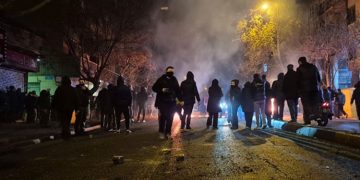
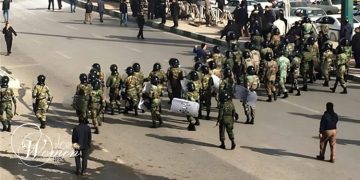
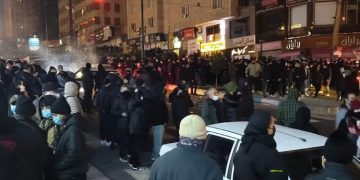
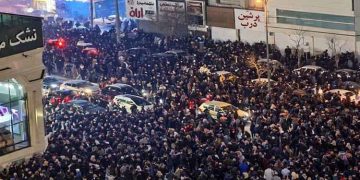
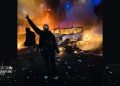
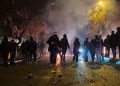
In Tehran, thousands gathered in the Sadeghieh district, chanting “Death to the dictator.” Rebellious youths confronted special units in Haft Howz, Piroozi, Teatr-e Shahr, Ashrafi Esfahani, Tehranpars, and Valiasr. Nighttime demonstrations also took place in Ekbatan Town. In Naziabad, regime forces fired pellet guns indiscriminately, injuring several protesters.
Earlier in the day, mourners at Behesht-e Zahra cemetery carried the bodies of slain protesters while chanting “Death to Khamenei,” turning funerals into acts of renewed defiance.
Nationwide Clashes and Military Escalation
Protests and confrontations continued across the country. In Mashhad, clashes between protesters and regime forces resulted in the deaths of a regime colonel and three Basij members who were firing on demonstrators. In Kermanshah, hit-and-run clashes persisted through the night, particularly in the Taq-e Bostan area, where security forces opened fire. Reinforcements were sent from Qasr-e Shirin, Ravansar, and Javanrud to strengthen repression.
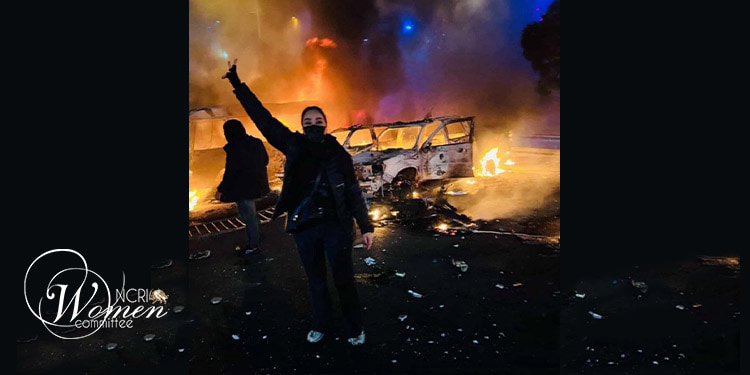
In Shahr-e Babak, Kerman province, authorities created a warlike atmosphere, arresting hundreds of protesters and injuring the city’s intelligence chief. In Kerman city, heavy weaponry was deployed against demonstrators. Additional clashes occurred in Shiraz, Ilam, Karaj, Tabriz, and Isfahan, where protesters set fire to motorcycles belonging to Basij members.
Women Show Courage in the Uprising
Eyewitnesses report that young women and girls have been particularly brave, taking significant risks to participate in protests and confront regime forces. Young mothers have joined demonstrations with their children, and older women have been present alongside disabled husbands in wheelchairs, highlighting the broad social participation in the uprising.
A Politically Conscious and Organized Movement
Today’s uprising is neither spontaneous nor short-lived. It is broader, more politically defined, and more radical than previous waves. It reflects a society that has accumulated experience, political awareness, and organizational capacity over decades of resistance. Protesters’ demands extend beyond economic relief to the dismantling of the authoritarian system itself.
Four Decades of Resistance
The current movement draws on more than 45 years of Iranian struggle, informed by nationwide uprisings in 2018, 2019, and 2022. These experiences demonstrate that Iranian society now engages in sustained, organized protests that directly challenge the apex of power. The PMOI Resistance Units have played a key role in maintaining momentum between uprisings, ensuring that dissent remains active.
The Regime’s Failed Strategy
Faced with an “explosive society,” the regime employs a dual approach: overt repression, including mass arrests, executions, and live fire, alongside psychological warfare and political deception. By promoting monarchist narratives and amplifying figures such as Reza Pahlavi, the regime seeks to divide protesters, marginalize the democratic alternative, and portray the uprising as foreign-backed.
Determination Rooted in History
Yet the slogans heard across Iran, rejecting both religious and monarchical dictatorship, reflect a clear collective choice. Despite repression and propaganda, Iranian society, shaped by decades of imprisonment, exile, and sacrifice, shows no sign of retreat. The uprising continues with determination, rooted in a historical trajectory of resistance and the unwavering demand for freedom and democracy.