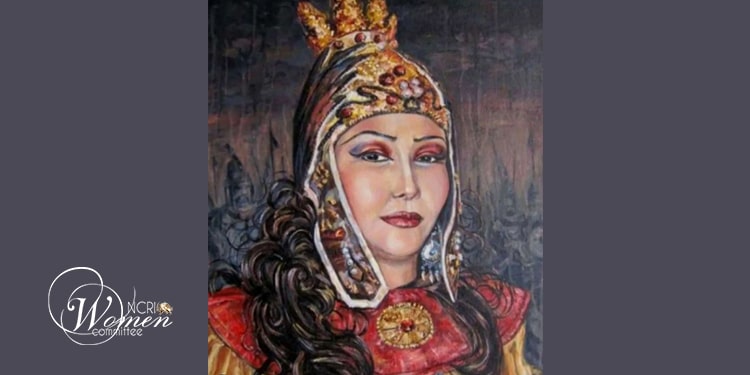
In the mid-thirteenth century, when the Mongol Empire ruled over vast stretches of Asia and Iran, an extraordinary Iranian woman rose to the very center of power: Fatemeh Khatun. Her life story—beginning in captivity and culminating in political influence at the highest levels of Mongol governance—is one of the most remarkable and least told narratives in the history of Iranian women.
Fatemeh Khatun was born in Tus, near present-day Mashhad, into a Persian-speaking Shiʿi family. During the Mongol invasions of Khwarazmian territories, she was captured along with thousands of other Iranians and taken to the Mongol imperial center. What distinguished Fatemeh from other captives, however, was her political intelligence, administrative ability, and keen understanding of power dynamics.
Entry into the Court and Political Ascent
Fatemeh Khatun entered the court of Töregene Khatun, the wife of Ögedei Khan, who assumed control of the Mongol Empire as regent after her husband’s death. Within this court, Fatemeh did not remain a servant. Gradually, she emerged as one of Töregene’s closest political advisers.
During Töregene Khatun’s regency, Fatemeh Khatun played an active role in major state decisions. She exerted influence over appointments and dismissals, participated in administrative governance, and supported Iranian and Muslim elites in gaining key positions. The presence of an Iranian woman in such a powerful role within the rigidly patriarchal and militarized structure of the Mongol Empire was both unprecedented and extraordinary.
Power, Rivalry, and Accusation
As Fatemeh Khatun’s influence grew, so too did opposition against her. Many Mongol nobles and political rivals resented her rise to power. After the death of Töregene Khatun and the accession of Güyük Khan, the political climate shifted rapidly. Fatemeh Khatun was accused of exercising influence through illicit means, including sorcery and witchcraft—charges that history has frequently employed to discredit and eliminate powerful women.
A Tragic End, an Enduring Legacy
Following these accusations, Fatemeh Khatun was arrested, tortured, and ultimately executed in a brutal manner. Her death marked a tragic end to the life of a woman who had risen from enslavement to the heights of imperial authority. Yet her name endured—not merely as a victim of political intrigue, but as a symbol of the capacity of Iranian women to transcend historical constraints.
Why Fatemeh Khatun Matters
Fatemeh Khatun represents a rare example of a woman who penetrated the core of political power within one of history’s most formidable and male-dominated empires. Her story is one of courage, strategic intelligence, and the heavy price women have often paid for visibility and authority in the political sphere.