
Friday, January 16, 2026
  • English
  • Français
  • فارسی
  • عربى
PODCASTS
NCRI Women Committee Women Resistance Freedom
  • Home
  • NEWS
    • Women’s News
    • Articles
    • Statements
  • PUBLICATIONS
    • Monthlies
    • Documents
    • Reference Library
  • ABOUT US
    • The NCRI Women’s Committee
    • Gender Equality
    • Women’s Platform
  • MARYAM RAJAVI
    • Maryam Rajavi
    • Maryam Rajavi Speeches
    • The Plan on Women’s Rights and Freedoms
    • Ten-Point Plan for the future of Iran
  • VANGUARDS
    • The Fallen for Freedom
    • Heroines in Chain
    • Women of Iranian Resistance
    • Famous Women
    • Women in History
  • EVENTS
    • IWD Conferences
    • Activities
    • IWD Speeches
    • Solidarity
  • VIDEO
    • Videos
    • IWD Videos
  • PODCAST
  • DONATE
  • CONTACT US
No Result
View All Result
NCRI Women Committee Women Resistance Freedom
  • Home
  • NEWS
    • Women’s News
    • Articles
    • Statements
  • PUBLICATIONS
    • Monthlies
    • Documents
    • Reference Library
  • ABOUT US
    • The NCRI Women’s Committee
    • Gender Equality
    • Women’s Platform
  • MARYAM RAJAVI
    • Maryam Rajavi
    • Maryam Rajavi Speeches
    • The Plan on Women’s Rights and Freedoms
    • Ten-Point Plan for the future of Iran
  • VANGUARDS
    • The Fallen for Freedom
    • Heroines in Chain
    • Women of Iranian Resistance
    • Famous Women
    • Women in History
  • EVENTS
    • IWD Conferences
    • Activities
    • IWD Speeches
    • Solidarity
  • VIDEO
    • Videos
    • IWD Videos
  • PODCAST
  • DONATE
  • CONTACT US
No Result
View All Result
NCRI Women Committee
No Result
View All Result
Home Monthlies
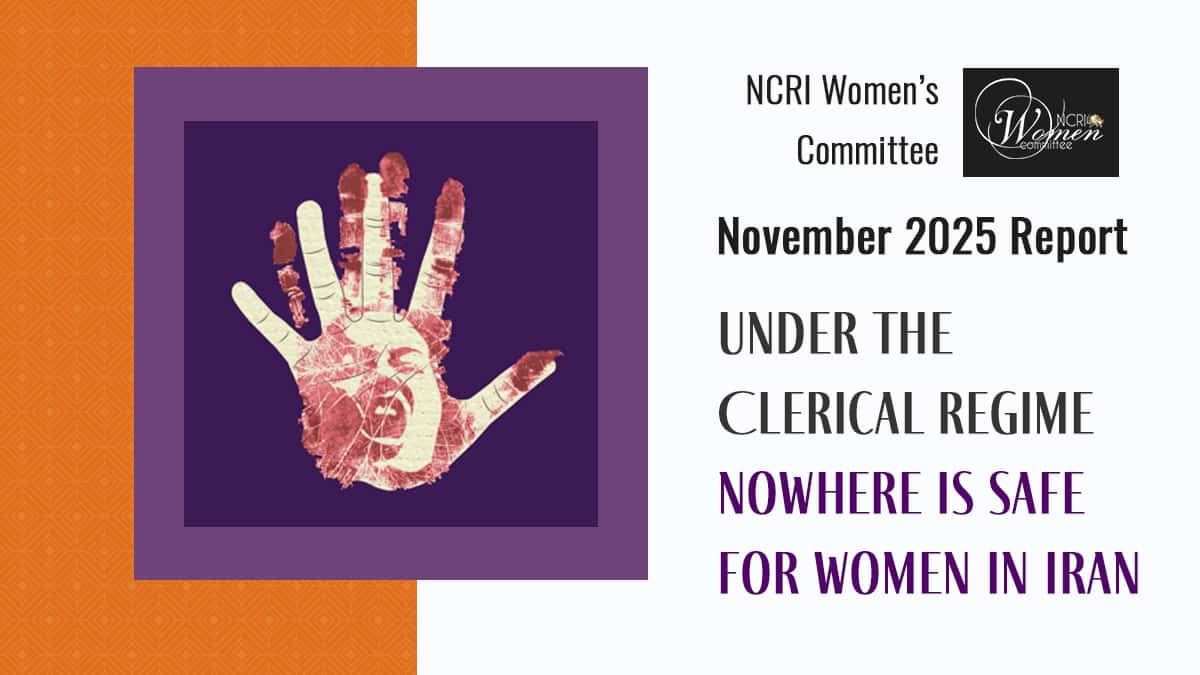
November 2025 Report: Under the Clerical Regime, Nowhere Is Safe for Women in Iran

November 2025 Report: Under the Clerical Regime, Nowhere Is Safe for Women in Iran

November 30, 2025
in Monthlies
Share on FacebookShare on Twitter

Women Are Killed in Iran with Complete Impunity

November 2025 Report: Under the Clerical Regime, Nowhere Is Safe for Women in Iran

Under the rule of Iran’s misogynistic clerical regime, Iranian women, from childhood to old age, are unsafe in all spaces and circumstances. If they manage to escape the brutality of security forces in the streets, they may still fall victim in their homes to so-called “honor suspicions,” resisting forced marriage, requesting a divorce, or even attempting to defend their own rights. Many of these killings take place in front of children or other family members, feeding a cycle of violence across generations. Among the victims are pregnant women or mothers killed alongside their children.

Monthly November 2025_ENDownload

Beatings and torture of women in prisons, firing pellets into the eyes of protesting women, sexual assault in detention centers, and the attacks by morality police patrols enforcing compulsory hijab in public all legitimize and encourage violence against women inside the home and within families.

As a result, state violence against Iranian women is far more widespread than domestic violence. Iran, under clerical rule, remains the world’s largest executioner of women—women who are often victims of forced marriages, child marriages, and domestic abuse, then condemned to death in unjust courts.

Fact-Finding Mission Report

“Systemic Impunity” for killers, an expression used in the recent United Nations Fact-Finding Mission report on Iran, is a phrase that should trouble anyone with a conscience. It reflects a truth that Iranian women and girls face every day. Under the Iranian state’s laws, this “systemic impunity” effectively exempts perpetrators of violence against women from prosecution and proportionate punishment.

In the UN report published on October 30, 2025, which examines human rights violations in Iran, Sara Hossain, the Chair of the UN Fact-Finding Mission, said:

“The acts of denying justice are not neutral. Failure to address injustice prolongs the suffering of victims of victims and undermines the State’s obligations under international human rights law to ensure accountability, truth, justice, and reparations.”

Rising Numbers of Femicides in Iran

Each year, femicides in Iran grow in scale. The lack of transparent official statistics reflects the state’s deliberate intention to hide the truth. Still, even the partial data published by state-run media reveal a tsunami of violence.

Zahra Eftekharezadeh, founder of the Atena Safe Shelter in Tehran, recently said: “We are facing an increase in domestic violence, but the lack of scientific and national statistics prevents us from having an accurate picture of the reality. No official institution in Iran has taken responsibility for collecting precise data in this area, nor have any comprehensive studies been conducted.” (Shargh newspaper, October 11, 2025)

She also stated elsewhere: “Every day we see an increase in femicides in Iran. Even without exact statistics, we can see that every two days a woman is killed, an extraordinarily high number. Just in Shadegan, in Khuzestan Province in southwest Iran, at least five women were killed. These figures were gathered even though no institution in this country feels obligated to provide statistics; so, these numbers are based on verbal reports. Therefore, we must multiply them to reflect the real scale.” (Ham-Mihan newspaper, October 26, 2025)

Shirin Ahmadnia, President of the Iranian Sociological Association, said about femicide: “This phenomenon has deep structural roots, while we witness silence and negligence in the face of it… The accumulated inequalities and injustices in society ultimately result in the physical elimination of a woman. Violence inside the home directly reflects the unequal policies that exist on a macro scale.” (Ham-Mihan newspaper, October 26, 2025)

The statistics published by state institutions and media are merely the tip of the iceberg.

According to the data collected by the NCRI Women’s Committee, from January 2025 to the end of November 2025, an 11-month period, at least 175 women were killed by male family members. This number is extremely conservative, because in many cases family members, under the pretext of “honor” or in their role as the vali-ye-dam (literally means the owner of blood or the relative who holds the right to pursue charges), remain silent about the killings of women and girls and do not file any complaints.

Unofficial academic estimates have previously suggested that between 375 and 450 women are victims of honor killings and domestic femicides in Iran each year, a staggering figure that reveals a structural and state-driven catastrophe.

Stories That Reveal the Depth of the Tragedy

Only in November 2025, the following murders were reported:

Mobina Zare, age 20, in Islamshahr (a city southwest of Tehran), was killed by her former fiancé. After murdering her, he burned her body in an aluminum-melting furnace at his father’s workshop. Her family searched for her for ten days before finding her half-burned body.
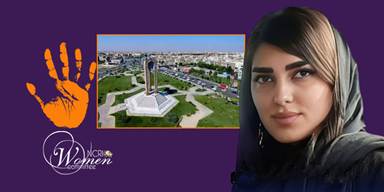
Mobina Zare was burned in analuminum melting furnace

Leila Aliramaii, age 40, in Marivan (in Kurdistan Province, western Iran), was killed with a Kalashnikov rifle because she refused the vile demands of a member of the Revolutionary Guard Corps (IRGC). Leila was married and the mother of a young daughter and son.
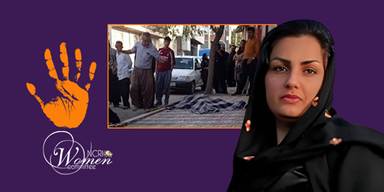
Leila Aliramaii, the mother of two young children

Sarina Rostami, age 16, in Sarpol-e-Zahab (in Kermanshah Province, western Iran), was killed by a male relative because she refused accept a forcible marriage.

Sarina Rostami, 16, victim of forced marriage

A 40-year-old woman in Pakdasht (Tehran Province) was suffocated with a blanket by her husband.

Reyhaneh Dorzadeh, age 23, in Nikshahr (Sistan and Baluchestan Province, southeastern Iran), was suffocated by her husband because she opposed his desire to take a second wife.

A 29-year-old woman identified as J.D. was murdered by her father, who then dismembered her body and set it on fire.

Sakineh, age 80, in Tehran, was killed by her son using an iron rod.

Zahra Ghaemi, a women’s rights activist and member of the Women’s Study Group at the University of Tehran, was suffocated by her husband.
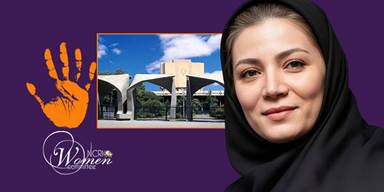
Zahra Ghaemi, a member of the Women’s Study Group at the University of Tehran

Shahla Karimani, age 38, mother of two, in Mahabad (Kurdistan Province), was strangled with a scarf by her husband and brother-in-law.

Sajedeh Sand-Kazehi, in Khash (Sistan and Baluchestan Province), was killed with a hunting rifle because her father-in-law wanted to forcefully take a gas regulator that belonged to her. Sajedeh was the mother of two young children.

Raheleh Siavoshi, age 26, in Nahavand, a town in Hamedan Province in western Iran, was fatally stabbed by her husband after participating in a sports camp. She died in the hospital two days later.
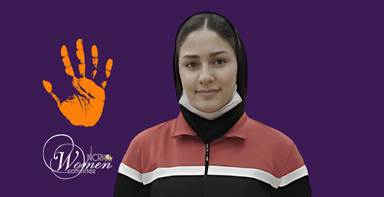
Raheleh Siavoshi, a national wushu champion and coach

Justice Has Lost Its Meaning

While women are sentenced to long prison terms for “removing their hijab” or protesting discrimination, men who murder their wives typically receive only a few years in prison. In many cases, they can pay money to buy their way out and return to their lives.

In notorious cases such as Romina Ashrafi and Mona Heydari, the murderers received only two to eight years in prison. Even state-run media sometimes acknowledge this “inverted justice”: “The punishment for beheading one’s wife: 8 years in prison; The punishment for removing one’s hijab: 10 years in prison!”

According to the regime’s laws, the father, who is also the “male guardian and blood-owner (vali-ye-dam),” is exempt from retributive punishment for killing his own child.

Zahra Eftekharezadeh, founder of one of Tehran’s safe shelters, said regarding the absence of deterrent laws: “When the law does not impose a punishment proportionate to the crime, perpetrators realize there is no serious consequence waiting for them. In many cases, the sentences issued by the judiciary are not only non-deterrent but encourage the offender. Romina Ashrafi’s father is an example. He openly said that if he killed his daughter, he would receive at most ten years in prison.” (Shargh newspaper – October 11, 2025)

Atrocities Rooted in Law and Politics

Under Iran’s misogynistic clerical laws, a woman is not recognized as an independent individual but as “subordinate” to a man. Without legal or structural protection, women are forced to endure domestic violence, and each day adds new names to the list of women murdered.

Article 1105 of Iran’s Civil Code assigns family leadership exclusively to men.

Article 1108 makes a woman’s right to financial support conditional on her “obedience.”

Article 1114 gives the husband the right to determine the wife’s place of residence.

In such a system, women seeking divorce must prove their lives are in danger, and their testimony is worth only half that of a man. Judges routinely force women who have been beaten or threatened back into the homes of their abusers.

Through its laws, media, and judiciary, the clerical regime perpetuates these crimes. Violence extends from home to the school, from the street to the courtroom, widening its reach every day.

But beyond the laws, today’s social tragedies in Iran stem from political roots. The misogynistic clerical regime is founded on the subjugation of women. The horrific killings of women are not isolated acts of personal fanaticism; they are the product of a system that authorizes violence against women.

The rising number of honor killings must therefore be understood as the direct result of the regime’s anti-woman policies and the patriarchal culture embedded within its structure. The Iranian people blame not society but the regime itself, an oppressive, misogynistic establishment that preserves its power through the suppression and elimination of women.

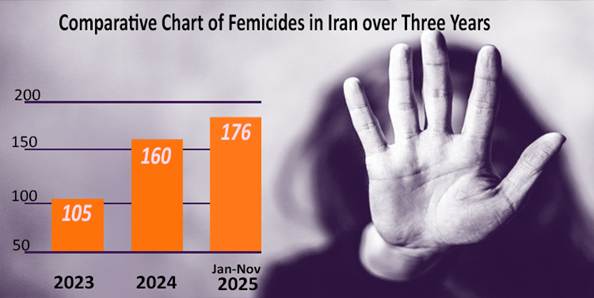
Data compiled over the past three years by the NCRI Women’s Committee shows a sharp upward trend in the number of women murdered under the misogynistic rule of the clerical regime. These figures are drawn entirely from documented and published reports by state-run media and other available sources. They therefore represent a minimum estimate, as the regime deliberately obscures such information, and many families, fearing the perpetrators, avoid publicizing the killings of their daughters and female relatives.

According to these findings, at least 105 women were murdered in 2023, 160 in 2024, and during just the first eleven months of 2025, no fewer than 175 women have been killed in Iran.
Tags: Honor killingsViolence against women
ShareTweetPinShareSendShare

Related Posts

December 2025 Report: A Year in Review: Iranian Women’s Resistance Against Religious Dictatorship

January 5, 2026
December 2025 Report: A Year in Review: Iranian Women’s Resistance Against Religious Dictatorship

December 2025 Report: A Year in Review: Iranian Women’s Resistance Against Religious Dictatorship In 2025, Iranian women faced escalating challenges and deepening injustices. Yet, they never surrendered in...

Read moreDetails

When Justice Is Absent

December 24, 2025
When Justice Is Absent

Femicide and the Impunity of Killers Each year, femicides in Iran grow in scale.  At least 176 women and girls have been killed by male family members in...

Read moreDetails

State Violence and Torture Against Women Political Prisoners in Iran

December 16, 2025
State Violence and Torture Against Women Political Prisoners in Iran

Thousands of women in Iran remain out of sight jailed, tortured, and denied the most basic medical care simply for demanding freedom. They are teachers, workers, students, women...

Read moreDetails

State Violence and Torture Against Women Political Prisoners in Iran: Medical Denial and an Engineered Health Crisis

December 10, 2025
State Violence and Torture Against Women Political Prisoners in Iran

As the two-week global campaign to end violence against women concludes, and on the International Human Rights Day, we turn to the situation of women who have stood...

Read moreDetails

Execution of Women in Iran Soars: 70% Increase in Just One Year

December 8, 2025
Execution of Women in Iran Soars: 70% Increase in Just One Year

Execution, the regime’s tool for intimidating a discontented society Execution of Women in Iran: A State-Sponsored Violence The execution of women in Iran is among the most brutal...

Read moreDetails
Next Post
Political Prisoner Fatemeh Ziaii, 68, Arrested for the 7th Time

Health of Fatemeh Ziaii Deteriorates in Evin Prison; Doctors Warn of Life-Threatening Risk

Documents

More than 400 Prominent Women Demand Halt to Iran Execution of Political Prisoner Zahra Tabari

More than 400 Prominent Women Demand Halt to Iran Execution of Political Prisoner Zahra Tabari

December 25, 2025

More than 400 prominent women from across the globe, among them Nobel Prize winners, former presidents and prime ministers, parliamentarians,...

The Gendered Dimensions of the Water Crisis in Iran: Impacts on Women’s Health, Livelihoods, and Security

The Gendered Dimensions of the Water Crisis in Iran: Impacts on Women’s Health, Livelihoods, and Security

October 12, 2025

How Iranian Women Shoulder the Heavy Burden of a Deepening Crisis Download Italian Version The water crisis in Iran has...

The Failure of Iran's Population Growth Law Despite the Repression of Women A Glance at a Costly and Ineffective Policy

The Failure of Iran’s Population Growth Law Despite the Repression of Women

August 24, 2025

A Glance at a Costly and Ineffective Policy The “Youthful Population Law” in Iran vs. Women’s Human Rights Following a...

Monthlies

December 2025 Report: A Year in Review: Iranian Women’s Resistance Against Religious Dictatorship
Monthlies

December 2025 Report: A Year in Review: Iranian Women’s Resistance Against Religious Dictatorship

January 5, 2026
November 2025 Report: Under the Clerical Regime, Nowhere Is Safe for Women in Iran
Monthlies

November 2025 Report: Under the Clerical Regime, Nowhere Is Safe for Women in Iran

November 30, 2025
October 2025 Report: Death Sentence for a Female Political Prisoner The Resistance of Female Political Prisoners Inspires Iranian Women and Girls in Their Struggle Against the Regime of Executions and Massacre
Monthlies

October 2025 Report: Death Sentence for a Female Political Prisoner

October 31, 2025
September 2025 Report: One Woman Executed Every 4 Days in Iran
Monthlies

September 2025 Report: One Woman Executed Every 4 Days in Iran

September 30, 2025

Articles

Why Iran’s Nationwide Uprising Continues Despite Brutal Repression

Why Iran’s Nationwide Uprising Continues Despite Brutal Repression

January 14, 2026

Uprising Enters 17th Day Across Iran On Tuesday, January 13, 2026, Iran’s nationwide uprising entered its 17th consecutive day, with...

Nationwide Iran Uprising Expands to 207 Cities

Nationwide Iran Uprising Expands to 207 Cities; Protesters’ Morale Remains High Despite Bloody Crackdown

January 13, 2026

On Tuesday, January 13, 2026, the nationwide Iran uprising entered its third week, spreading to at least 207 cities and...

Internet Shutdown and Suppression Orders: Death Toll Surpasses 3,000

Internet Shutdown and Suppression Orders: Death Toll Surpasses 3,000

January 12, 2026

Partial list of women detained during the nationwide uprising The People’s Mojahedin Organization of Iran (PMOI/MEK) announced today, January 12,...

The Fallen for Freedom

Zahra Bohlouli Pour (Raha) Zahra Bohlouli Pour was a 19-year-old girl who sacrificed her life in the 2026 uprising
The Fallen for Freedom

Zahra Bohlouli Pour

January 15, 2026
Robina Aminian Art student killed during the 2026 Iran Uprising
The Fallen for Freedom

Robina Aminian

January 13, 2026
Akram Peargazi
The Fallen for Freedom

Akram Peargazi

January 13, 2026
In Memory of Zohreh Bani Jamali
The Fallen for Freedom

In Memory of Zohreh Bani Jamali

November 20, 2025

ABOUT US

NCRI Women Committee

We work extensively with Iranian women outside the country and maintain a permanent contact with women inside Iran. The Women’s Committee is actively involved with many women’s rights organizations and NGO’s and the Iranian diaspora.
The committee is a major source of much of the information received from inside Iran with regards to women. Attending UN Human Rights Council meetings and other international or regional conferences on women’s issues and engaging in a relentless battle against the Iranian regime’s misogyny are part of the activities of members and associates of the committee.

CATEGORIES

  • Activities
  • Articles
  • Documents
  • Famous Women
  • Heroines in Chain
  • IWD Conferences
  • IWD Speeches
  • IWD Videos
  • Maryam Rajavi
  • Maryam Rajavi Speeches
  • Monthlies
  • Podcast
  • Reference Library
  • Solidarity
  • Statements
  • The Fallen for Freedom
  • Videos
  • Women in History
  • Women in Leadership
  • Women of Iranian Resistance
  • Women's News

BROWSE BY TAG

Child marriage coronavirus education execution forced hijab Gender Gap Generation Equality Honor killings Iran Teachers Maryam Akbari Monfared Nurses Plan on Women's Rights and Freedoms Poverty Prisoners Protests rural women Saba Kord Afshari The girl child Violence against women Women's Leadership Women Heads of Household Zeinab Jalalian

The copyright of all the material published on this website has been registered under © 2016 the Women’s Committee of the National Council of Resistance of Iran. To obtain permission to copy, redistribute or publish the material published on this website, you should write to the NCRI Women’s Committee. Please include the link of the original article on our website, women.ncr-iran.org.

Welcome Back!

Login to your account below

Forgotten Password?

Retrieve your password

Please enter your username or email address to reset your password.

Log In

Add New Playlist

No Result
View All Result
  • Home
  • News
    • Women’s News
    • Articles
    • Statements
  • Publications
    • Monthlies
    • Documents
    • Reference Library
  • About Us
    • The NCRI Women’s Committee
    • Gender Equality
    • Women’s Platform
  • Maryam Rajavi
    • Maryam Rajavi
    • Maryam Rajavi Speeches
    • Ten Point Plan for Iran
    • The Plan on Women’s Rights and Freedoms
  • Vanguards
    • The Fallen for Freedom
    • Heroines in Chain
    • Women of Iranian Resistance
    • Famous Women
    • Women in History
  • Events
    • IWD Conferences
    • Activities
    • IWD Speeches
    • Solidarity
  • Video
    • Videos
    • IWD Videos
  • Podcast
  • Donate
  • Contact us
  • فارسی
  • عربی
  • Français

The copyright of all the material published on this website has been registered under © 2016 the Women’s Committee of the National Council of Resistance of Iran. To obtain permission to copy, redistribute or publish the material published on this website, you should write to the NCRI Women’s Committee. Please include the link of the original article on our website, women.ncr-iran.org.