

Call for Urgent UN Investigation into Clerical Regime Crimes
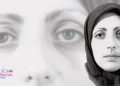
Several Iranian political prisoners have issued a letter on the passing of Somayeh Rashidi to alert international public opinion and press for action by the UN Special Rapporteur on the situation of human rights in Iran, Dr. Mai Sato. The letter states:
On May 2, 2025, while writing the slogan “Workers are awake; they despise both mullahs and Shah,” Somayeh Rashidi was arrested by agents of the Ministry of Intelligence.
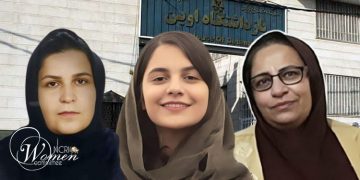
After spending 24 hours in an undisclosed detention center and enduring psychological torture, she was transferred to the women’s ward of Evin Prison on May 3, 2025.
Somayeh suffered from epilepsy and required daily medication.
While the regime’s deceitful media tried to portray Somayeh as an addict to cover up their crime, the truth is that Somayeh and others like her are not condemned because of addiction, but because of their fighting spirit and refusal to submit—qualities that make them enemies in the eyes of these executioners.
Prisoners in Evin and Qarchak can testify that Somayeh Rashidi’s illness worsened after her transfer from Evin to Qarchak due to the harsh conditions and lack of medical care.
Whenever she went to the infirmary, officials accused her of faking illness and sent her back to the ward. Then, when she was near death, they removed her, and her fate remains unknown.
The story of Somayeh Rashidi is like that of a lone bird, bearing witness to the killing of many innocent women and girls in the women’s general ward of this prison and in other prisons of the clerical regime.
Somayeh was neither the first nor will she be the last to be imprisoned and murdered in the prisons of this homeland—the same regime that massacred 30,000 prisoners in 1988.

This testimony surfaced just as the regime’s Student News Agency—affiliated with the IRGC Basij—released a September 25, 2025 video of Somayeh chanting “Death to Khamenei, hail to Maryam Rajavi.” The broadcast sought to distract from beatings, denial of medical treatment, and other crimes by prison authorities that led to her death.
The Basij further attempted to smear her as a collaborator with the PMOI and the “Zionist regime during the 12-day war,” while also alleging drug use to claim medical treatment was ineffective. These narratives even contradict the judiciary’s own Mizan news agency, which reported that Somayeh had been arrested three times since 2022 and linked her to ten operations.
The NCRI Women’s Committee urges the UN Special Rapporteur, the High Commissioner for Human Rights, the Human Rights Council, and the Special Rapporteur on Violence Against Women to launch an immediate investigation into Somayeh Rashidi’s death and to take urgent steps to protect sick prisoners, particularly women held in the notorious Qarchak Prison.