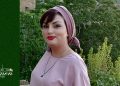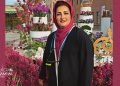


Maliheh Moghaddam was born in Tehran in 1959 to a large family of eight siblings where she grew up and graduated from the College of Applied Chemistry.
For a short while, at the age of 17, she left for England in order to further her education. However, Maliheh could not bear to be away from home, especially having been aware of Iran’s deteriorating situation under Shah’s dictatorship. She hence returns to her country and decides to continue her education in the field of metallurgy at Tehran’s University of Science and Technology up until the cultural coup and Khomeini’s mandate of university closures in 1980.
Maliheh was 18 years old when she was first introduced to the PMOI through her older brother, Mohammad, a political prisoner during Shah’s reign.[1]
She very simply and beautifully describes this initial acquaintance: “I came to know the Mojahedin through prison bars, where Mohammad first announced to me that he was a member of the People’s Mojahedin Organization of Iran (PMOI/MEK) and after explaining their logo, he asked me to begin reading their reports and declarations. I became more familiar with the organization in 1978 at a time when anti-monarchy protests were on the rise and the political climate allowed any activist or student to get acquainted with various political groups.”
Suppression of women’s rights and freedoms
In her book entitled, The Real Boundary of a Dream, Maliheh examines the process by which Khomeini came to power and his specific implementation of torture and imprisonment.
An excerpt of her book describes the suppression of freedoms and women’s rights as follow: “Shortly after the revolution, one could hear such murmurs as ‘engineering is a difficult field for women’ or ‘women should not work outside of home must stay home to tend the children.’ I remember how challenging it was to be able to control myself upon hearing such sentiments. They apparently wanted to revert to the era of slavery and feudalism when women and girls were not allowed to be in the fields or that only males could have access to education. Gender discrimination and misogyny were the basis of such mentalities and hence Khomeini’s policies; as if women were incompetent in intellectual capacities. As a woman, it was very important for me to realize that I could not pursue my rights and unless through an all-out struggle.”
Maliheh Moghaddam continues to describe her arrest and how she escaped from the clutches of the Revolutionary Guards: “On June 20, 1981, I participated in the Mojahedin’s peaceful demonstrations in Tehran where I was attacked by the Revolutionary Guards and was severely beaten. I was then arrested and transferred to the basement of a Police Station across from Student Park where I was kept for several hours and managed to finally escape from during a rush.”
Maliheh will be once again arrested by the IRGC on November 24, 1981, during a trip where she is stopped on a highway. She recalls, “IRGC patrols were generally arresting young people and taking them to prisons for interrogation. They were searching for any connections one could have with the PMOI. I was transferred to a Police Station in Saadabad and spent 10-12 hours under interrogation and eventually taken to Evin Prison in the middle of the night.”
Conditions of female prisoners
Women’s condition in Evin Prison is among the topics that Maliheh has covered in her book: “The political prisoners at Evin were from all walks of life. Those who were arrested before June 20, were subjected to many intimidations. One prisoner said, ‘We were thrown into a cell with no airflow such that we had serious breathing problems as a result of the hot weather. We would take turns in putting our faces against the floor behind the cell door in order to breath in some fresh air and alleviate suffocation.’”
In another part of her book, she recounts the cheerful and friendly spirit of the prisoners: “We were given a free hour every evening and this was a time we spent skipping, jumping and playing. When we succeeded in creating a ball, we began playing seated volleyball. We created mini balls from dough and stones for various games. Our games were the cause of many headaches. Each time we were ambushed by the prison guards, they would cut our bread and accuse us of squandering the property of the Islamic Republic. We would never give up though.”
Torn apart feet and the menu of torture tools
Maliheh Moghaddam also describes some horrendous scenes she came across in prison: “Not long after my arrest, I witnessed a very shocking image that is to this day difficult for me to imagine. All along the corridor, there were women lying on the floor whose feet were drenched in blood. Each passing by guard would kick their already torn apart feet in order to make way for themselves. This shocking experience left me thinking how no one will probably come out of this place alive so that they are able to report these atrocious cruelties to the Iranian people and the rest of the world. This forever ingrained image of torn apart feet, the sounds of shouting, moans, lashes, kicks and punches trapped my breath in my chest…”
“An interrogator who had been named the master, was the one assigned for my interrogation. He first gave me a very large and loose Kurdish-style pant…and holding series of tools in his hands he asked me which one I preferred for my torturing session. The menu for the master’s tools consisted of a variety of electrical cables with the casing removed some of which were about 4-5cm in diameter. There were several types of hoses, some flexible and some rigid ones, as well as wooden sticks and batons. It was impossible for me to hide my disbelief. I could not move one bit as my arms and legs were strapped as well as my waist.
“To my dismay, they did not even allow me to answer. They shoved a piece of dirty cloth containing fresh and dry blood stains into my mouth and sent to work. With each blow, I felt sleepy and would faint momentarily until the next blow when my eyes would open involuntarily and this process repeated itself. I peeked at my feet every once in a while, and would close my eyes and continue thinking about when all this would end.
“It is said that every land in this world has its own wonders that usually involves travelling a long distance in order to reach it. In Evin Prison, not only does time stop but also one doesn’t need to travel far because every room differs from the rest…”
Wishing for everyone’s freedom
In response to the question regarding how she imagined freedom and what she wished for during her 4 years of imprisonment and solitary confinement, Maliheh said, “I wished to destroy every prison and put an end to torture and killing; I wished for freedom of the Iranian people.”
Maliheh writes how following the Mojahedin’s revelations, protests of parents and families of prisoners, and especially with the escalation of internal conflicts between Montazeri and Khomeini, a delegation was sent on behalf of Montazeri to assess and improve the prisons’ conditions. The cage and the residential unit, two dreaded torture chambers at the time, were hence closed. Political prisoners were then transferred to general wards.
Compatriots helped me escape and rejoin with the PMOI
Maliheh Moghaddam says, “I was part of the last cohort of prisoners who were taken from Evin to Ghezel-Hesar prison to be tortured in the residential unit. But our transfer coincided with these incidents and so, I was held in the punishment ward 7. After some time, I was transferred to the public ward 4 where I was severely sick with internal infections. A number of prisoners, including myself, were nominated and issued a warrant to leave prison for a few days in order to seek medical treatments. I did not want to accept but Farangis Keyvani (martyr of the 1988 massacre) and Zahra Falahat-Pisheh (another martyr of the massacre) told me not to refuse this opportunity and to leave and never return!”
“As soon as I left prison, on bail of course, I contacted my brother, Asghar, who was a member of PMOI abroad. With the help of the organization and their supporters, I left Iran immediately and fulfilled the promise I had made to my mates. The guards are yet to see my return.”
Maliheh says she owes the success of her flight to the efforts of her compatriots, who with their love and admiration for Mojahed women, helped her join the Mojahedin’s bastion outside of the ruling theocratic dictatorship. She tells us, “I was under surveillance of the IRGC as I was leaving Iran and they had taken my father and sister as hostages and they were held imprisoned for about a year. Thanks to the Mojahedin supporters, I managed to secretly leave the Iranian frontier. I am especially forever grateful to the Kurdish compatriot who, with her young daughter, helped me secretly pass through 21 checkpoints and finally cross the border with the cover that his kind mother had given me to hide underneath. I am grateful to another Kurdish compatriot who guarded the mountains up until dawn to ensure our safety as well as everyone else who helped me reconnect with the organization. I finally arrived in November 1985 at the Mojahedin’s bastion in Iraqi Kurdistan.”
The loved ones lost and the hope to realize their dream
This brave Mojahed compares the resistance and the struggle for freedom with the current rebellious activities and remarks, “Nowadays when I hear about the ongoing uproars, how my dear sisters and brothers filled with resilience, hope, and altruism, continue to play an important role in keeping the flames of people’s uprisings. It reminds me of those who, in the earlier days of the resistance to Khomeini’s repression, accepted all the risks and chose selflessness and are now the pioneers of today’s generation. I salute them all and praise their courage!”
Maliheh Moghadam has lost many loved ones, closest of whom were her eldest brother, Mohammad (30 years old), and his wife, Mahshid Farzanesa (23 years old) who were killed by the IRGC during a ferocious attack. Their 10-month-old daughter, Sima, who was taken by the IRGC and after spending a few months in Evin prison, fell severely ill.
She went on to say, “My other brother, Ahmad (Bijan), was a student who was arrested in 1981 at the age of 17, and after enduring two years of torture, he was hanged in Ghezel Hesar prison in 1983. My parents were haphazardly given the news as they had gone to visit him. He was one of 90 other students who were executed in the same manner. Asghar, another brother of mine, to whom I owe my reunion with the Mojahedin, was a member of the National Liberation Army and was martyred in 1988 during the Eternal Light Operation.”
[1] Mohammad Moghaddam was one of PMOI’s commanders who was martyred on 8 February 1982 during IRGC’s raid on the base where Moussa Khiabani and Ashraf Rajavi were at the time.