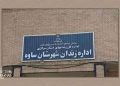

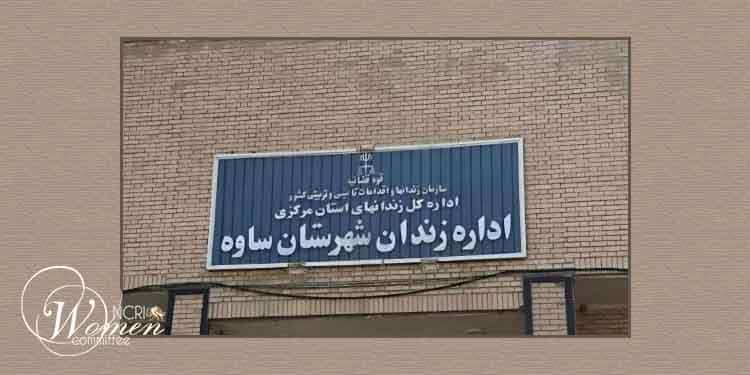
Saveh Prison, located on the Saveh-Hamedan highway, houses its women’s ward in the basement section of the prison complex. Women prisoners held there face a shortage of basic facilities, inadequate living conditions, and significant barriers to accessing healthcare and sanitary services.
The women’s ward consists of five rooms, each reportedly designed to accommodate five inmates, giving the ward a total capacity of 25 prisoners. At times, however, the number of women held in the ward has reached 40, leaving 15 inmates housed beyond its intended capacity.
The ward’s location in the basement further worsens living conditions. Women prisoners describe extreme heat during the summer and severe cold during the winter, conditions that become increasingly difficult as the prison population grows.
Limited Sanitary Facilities and Poor Living Conditions
When the population reaches 40 inmates, all women prisoners must share a single shower, two toilets, and one sink.
The ward’s only sink is located inside the shower area and is used not only for hygiene purposes but also for washing and preparing food. Prisoners say liquid soap is stored in a rusted metal container, causing rust particles to mix with the soap during use.
Cockroaches, lizards, and other pests are also reportedly present in the ward. Together, these conditions create serious sanitation concerns for women prisoners.
Lack of Safe Drinking Water
One of the most serious problems in the women’s ward of Saveh Prison is access to safe drinking water.
According to prisoners, the tap water is so salty that it is unsuitable for drinking and even difficult to use for brushing teeth. As a result, women inmates collectively purchased a household water filtration system at their own expense.
When the filtration system broke down during the summer of 2026, prisoners were left without access to safe drinking water for nearly two months. After repeatedly raising the issue with prison authorities, they were reportedly told to purchase their own water. Prisoners say prison officials took no action to repair the filtration unit or provide an alternative source of drinking water during that period.
Extreme Summer Heat and Winter Cold
Only one evaporative cooler serves all five rooms in the women’s ward.
Prisoners say the cooler is incapable of adequately cooling the entire ward, and repeated mechanical failures left the unit without effective cooling during parts of the summer.
During the summer of 2026, several women reportedly suffered symptoms associated with heat exhaustion while access to medical assistance remained limited.
Winter conditions are also difficult. Women prisoners often rely on multiple blankets to keep warm, while a shortage of hot water limits access to the ward’s only shower. According to inmates, after one person bathes, hot water frequently runs out, forcing others to use cold water.
Inadequate Healthcare for Women Prisoners
The women’s ward has no resident female doctor or nurse.
When a prisoner becomes ill, prison staff contact the men’s section to obtain medication, a process that can take several days. Access to medical treatment is further limited when inmates require injections or specialized care.
Prisoners say that in some cases injections are left to inmates themselves, raising concerns about the adequacy of medical care available inside the ward.
Prison Staff Conduct and Restrictions on Fresh Air
The head of Saveh Prison, and the deputy prison director, oversee the facility.
Six female guards work in the women’s ward in two-person shifts. According to inmates, three of them reportedly have educational qualifications below a high school diploma.
Women prisoners complain of verbal abuse and mistreatment by some guards. One inmate stated that she personally witnessed a female guard consuming opium while on duty.
The ward’s outdoor area measures approximately 100 square meters. Although prisoners are officially permitted access from 7 a.m. to 1 p.m. and again from 5 p.m. to 7 p.m., inmates say access is sometimes denied during those hours. They report being told on some occasions that outdoor access was prohibited because workers were present on the roof.
Repetitive Food and Limited Facilities
Women prisoners describe the quality of prison food as poor and the menu as highly repetitive.
Boiled eggs are reportedly served several times a week, while lentil stew and bean dishes make up a large portion of the meal rotation. Prisoners say opportunities to obtain alternative food items are limited.
The women’s ward lacked a prison store for an extended period. Although a small store has recently been opened, inmates say it frequently lacks many essential items.
The ward also has only one telephone booth. Prisoners describe difficulties obtaining access to it, while a damaged door compromises privacy during phone conversations.
According to the prison’s schedule, in-person family visits take place once a month and both visits are allowed once a week.
Women Held in Saveh Prison
Most women imprisoned in the ward were born during the 1980s. Charges attributed to inmates include drug-related offenses, theft, murder, and financial crimes.
Among those currently held are a girl born in 2007 facing fraud-related charges and a 24-year-old woman accused of complicity in murder.
During the January 2026 protests, approximately 40 detainees were transferred to Saveh Prison. Prisoners say political detainees are usually transferred to other facilities after one or two months and that those arrested during the protests were held in Saveh Prison for less than 20 days.