
Violence against women in Iran claimed two more victims.
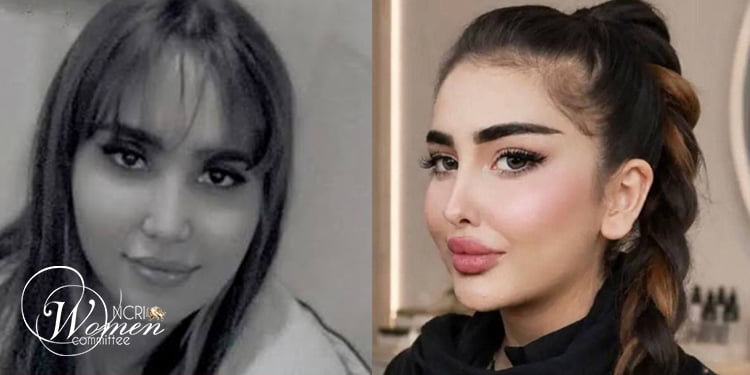
Helia Fattahi, a 19-year-old woman from Sanandaj in Kurdistan Province, was killed by her parents. According to a report by Asr Iran, the so-called “honor killing” took place on November 21, 2026. (Asr Iran, November 24, 2026)
Helia’s parents allegedly forced her to ingest 30 anti-seizure pills, severely beat her, and then suffocated her by placing a pillow over her face. Reports indicate that Helia Fattahi was two months pregnant. She had informed her family of her pregnancy a week earlier.
In another tragedy, Zahra Jadidi, a 16-year-old girl from Miandoab in West Azerbaijan Province, was stabbed to death after rejecting a marriage proposal and ending her engagement to her 21-year-old fiancé. The 21-year-old man stabbed Zahra to death in a public park in the city. Zahra had been engaged to him since childhood.
Child marriage in Iran is an organized and state-sponsored crime. This phenomenon has expanded under the regime’s religious laws and the system of Velayat-e Faqih, functioning as part of a broader mechanism for the oppression of women and social control.
Coinciding with the International Day for the Elimination of Violence against Women, women and girls continue to be killed in Iran by male members of their own families on a daily basis. The recent reports of such crimes, particularly following the killing of Sogand Sayyadi, have heightened public concern over the scale of violence against women in Iran.
The regime’s media outlets often report such cases without naming the young female victims and frequently describe them merely as “family disputes.”
In a report published on November 25, 2026, under the headline “The Law’s Silence in the Face of Violence Against Women?”, the ISNA news agency wrote: “On the International Day for the Elimination of Violence against Women, the death of Sogand has once again highlighted the need to review punishments for fathers who kill and to strengthen mechanisms for protecting women, while the Bill on Ensuring Women’s Security Against Violence remains unresolved.”
Under the misogynistic laws of the clerical regime, there is no protection system for women and girls who are continuously exposed to domestic violence. Establishing a comprehensive and binding mechanism for identifying, assessing, and managing the risks of violence against women and children is among the measures that will never be implemented under the rule of the misogynistic mullahs’ regime.