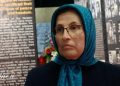


Masoumeh Qajar Azdanlou was born in 1959 into a middle-class family in Tehran and is the younger sister of Maryam Rajavi, the President-elect of the National Council of Resistance of Iran.
After completing her primary and secondary education, she entered the Iran University of Science and Technology in 1977, where she studied industrial engineering.
Masoumeh first became acquainted with the People’s Mojahedin Organization of Iran (PMOI/MEK) in 1973 while she was in high school, following the arrest and imprisonment of her brother, Mahmoud, by the Shah’s SAVAK. Through reading the biographies and court defense statements of fallen Mojahedin members, she developed a deepening understanding of the movement and devoted her heart to the PMOI from that time onward.
During those years, she organized group study sessions with her friends and classmates and visited neighborhoods in southern Tehran to better understand the hardships and suffering of underprivileged communities.
Upon entering university, she expanded her activities. During the popular uprising against the dictatorship of the Shah, Masoumeh actively took part in street demonstrations. Masoumeh was one of the student activists who played an active role in the student resistance movement during those years.
Following the anti-monarchy revolution and the establishment of the Mojahedin’s open offices, she took on various responsibilities in direct contact with the organization—working first in the university division, then in the high school division, and later in the headquarters library. Masoumeh was known for her perseverance, seriousness, and strong sense of responsibility. Deep motivation, sincere affection for her brothers and sisters in the PMOI/MEK, warmth, kindness, and hard work were among her defining traits.
In April 1981, Masoumeh Qajar Azdanlou married Massoud Izadkhah Kermani, and starting in June 1981, she and her husband worked together in the security division.
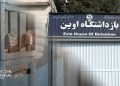
On April 2, 1982, after hours of resisting a brutal assault by Revolutionary Guards on her safe house, she was arrested while unconscious after being struck by four bullets to the neck, jaw, and arm.
Mojgan Homayounfar, a political prisoner in Evin and Qezel Hesar prisons from 1981 to 1984, recounted her first encounter with Masoumeh Azdanlou in the Evin Prison infirmary:
“It was Sizdeh-Be-Dar [the thirteenth day of the Iranian New Year, April 2], 1982. Another inmate, who had also been severely tortured, losing all her toes and suffering permanent injury to her feet, and I were in the least crowded cell of the Evin infirmary when Revolutionary Guards brought a woman in on a stretcher, thrashing in her own blood, dumped her onto the bed next to ours, and left. The woman was gravely wounded. An interrogator using the alias ‘Massoud’ came in and matched a photograph against her face, and that is how we learned she was Masoumeh Azdanlou.
Masoumeh was thrashing while unconscious, so the guards tied her to the bed with ropes. I remember that for a month or two, whenever I was taken out of the infirmary and brought back, Masoumeh’s interrogations were taking place right there on that same bed.”
The Khomeini regime, which had claimed Masoumeh was killed during the clash, subjected her to the most brutal tortures. She was not given medical attention for the bullet that remained in her neck and near to her spinal cord, severely hurting her.
The torture was so severe that she miscarried her pregnancy of several months. Masoumeh grew emaciated, and after a time could no longer walk on her own or speak and eat without great difficulty. She endured six full months of continuous torture and solitary confinement yet never uttered a word about the secrets she held.
The brave Masoumeh usually returned to the prison ward unconscious from the torture chambers yet still used every opportunity to inquire about other supporters and their condition in other prison wards as soon as she regained consciousness.
Azam Haj-Heydari also wrote in her prison memoirs, published in the book The Price of Being Human, about the torments the Revolutionary Guards inflicted on Masoumeh:
“I heard from prisoners in Ward 209 that after each interrogation and torture session, Masoumeh Azdanlou was taken away and thrown alone into one of the ward’s cells. Torture had left her so weak and helpless that she barely had the strength to call out to a guard.
One day, after she had been severely tortured, the guards opened her cell door to torment her further and threw a water snake inside.
The snake slithered over and curled up beside Masoumeh. She looked at it and recognized from its green color that it was a water snake. As it sat beside her, she gently stroked it and gazed at it with a tender expression. The snake remained curled up beside her until the end, without moving.
The executioners had apparently expected her to scream and shout when they threw the snake into her cell. They waited outside the door, listening for her reaction. But no matter how long they listened, they heard nothing. After several hours, they grew tired of waiting and opened the door on the pretext of bringing her food. The snake slithered out on its own, leaving the executioners thoroughly embarrassed.”
Mojgan Homayounfar further recalled: “In Ward 311, Masoumeh’s cell and mine were next to each other. There I learned that Masoumeh had been tortured while pregnant. One bullet had struck her jaw near her spinal cord, which is why her neck remained tilted the entire time, and another bullet had hit her arm. Because of her jaw injury, Masoumeh could not eat or talk. I remember one day hearing Masoumeh’s voice singing this song through half-closed lips:
The mirror river flows through the night,
A thousand blossoms sleeping in the riverbed…
Wave upon wave it rolls,
Laughing at the night’s spell,
Joining the blue waters…
It was clear she didn’t know the full lyrics, because she kept repeating the line ‘Wave upon wave,’ almost like a record skipping. I had to write down the full lyrics for her, which I knew well. Using the blank margins of newspapers, I wrote out the full text with a pen and gave it to the others to slip under her door. From the next day on, I could hear her voice trying to sing the whole song, though she still didn’t know the melody. Whenever she started, I would join in. She would fall silent and listen to me:
Above the singing river,
A galaxy garden in bloom,
Night burns away in between…
I would wait for her to repeat and correct herself. Then came a knock on the wall, meaning ‘Be quiet!’ Bakhtiari [a female prison guard] was walking down the corridor… It was late June or early July 1982 when one day, by mistake, Masoumeh was sent up to Ward 246 instead of Ward 209.
Masoumeh went to Room 3. One of the inmates, Zari Nahidpour, who was a student at the Iran University of Science and Technology, went over to Masoumeh and spoke with her. Masoumeh told Zari that they had demanded the address of her sister, Maryam (Rajavi), from her. ‘I told them I didn’t know,’ Masoumeh said, ‘even though I did know the address, but I didn’t give it.’”
Masoumeh was popular among her peers for her caring nature and unbreakable resilience. When not in the prison’s medical ward she was mostly held in solitary confinement. Despite being in the medical ward, they did not treat Masoumeh’s jaw until the very end. She was weak, in a lot of pain, and denied even basic painkillers. “They were outraged by her stubborn, unspoken resistance,” reported another PMOI supporter who was imprisoned at the same time as Masoumeh.
Finally, on September 30, 1982, Masoumeh Azdanlou was executed by firing squad in Evin Prison.
“On that day, the most popular Mujahideen prisoners were called for execution, including, Masoumeh Azdanloo, Shahla Hariri Motlagh, and Nadia Kaviani. When they were taken away, ward 246 was in disarray; all PMOI/MEK supporters were knocking on doors, protesting, crying and chanting from their cells. Many prisoners were taken away and tortured the next day because of that.”
Her final message to her fellow inmates before being taken to execution was: “Tell the others that my heart kept its secrets.”
The regime told her family: “We executed her because she stood firm on her position and refused to express remorse or cooperate!”