
What does it mean to be a young woman in Iran in 2026, trying to build a future through education? Welcome to another episode of podcasts of the Women’s Committee of the National Council of Resistance of Iran. We are, so glad you could join us today.
Yeah. Thanks for tuning in.
So for this deep dive, we’re exploring a really vital and, well, a very timely question, and that is, what does it mean to be a young woman trying to build a future through education in Iran in 2026?
It’s a question with a whole lot of layers. And to really understand it, we kind of have to throw away some of our most basic assumptions about how society functions.
Absolutely.
And honestly, you look at that landscape, think about how we usually conceptualize getting an education.
Right. Like a straight path. Yeah, exactly. We tend to view it as this predictable staircase. You put your head down, you study hard, you pass your exams, and you step up to the next grade.
And eventually you graduate and get a job.
Right. It’s a comforting progression. We’re like conditioned to believe that effort inherently equals advancement. Right? That if a student just puts in the work, the system will hold their weight.
But when you look at the reality of education in Iran right now, that staircase is missing half its steps. And the handrails are just… They’re actively being removed.
Yeah. They really are.
We’re talking about a reality where simply sitting at a desk requires navigating this unbelievable obstacle course of economic, social, and pressures.
It is the absolute definition of a systemic crisis. Like we aren’t discussing standard administrative hurdles here or, regular budget cuts.
No, it’s much deeper.
Way deeper.
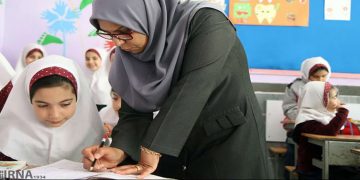
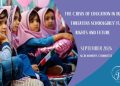
We’re looking at a fundamental dismantling of the basic right to learn. So let’s start with the very first hurdle, which is literally just getting in the front door. Because the demographic data from the start of this 2026-2027 school year is… Well, it’s jarring.
It’s completely wild.
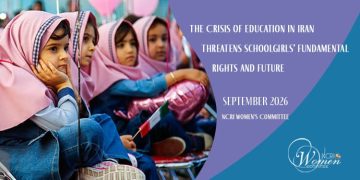
According to state officials, there was a drop of 160,000 first grade enrollments compared to the previous year. Wow. And furthermore, over 140,000 children were completely deprived of education over the past year, and girls make up nearly 45% of that number.
Which is awful. But the geographical shift in these statistics is what truly demands our attention here. Because historically, if you read reports about school dropouts in Iran, the phenomenon was largely attributed to, like, underprivileged border regions.
Right. Or deeply remote provinces where infrastructure was already pretty sparse.
Exactly. But the data shows this is no longer a localized issue. It has mutated into this national crisis that is bleeding into major metropolitan areas.
Even the capital.
Yeah. Even Tehran. Unofficial estimates are now projecting that nearly 1,000,000 children in total will be denied an education this school year.
Okay. Let’s unpack this because 1,000,000 children out of school is just a staggering figure for a modern nation. Like, is this a cultural shift? Are families simply deciding that formal schooling isn’t valuable anymore?
Not at all. It is purely an economic barricade. To understand why those million children are missing, we really have to look at the math of survival in Iran right now.
Right.
So inflation reached an official rate of 69.9% as of August 2026.
Nearly 70%.
It’s crushing. The cost of basic stationery, I’m talking pencils, notebooks, backpacks, has surged by 100% compared to just last year. So preparing a single student for the school year currently costs between 20 and 30,000,000 Tomans.
I want to contextualize that number so you, the listener, can truly grasp the weight of it. Because in an economy where the minimum monthly wage for a laborer hovers around, what, 7 to 10,000,000 Tomans?
Yeah. Right around there.
Asking a family to pay 20 to 30,000,000 Tomans just to buy basic school supplies is essentially asking them to hand over three entire months of their gross household income. Just to get one child in the door.
Imagine being a female head of household, trying to juggle rent, health care, soaring food prices. That cost is not just a heavy burden. It is a mathematical impossibility.
It’s like being promised a free public highway to drive your life forward, but every single mile has a new tollbooth, and the toll prices are tied to hyperinflation. You don’t pull off the road because you don’t want to drive. You pull off because you physically cannot afford the tolls anymore.
And when the family is forced to pull over, we have to examine who gets taken out of the car first.
Oh, this is the really grim part.
In low income households, when budgets finally snap under the pressure, the data overwhelmingly shows that girls are the first to be sacrificed. They’re pulled out of the education system to save costs.
Which triggers this terrifying domino effect. Right? The reports trace a very clear devastating pipeline.
When a young girl drops out due to severe poverty, she doesn’t just sit at home reading novels.
No. She is immediately pushed into incredibly hazardous environments. The data indicates these girls are routed directly into child labor.
Or forced child marriage.
Exactly. As families attempt to secure some sort of financial relief. And this almost inevitably escalates to domestic violence, trapping them in this generational cycle of social harm that permanently caps their economic and professional potential for the rest of their lives.
It’s heartbreaking, but let’s pivot to the girls who actually survive that initial culling. What about the families who skip meals for months, take on debt, scrape together the 30,000,000 Tomans, and somehow manage to keep their daughters enrolled?
Yeah. The ones who make it to the classroom. Right. The documentation introduces a phrase that I found incredibly haunting. It’s called learning poverty.
Yes. Learning poverty is a really vital concept for anyone analyzing global education. It describes a scenario where a student physically occupies a desk every single day, yet systematically fails to acquire foundational skills.
Like basic reading, writing, analytical comprehension.
Exactly. They are there, but they aren’t learning.
Because the physical infrastructure is literally collapsing around them. The documentation states that 16,000,000 students, and that includes 7,700,000 young girls, are entering an academic year defined by thousands of decaying, overcrowded classrooms.
We are talking about 35 to 40 plus students cramped shoulder to shoulder in a single room.
That’s not a classroom. That’s a waiting room.
Right. And when you inflate class sizes to that extreme, individualized instruction basically ceases to exist. The teacher goes from being an educator to just a crowd control officer.
Just trying to keep order.
Yeah. Iran’s Ministry of Education has suffered for years from severe compounding resource deficits and a chronic shortage of qualified educators. So, physical attendance is no longer a proxy for cognitive development. You can have perfect attendance and still graduate illiterate.
Let me push back on this for a second, though. If we look at the official average national exam scores across key academic tracks, the average in the 2021-2022 academic year was 12.50 out of 20. But by the 2025-2026 academic year, that overall average plummeted to an abysmal 10.69 out of 20.
Right. A huge drop.
My first instinct as a skeptic is to say, well, maybe the ministry just rolled out a much harder standardized test that year, Or maybe we are just seeing a lingering global hangover from pandemic learning loss. Are we sure this is a systemic collapse?
That is a totally fair question if you were looking at a functioning educational ecosystem. But when you look at the underlying mechanics here, the data tells a very different story. You don’t see a drop that steep and uniform across multiple demographics simply because a test was harder.
So, it’s something deeper.
Yeah. It points to a structural failure in knowledge transfer. Millions of students are progressing through years of schooling only to find out the system never actually gave them the competencies they need. And for young girls in marginalized areas who lack the capital to hire private tutors to bridge that gap.
Right, they can’t just buy their way out of it.
Exactly. This systemic hollowing out hits them the absolute hardest.
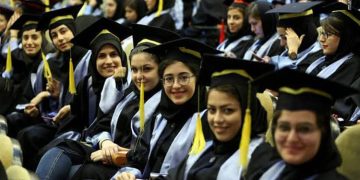
Let’s imagine that despite all these obstacles, a girl manages to finish school and get accepted to university. Does that mean the challenges are finally over or does a new set of challenges await her at university?
A completely new and arguably much more dangerous set of challenges awaits. If high school was an economic and structural obstacle course, the university campus is basically mutated into a heavily policed surveillance driven environment.
Yeah. We see this reflected in the way women’s bodies and clothing are actively regulated by the state apparatus on campus. The rhetoric used by high ranking officials reveals the exact mentality driving this. There’s a quote from, Abdul Hossein Khosrow Panah, the secretary of the Supreme Council of the Cultural Revolution. He spoke openly about enforcing mandatory hijab at universities. And he declared that a student cannot walk around the university dressed as if they were in their bedroom.
Wow. If you think about what a university is supposed to represent, you know, a sanctuary for the free exchange of ideas, intellectual exploration, coming of age, that quote entirely shatters the illusion.
It really does.
They are treating a place of higher learning as a space requiring intense moral policing. And it’s not just rhetorical posturing. Right? The disciplinary actions are concrete and severe.
Very severe. Just on the eve of the new academic year alone, over 100 disciplinary cases were suddenly opened against students.
Breakdown of those cases is just alarming. At Amir Kabir University, 16 students received sudden suspension orders and one was expelled.
Just right off the bat.
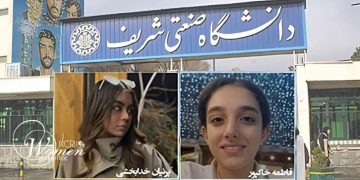
Yeah. At the University of Tehran, over 10 cases were open awaiting final rulings. And at Sharif University of Technology, disciplinary rulings hit 40 students simultaneously with at least 10 receiving outright expulsion orders.
And we cannot let those numbers just float as abstract statistics. You know, each one of those digits represents a young person whose entire career trajectory has been intentionally derailed.
Let’s name them. The reports specifically highlight students targeted right as the universities were reopening. Fatemeh Khakpour, an undergraduate chemistry student at Sharif University of Technology, expelled. Parnian Khodabakhshi, an engineering and material science student at the same university, not only expelled but slapped with a ban preventing her from pursuing any studies for five entire years.
Five years.
It’s life ruining. And it goes beyond expulsions into the criminal justice system. Maryam Javadi, a 27 year old journalism student from Isfahan, was detained, subjected to forced confessions, and sentenced to five years in prison.
The punitive measures are designed to be visible and terrifying. It’s about setting an example.
Which raises a critical logistical question for me. You have students being mass expelled or imprisoned for their activism. On the flip side, the reports note a massive brain drain of educators.
Oh, massive.
Right. With 12,000 faculty members emigrating over the past decade because they are surviving on unpaid sub $1,000 monthly salaries. How does a higher education system physically avoid total collapse when it is bleeding talent from both ends?
Well, honestly, it is functioning on life support. And the way the administration manages this dual crisis of academic drain and a severe lack of funds is by weaponizing economics against the student body.
What do you mean by that?
The government is essentially executing a strategy of bureaucratic attrition. They are shifting the crushing financial burden of running these hollowed out universities directly onto the students themselves.
And a glaring example of this mechanism is the new electronic wallet meal plan mentioned in the sources. On the surface, shifting from a physical cafeteria line to a digital wallet might sound like a modernization effort. Right? So how is this being used as a tool of attrition?
So, under the old system, food subsidies were managed at the institutional level to keep cafeteria meals universally affordable for everyone.
Makes sense.
But under this new digital plan, tiny insufficient subsidies are allocated to a student’s personal electronic wallet. And then they are forced to buy from contracted private food providers at market rates. Student union activists have raised the alarm that the allocated budget in these wallets is a fraction of what is actually needed. It completely lacks transparency, and the daily allowance doesn’t even cover the cost of a single basic meal in Tehran.
So, if you are a young woman who fought through the economic tollbooths of high school, survived the learning poverty, and traveled all the way from a remote province to study in the capital, you are suddenly hit with a wall of rising accommodation costs, transport fees, and a system that quietly prices you out of campus dining.
Exactly. It is a quiet, administrative way of forcing marginalized women out of higher education. It creates a compound fracture in the students’ ability to survive. And the institutional result of this hostility combined with the fleeing faculty, the academic standing of these historic institutions is plummeting globally.
Yeah. The rankings are tanking.
The University of Turan has dropped 45 places in international rankings, and the University of Tabriz has plummeted a 108 places.
It’s an academic free fall.
Now if you are listening to this, you might assume that an entire generation of young women facing this level of pressure, you know, the threat of expulsion, soaring costs, the literal lack of food, and heavy security would simply be crushed into submission.
I mean, I think most people would give up under that weight.
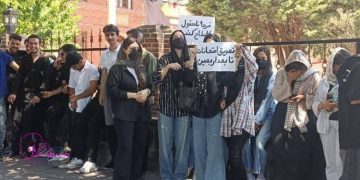
Right. But here’s where it gets really interesting because the events of September 28 at Allama University proved the exact opposite.
The gathering at Allameh University is basically a master class in understanding the current Iranian student psyche. All of these converging pressures we just talked about ignited a massive protest.
And what makes it so significant is that it refused to stay localized. It wasn’t just a petition about tuition hikes for evening programs or like a complaint about the dormitory heating.
No. It rapidly transformed into a remarkably unified front.
Led prominently by female students, this gathering really connected the dots. They protested the compulsory hijab, the crushing inflation, and the overarching political repression on campus.
They utilized their platform to address the systemic root of their misery, not just the symptoms.
And the chants documented during this protest show a profound level of structural awareness. These students weren’t asking for minor administrative tweaks. They were shouting, high prices and inflation are the scourge of the people. They chanted exploitation, unemployment, compulsory hijab for women, and the one that really anchors this entire deep dive. They speak of dialogue but point their guns at us.
That specific chant brings us to one of the most chilling encounters detailed in all the documentation we reviewed. As the protest unfolded, members of the university’s Basij organization, which operates as a state paramilitary force on campus, attempted to disperse the crowds. And they approached the students claiming they wanted to have a dialogue.
But the conditions of this supposed dialogue were terrifying.
Extremely. The reports document that while publicly calling for a conversation, some of these Basij forces were simultaneously threatening the students, explicitly telling them, we’ll put you in sacks.
Let’s dissect that phrase for a second because to an international ear, we’ll put you in sacks might sound bizarre or even cartoonish.
Right. But in the context of Iranian political and protest discourse, it is an incredibly dark, well understood threat. Being put in a sack is a direct reference to arbitrary detention.
Violent abduction.
Yes. Forced disappearances.
It means you will be taken off the street, thrown into the back of an unmarked vehicle, and you will just vanish into the security apparatus. It is the ultimate threat of violent erasure.
So, faced with a paramilitary force threatening them with disappearance, did the students scatter?
They held their ground. The documentation highlights a fearless immediate retort from the crowd. The students chanted back in unison, we don’t want your dialogue in a sack. We don’t want it.
Wow. We don’t want your dialogue in a sack.
By throwing that phrase right back at the authorities, the students completely dismantled the state’s facade. They exposed the glaring contradiction between a regime demanding polite dialogue while literally holding the threat of violent abduction over their heads.
It’s so powerful.
If we zoom out and look at the bigger picture, this single exchange demonstrates how the Iranian university has fundamentally evolved. It is no longer just a place to endure decaying classrooms or economic hardship. It is crystallized into a frontline of active, highly conscious resistance against a religious dictatorship.
It paints a picture of a generation with nerves of steel. I mean, these young women are looking at an educational highway filled with impossible tolls. They are sitting in overcrowded rooms where the ceiling is literally and academically caving in. Yeah. They face expulsion, a ruined career, or five years in prison, simply for the clothes on their back or the words they publish. Yet, they are stepping up to the front line and leading the charge.
The constant threat of arrest, the disciplinary hearings, the economic strangulation none of it has successfully pacified them. They maintain a highly visible vocal presence. The documentation makes it clear that this reflects an unbreakable determination among Iran’s courageous students to fundamentally alter the existing conditions of their society.
Which brings me to a final thought for you, the listener, to mull over as we conclude today’s exploration.
If the very act of seeking an education, just trying to learn chemistry or journalism, requires a person to develop this level of staggering battle tested bravery. What happens to a society when that generation finally graduates into the real world?
It’s a great question.
You cannot forge that kind of resilience under immense pressure and expect it to just quietly disappear when they leave the campus gates.
It is a profound realization and one that is currently shaping the long term future of the entire nation.
We invite you to support the Iranian people’s resistance and its brave women by visiting wncri.org for more information. We also strongly urge you to consider making a donation to the NCRI Women’s Committee to support their ongoing efforts.
Thank you so much for your time, your curiosity, and your willingness to deeply engage with the reality these students face every day.
Until the next deep dive, take care. Warm farewell from both of us.