
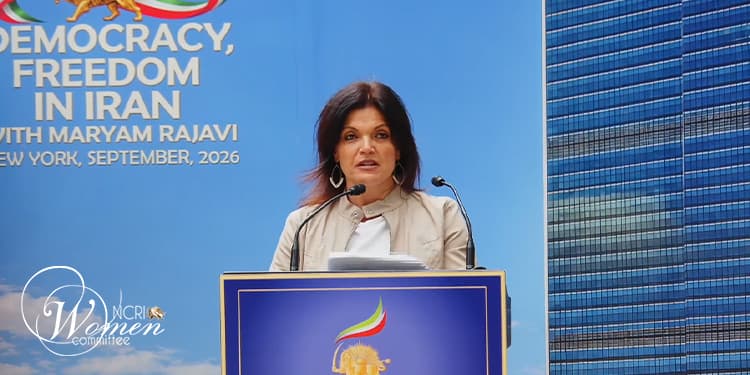
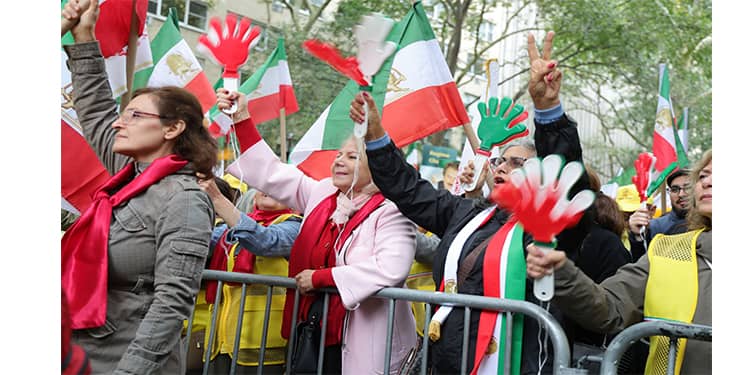
NEW YORK, Sept. 22, 2026 – Thousands of freedom-loving Iranians and supporters of the Iranian Resistance gathered outside United Nations headquarters for two days, to protest the reception of Masoud Pezeshkian, arguing that the Iranian regime’s president does not represent the people of Iran.
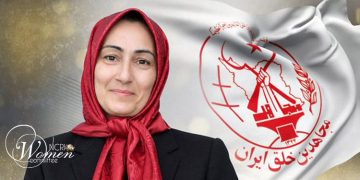
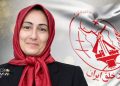
Zahra Amanpour, a successful entrepreneur, women’s rights advocate, and a strong voice for democracy and human rights, was one of the speakers at this gathering.
Zahra Amanpour was born in Tehran during the 1979 Revolution and, as an infant, fled Iran with her family. Her father joined the Iranian Resistance and was killed by the regime in the summer of 1988. Rather than allowing this loss and grief to limit her life, she transformed it into a purposeful motivation and became a strong voice for democracy and human rights.
The text of her speech at this gathering is presented below:
Friends, today, as the leaders of the world gather inside the United Nations, I want to talk to you about two Irans. Two parallel worlds representing two very different visions and, ultimately, two very different destinies for the Iranian people.
For more than a century, Iranians have struggled for the right to determine their own future, and twice, dictatorship has stood in their way. Under the Shah, political power was concentrated in a monarchy. Opposition was suppressed, political prisoners were tortured, and SAVAK became a symbol of fear and repression.
So, in 1979, millions of Iranians took to the streets. They did not march because they wanted a religious dictatorship. They marched because they wanted freedom, political participation, and a government that belonged to them. But that revolution was stolen.
The Shah’s crown was replaced by the mullah’s turban, and political repression was joined by religious coercion. Tens of thousands of political prisoners have been executed, protesters have been shot in the streets, and women have faced a system of control over their bodies, their choices, and their place in society. But running alongside this history of dictatorship is another history: the history of organized resistance.
The People’s Mojahedin of Iran, also known as the PMOI or the MEK, was founded 61 years ago on the conviction that the Iranian people deserve freedom and popular sovereignty. And all of you standing here today are part of that history. Your presence is a testament to a struggle that has endured across generations and to an unwavering commitment that replacing one dictatorship with another will never be enough.
That brings us to the two Irans before us today. In one, authority is concentrated at the top. Under the monarchy, sovereignty ultimately rested with the Shah. Under the Islamic Republic, ultimate authority rests with the Supreme Leader and institutions the Iranian people cannot freely choose or remove.
The alternative presented by the Iranian resistance is a democratic republic based on elections, political pluralism, separation of religion and state, equality, minority rights, and the rejection of hereditary rule. And perhaps, nowhere is this contrast more powerful than in the role of women.
Is Democracy Possible Without Women’s Participation and Leadership?
The Iranian regime has spent more than four decades writing discrimination against women into law and using the power of the state to restrict their choices and participation in public life. The MEK stands as a majority-women-led movement that has transformed women’s freedom from a promise into a governing principle, embedding equality into its vision for Iran’s political future.
For more than three decades, women have assumed the organization’s highest executive responsibilities. This month, Mahnaz Meimanat became the 10th successive woman to serve as Secretary General of the People’s Mojahedin of Iran.
Mahnaz entered the struggle as a university student. Her mother was killed by the Revolutionary Guards. Two of her brothers were executed, including one during the 1988 massacre. Yet, she continued taking on greater responsibility until ultimately being elected the leader of the organization.
Think about that contrast: a regime that has devoted enormous power to restricting women, confronted by a resistance movement in which women have spent decades exercising political and organizational authority.
Neither Monarchy nor Religious Dictatorship: What’s the Alternative?
These are the two destinies before Iran. One says power belongs to the Shah or a Supreme Leader. The other says sovereignty belongs to the Iranian people.
Iranians did not struggle against monarchy to create religious tyranny, and the answer to religious tyranny is not to recreate monarchy. The unfinished promise of generations of Iranian struggle is the right of the Iranian people themselves to determine what comes next.
That is the Iran I believe in, an Iran where women and men are equal, beliefs are freely chosen, leaders are elected rather than inherited, and governments belong to the people rather than the people belonging to their government.
That is the Iran that my father, Mehrtash Amanpour, fought for and died for in 1988, and this is the Iran I want my children to inherit.
That is the Iran that every Iranian deserves. The future of Iran belongs to the Iranian people.