
Sunday, October 4, 2026
  • English
  • Français
  • فارسی
  • عربى
PODCASTS
NCRI Women Committee Women Resistance Freedom
  • Home
  • NEWS
    • Women’s News
    • Articles
    • Statements
  • PUBLICATIONS
    • Monthlies
    • Documents
    • Reference Library
  • ABOUT US
    • The NCRI Women’s Committee
    • Gender Equality
    • Women’s Platform
  • MARYAM RAJAVI
    • Maryam Rajavi
    • Maryam Rajavi Speeches
    • The Plan on Women’s Rights and Freedoms
    • Ten-Point Plan for the future of Iran
  • VANGUARDS
    • Fallen Trailblazers of Iran’s Freedom
    • Fallen Heroes of Iran Uprisings
    • Heroines in Chain
    • Women of Iranian Resistance
    • Famous Women
    • Women in History
  • EVENTS
    • IWD Conferences
    • Activities
    • IWD Speeches
    • Solidarity
  • VIDEO
    • Videos
    • IWD Videos
  • PODCAST
  • DONATE
  • CONTACT US
No Result
View All Result
NCRI Women Committee Women Resistance Freedom
  • Home
  • NEWS
    • Women’s News
    • Articles
    • Statements
  • PUBLICATIONS
    • Monthlies
    • Documents
    • Reference Library
  • ABOUT US
    • The NCRI Women’s Committee
    • Gender Equality
    • Women’s Platform
  • MARYAM RAJAVI
    • Maryam Rajavi
    • Maryam Rajavi Speeches
    • The Plan on Women’s Rights and Freedoms
    • Ten-Point Plan for the future of Iran
  • VANGUARDS
    • Fallen Trailblazers of Iran’s Freedom
    • Fallen Heroes of Iran Uprisings
    • Heroines in Chain
    • Women of Iranian Resistance
    • Famous Women
    • Women in History
  • EVENTS
    • IWD Conferences
    • Activities
    • IWD Speeches
    • Solidarity
  • VIDEO
    • Videos
    • IWD Videos
  • PODCAST
  • DONATE
  • CONTACT US
No Result
View All Result
NCRI Women Committee
No Result
View All Result
Home Articles
Women Teachers in Iran Struggle with Inflation and Low Wages

Women Teachers in Iran Struggle with Inflation and Low Wages

October 4, 2026
in Articles, Women's News
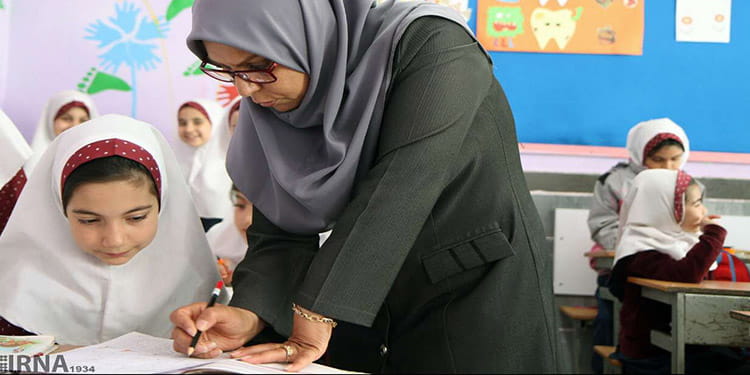
Every year, October 5, World Teachers’ Day, provides an opportunity to recognize millions of teachers around the world and to reaffirm the reality that quality education is impossible without supporting teachers.

According to Education at a Glance 2025, the average statutory salary for teachers with 15 years of experience in OECD countries ranges from approximately $55,725 per year at the pre-primary level to $63,925 at the upper-secondary level. In these countries, teachers’ actual earnings at the primary and secondary levels average around 83 to 91 percent of the earnings of people with university-level education.

Even in wealthy countries, however, teachers’ circumstances are far from ideal. In Iran, however, the issue unfolds in a different context: high inflation, declining purchasing power, housing and living costs, delays or discrepancies in the payment of certain benefits, differences among types of educational employment contracts, and the need for most teachers to take on a second job.

For a teacher, the question is how much remains from the monthly pay slip after paying rent or housing installments, food, transportation, medical expenses, children’s education, and other essential costs.

For women teachers, the issue has additional dimensions.

This article examines reports and published accounts concerning the situation of teachers in Iran and addresses some of the most significant economic, financial, employment, and livelihood challenges facing teachers, particularly women teachers.

Women Teachers: One Formal Job and One Invisible Shift

For women teachers, livelihood concerns cannot be explained solely by the amount shown on a monthly pay slip.

Many women, after completing their school day, also assume responsibilities at home, including childcare, household duties, or caring for elderly family members.

This part of their work is generally not reflected in their pay.

The situation of many women teachers can therefore be described simply as follows:

First shift: Educational work for a salary
Second shift: Unpaid domestic and caregiving work
Third shift: A second job, when income is insufficient to cover living expenses

Under such circumstances, economic pressure can become multilayered for women teachers.
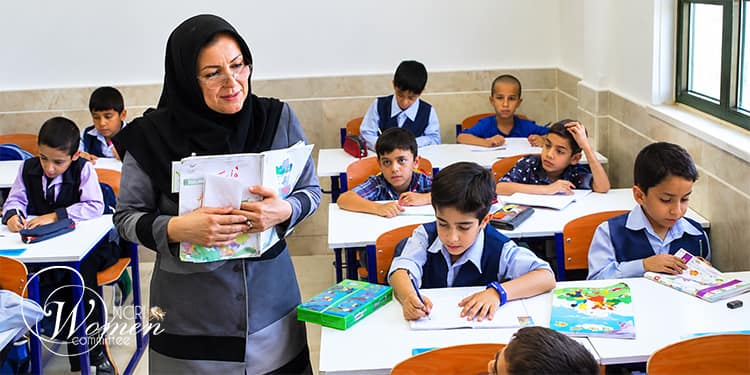
Women Teachers in Iran Struggle with Inflation and Low Wages

What Happens to Purchasing Power?

One of the main challenges facing teachers in Iran is the gap between nominal wage increases and rising living costs.

In recent years, increases in the wages of government employees have been regularly addressed in annual budgets. Under inflationary conditions, however, a wage increase can improve living standards only if it keeps pace with the rising cost of essential goods and services.

For example, reports concerning the 2026 budget proposed a graduated increase in government employees’ wages, with higher percentage increases for lower-income groups. At the same time, economic reports have warned about the gap between wage growth and inflation.

“A teacher who performs the sacred work of educating and raising the next generation earns 180 million rials (approx. $70) a month, while the minimum wage for employees has reached 400 million rials.

“A teacher does not only have transportation expenses. In Tehran, a teacher may have to travel from one part of the city to southern Tehran, or from the south to western Tehran. In some cities, teachers have to travel several kilometers to reach rural areas. Who pays for these costs? A teacher who works online and uses the national student network also has to pay for internet access. Who covers that expense?

“These are not one or two minor expenses that can simply be overlooked. They cannot easily be calculated. When we say that a teacher’s income is 180 million rials, we must ask whether this amount is enough to run a household. Can a family afford its basic necessities, transportation costs, and other living expenses for an entire month on such an income? A teacher’s income is not even enough for pocket money.” (Jahan-e Sanat, September 30, 2026)
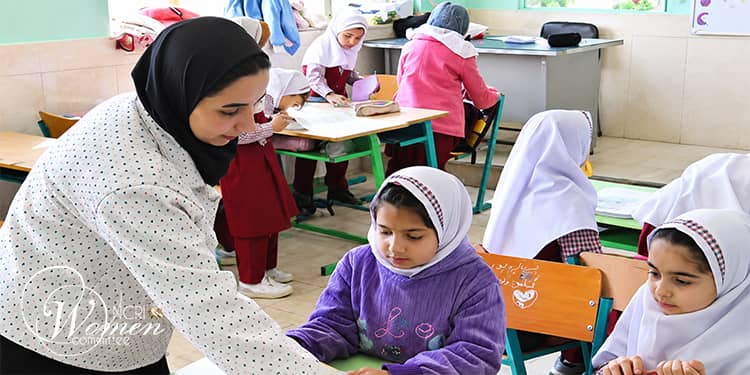
Women Teachers in Iran Struggle with Inflation and Low Wages

When Teaching Is Not Enough to Make a Living

One indication of the economic pressure facing teachers is the need for most of them to take on a second or even a third job.

This is not a new phenomenon. Media reports about teachers holding multiple jobs have been published for years, and more recent reports have also highlighted cases of teachers turning to private tutoring or other forms of work to supplement their income.

Having a second job does not simply mean working a few extra hours.

After the school day ends, a teacher must prepare for the next class, review assignments, assess students, and keep professional knowledge up to date. When these hours are devoted to a second job, time for rest and family is also reduced.

Part-Time Teachers: The Most Vulnerable Segment of the Education Workforce

Part-time teachers and other groups do not enjoy the job security and benefits available to permanent employees.

In recent years, the payment of wages and employment status of part-time teachers have repeatedly been raised in media reports.

For workers whose income is lower from the outset and whose job security is more limited, rising housing, food, and medical costs can create significantly greater pressure.

For women, this economic insecurity can also make it more difficult to plan for the future, start a family, have children, or pursue further education.
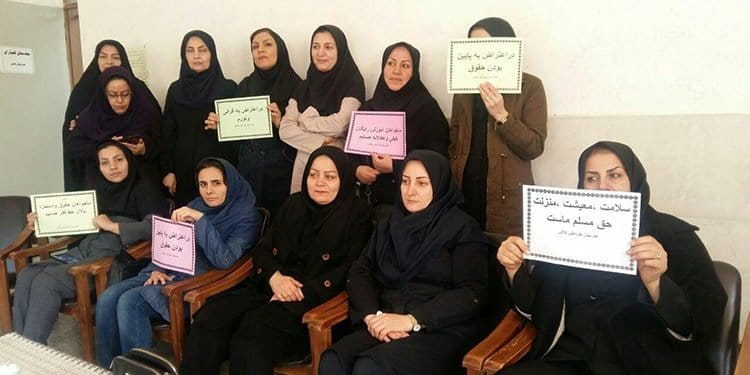
Women Teachers in Iran Struggle with Inflation and Low Wages

Teachers Who Pay a Price for Their Professional Demands

Alongside economic concerns, the situation of some teachers’ union activists represents another dimension of the issue.

In recent years, reports have emerged of summonses, arrests, convictions, and employment restrictions involving a number of teachers and union activists. A 2026 report by the Women’s Committee of the National Council of Resistance of Iran also referred to cases of judicial action against women teachers and union activists.

For example, the report referred to the case of Kowkab Badaghi Pegah, a teacher and union activist in Khuzestan, and the confirmation of her one-year prison sentence.

A teachers' rights activist Iran: Fatemeh Tadrisi and Atekeh Rajabi among arrested teachers
Kowkab Badaghi stands by a white board, which reads, “Brave people make history.”

This aspect of the issue highlights another dimension of teachers’ circumstances: for some, demanding better working and economic conditions is not merely a financial matter and may be accompanied by administrative or judicial consequences.

A Major Contradiction

Society expects teachers to help shape the future of the next generation. Yet teachers themselves must also be able to build a secure future for themselves and their families.

World Teachers’ Day provides an opportunity to ask precisely this question:

If quality education requires motivated, qualified teachers who have economic security, can a strong education system be expected without addressing teachers’ livelihood and employment challenges?

In Iran, reports over the past year concerning wages, the teacher ranking system, part-time teachers, second jobs, staff shortages, retirement, and the Teachers’ Reserve Fund indicate that teachers’ livelihoods remain a significant issue within the education system.

Among these teachers, women face a combination of professional, economic, and family responsibilities that requires particular attention.

World Teachers’ Day is not only a day to recognize those who educate children and young people. It is also a reminder that a teacher’s dignity must be reflected in their wages, job security, working conditions, and economic future.

Teaching should not be a profession that forces people to choose between educating others and making a living.
Tags: educationIran TeachersPoverty
ShareTweetPinShareSendShareShare

Related Posts

September 2026 Report: The Crisis of Education in Iran Threatens Schoolgirls’ Fundamental Rights and Future

September 30, 2026
September 2026 Report: The Crisis of Education in Iran Threatens Schoolgirls’ Fundamental Rights and Future

As the new academic year (2026–2027) begins, official regime media reports present an alarming picture of the crisis of education in Iran, marked by a steep drop in...

Read moreDetails

New Academic Year 2026 in Iran: Female University Students Face Security, Economic, and Educational Pressures

September 28, 2026
New Academic Year 2026 in Iran: Female University Students Face Security, Economic, and Educational Pressures

At the beginning of the new academic year, students at universities across Iran are facing a range of problems and restrictions. Security and disciplinary pressures at universities, particularly...

Read moreDetails

Low Pay and Mounting Pressure Are Deepening Iran’s Nursing Crisis

September 24, 2026
Low Pay and Mounting Pressure Are Deepening Iran’s Nursing Crisis

The nursing crisis in Iran has deepened significantly in recent years, with the country’s nursing workforce and broader healthcare system facing increasingly difficult conditions. Reports and documented data...

Read moreDetails

Working to Survive: Iranian Women Between Poverty, Exhaustion, and Lack of Labor Protection

August 28, 2026
Working to Survive: Iranian Women Between Poverty, Exhaustion, and Lack of Labor Protection

For many Iranian Women, losing a job or failing to find sustainable employment is not just about being unemployed; it marks the beginning of a cycle of economic...

Read moreDetails

The Hidden Victimization and Exploitation of Widows in Iran

July 23, 2026
The Hidden Victimization and Exploitation of Widows in Iran

Exploitation of widows in Iran Introduction: The survival of the mullahs' regime rests on two fundamental pillars: overt suppression in society and institutionalized misogyny within its laws. The...

Read moreDetails

Documents

Sign the Petition: Demand Urgent International Action to Protect Women Prisoners in Iran Iran: Political Prisoner Used as Leverage Against Her Imprisoned Brother

Sign the Petition: Demand Urgent International Action to Protect Women Prisoners in Iran

September 20, 2026

Iran's Women Prisoners: A Human Rights Emergency Demanding Immediate International Action September 2026 To: The UN High Commissioner for Human...

Call for Immediate Action to Halt the Death Sentence of Arghavan Fallahi

Sign our Statement to Halt the Death Sentence of 25-Year-Old Political Prisoner Arghavan Fallahi

July 10, 2026

Statement Calling for Immediate Action to Halt the Death Sentence of 25-Year-Old Political Prisoner Arghavan Fallahi We express our profound...

The Ineffectiveness of Population Policies in Iran: Economy, Aging, and the Overlooked Rights of Women

The Ineffectiveness of Population Policies in Iran: Economy, Aging, and the Overlooked Rights of Women

July 10, 2026

Abstract: A compilation of official data, media reports, and disclosures published in April, May, and June 2026 demonstrates that Iran...

Monthlies

September 2026 Report: The Crisis of Education in Iran Threatens Schoolgirls’ Fundamental Rights and Future
Monthlies

September 2026 Report: The Crisis of Education in Iran Threatens Schoolgirls’ Fundamental Rights and Future

September 30, 2026
August 2026 Report: The Epic of Women Who Said 'No' to the Executioners!
Monthlies

August 2026 Report: The Epic of Women Who Said ‘No’ to the Executioners!

September 1, 2026
July 2026 Report: Death Sentences for Women Rising Up to Overthrow the Mullahs' Regime
Monthlies

July 2026 Report: Death Sentences for Women Rising Up to Overthrow the Mullahs’ Regime

July 31, 2026
June 2026 Report: Working Iranian Women Erased from Labor Market
Monthlies

June 2026 Report: Working Iranian Women Erased from Labor Market

July 5, 2026

Articles

Women Teachers in Iran Struggle with Inflation and Low Wages

Women Teachers in Iran Struggle with Inflation and Low Wages

October 4, 2026

Every year, October 5, World Teachers’ Day, provides an opportunity to recognize millions of teachers around the world and to...

Health Crisis and Overcrowding in the Women's Ward of Fardis Prison

Health Crisis and Overcrowding in the Women’s Ward of Fardis Prison

October 2, 2026

Fardis Prison in Karaj, also known as Kachouii Prison or the Fardis Correctional Facility, is in the Hosseinabad area of...

New Academic Year 2026 in Iran: Female University Students Face Security, Economic, and Educational Pressures

New Academic Year 2026 in Iran: Female University Students Face Security, Economic, and Educational Pressures

September 28, 2026

At the beginning of the new academic year, students at universities across Iran are facing a range of problems and...

The Fallen for Freedom

Noushin Namvar: A Woman’s Glorious Battle for Liberation
Fallen Trailblazers of Iran’s Freedom

Noushin Namvar: A Woman’s Glorious Battle for Liberation

October 3, 2026
Mojgan Mahdavi: From U.S. Academia to the Frontlines of the Iranian Resistance
Fallen Trailblazers of Iran’s Freedom

Mojgan Mahdavi: From U.S. Academia to the Frontlines of the Iranian Resistance

August 21, 2026
Nasrin Shahrabi: A Lifetime Dedicated to Fighting Religious Fascism in Iran
Fallen Trailblazers of Iran’s Freedom

Nasrin Shahrabi: A Lifetime Dedicated to Fighting Religious Fascism in Iran

August 19, 2026
The Unbroken Smile: How Sara Mokhtar, a Former Airline Executive Became the Vanguard of the Iranian Resistance
Fallen Trailblazers of Iran’s Freedom

The Unbroken Smile: How a Former Airline Executive Became the Vanguard of the Iranian Resistance

June 28, 2026

ABOUT US

NCRI Women Committee

We work extensively with Iranian women outside the country and maintain a permanent contact with women inside Iran. The Women’s Committee is actively involved with many women’s rights organizations and NGO’s and the Iranian diaspora.
The committee is a major source of much of the information received from inside Iran with regards to women. Attending UN Human Rights Council meetings and other international or regional conferences on women’s issues and engaging in a relentless battle against the Iranian regime’s misogyny are part of the activities of members and associates of the committee.

CATEGORIES

  • Activities
  • Articles
  • Documents
  • Fallen Heroes of Iran Uprisings
  • Fallen Trailblazers of Iran’s Freedom
  • Famous Women
  • Heroines in Chain
  • IWD Conferences
  • IWD Speeches
  • IWD Videos
  • Maryam Rajavi
  • Maryam Rajavi Speeches
  • Monthlies
  • Podcast
  • Reference Library
  • Solidarity
  • Statements
  • Videos
  • Women in History
  • Women in Leadership
  • Women of Iranian Resistance
  • Women's News

BROWSE BY TAG

Child marriage coronavirus education execution forced hijab Gender Gap Generation Equality Honor killings Iran Teachers Maryam Akbari Monfared Nurses Plan on Women's Rights and Freedoms Poverty Prisoners Protests rural women Saba Kord Afshari The girl child Violence against women Women's Leadership Women Heads of Household Zeinab Jalalian

The copyright of all the material published on this website has been registered under © 2016 the Women’s Committee of the National Council of Resistance of Iran. To obtain permission to copy, redistribute or publish the material published on this website, you should write to the NCRI Women’s Committee. Please include the link of the original article on our website, https://wncri.org

Welcome Back!

Login to your account below

Forgotten Password?

Retrieve your password

Please enter your username or email address to reset your password.

Log In

Add New Playlist

No Result
View All Result
  • Home
  • News
    • Women’s News
    • Articles
    • Statements
  • Publications
    • Monthlies
    • Documents
    • Reference Library
  • About Us
    • The NCRI Women’s Committee
    • Gender Equality
    • Women’s Platform
  • Maryam Rajavi
    • Maryam Rajavi
    • Maryam Rajavi Speeches
    • Ten Point Plan for Iran
    • The Plan on Women’s Rights and Freedoms
  • Vanguards
    • Fallen Trailblazers of Iran’s Freedom
    • Fallen Heroes of Iran Uprisings
    • Heroines in Chain
    • Women of Iranian Resistance
    • Famous Women
    • Women in History
  • Events
    • IWD Conferences
    • Activities
    • IWD Speeches
    • Solidarity
  • Video
    • Videos
    • IWD Videos
  • Podcast
  • DONATE
  • Contact us
  • فارسی
  • عربی
  • Français

The copyright of all the material published on this website has been registered under © 2016 the Women’s Committee of the National Council of Resistance of Iran. To obtain permission to copy, redistribute or publish the material published on this website, you should write to the NCRI Women’s Committee. Please include the link of the original article on our website, https://wncri.org