
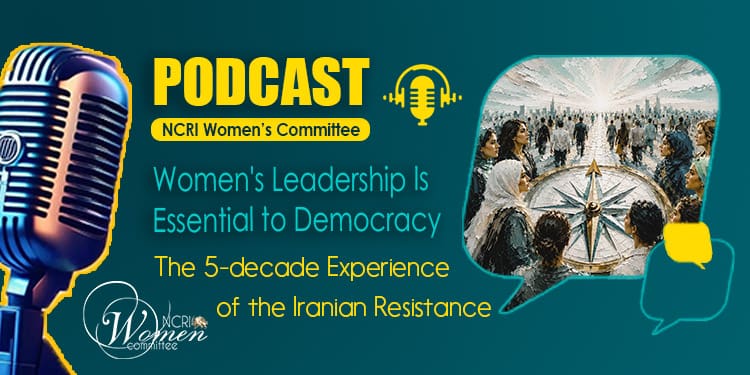
The 5-decade Experience of the Iranian Resistance
Welcome to another episode of podcasts of the Women’s Committee of the National Council of Resistance of Iran. We have a really fascinating deep dive for you today. We really do.
Yeah. So I want you to imagine something for a second. Imagine a government takes power after a massive nationwide revolution. The old regime is just completely gone.
Right. It’s essentially a blank slate.
Exactly. A total blank slate. Yeah. So what is the new leadership’s absolute first priority? You know, is it fixing a broken economy, securing the borders, rebuilding the infrastructure?
You’d think so, right?
You would. Yeah. But no, their very first legislative move is to dictate exactly what women must wear in public.
Yeah. It’s a striking historical detail.
It really is. And today, we’re going to exactly explore why that is, what it tells us about the structural nature of freedom itself. Yeah!
The central thesis of this essay is bold. It argues that true, sustainable democracy is a structural impossibility unless women have equal participation and a decisive role in political leadership.
Yeah. Structural impossibility. Those are strong words.
Very strong. It doesn’t frame women’s rights as a byproduct of a free society like something you get around to once the real work of government is done. Right.
It’s not an afterthought. Exactly. It frames women in leadership as the absolute prerequisite for a free society.
And that is the crucial distinction that sets this document apart. The text uses the past fifty years of Iran’s history as a profound case study to prove this exact point.
It’s a really deep case study too. It is. It argues that women’s freedom isn’t some offshoot of democracy. It is its very core. The essay insists that while you cannot build a democratic house on a foundation that explicitly excludes half the population.
It’s basically an architectural impossibility. Exactly. So, to understand why the source argues that women are the absolute core of democracy, we first have to look at how they’ve been treated as the primary threat to authoritarianism over the last fifty years.
Right. They are painted as the ultimate threat.
The text paints a picture of women not as passive victims of history but as the vanguard of change. It points out a striking historical detail. Iranian women were turning out in the millions against the Shah in the 1979 revolution.
Millions. They were a massive pivotal force in toppling a dictatorship.
But then, almost immediately after that revolution, the new ruling religious dictatorship began systematically stripping away their fundamental freedoms.
Right. Starting specifically with the imposition of the compulsory hijab. Yeah.
So why did the new religious dictatorship prioritize restricting women’s dress before literally anything else?
What’s fascinating here is the strategic calculation. The regime didn’t just impose the hijab out of a vacuum or purely out of religious zeal. Okay. So what was the logic?
The regime clearly recognized that women carried the society’s most progressive democratic demands. They were the engine of the revolution’s forward momentum. Therefore, to shackle the entire society and assert absolute dominance, the regime knew they strategically had to subdue women first.
That makes a lot of sense. Yeah. Imposing the hijab wasn’t just a cultural rule. It was a compliance test. It’s like, well, it’s like a hacker pinging a network.
That’s a great way to put it. Right. Because if a state can breach the firewall of personal autonomy, if they can enforce control over something as intimate and fundamental as what half the population wears on their bodies, they know they have the clearance to rewrite the whole system.
Exactly. They’ve established the baseline that the state owns the public square and the private individual. Which is terrifying.
The suppression of women as a foundational mechanism for wider repression. Subduing women was the necessary first step.
Because once you successfully criminalize the daily existence and choices of half the population, you’ve built the infrastructure to usher in a broader suppression of all democratic freedoms for everyone. Precisely.
And the escalation of that suppression requires us to pause for a moment because it is absolutely harrowing. The dark era of repression during the 1980s.
It’s a very difficult history to read. It is. We aren’t just talking about a loss of civil liberties here, we are talking about an industrial scale of violence.
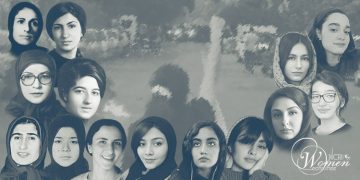
The text highlights the unprecedented execution of 12 teenage girls whose identities weren’t even verified before they were killed.
We really need to let that sink in because it speaks to the underlying mechanism of the state: unverified identities. Just completely anonymous to the system that killed them. Right.
When a bureaucratic machine of repression is moving so fast and with such lethal intent that the individual humanity, even the basic name of a teenage girl, is completely erased, you are looking at a system where terror is the primary objective.
It’s not about justice at all. No. Not even a twisted version of it. The goal is total psychological domination. And tens of thousands fell victim to these execution squads during that era, and the demographics of those victims is where it gets incredibly chilling.
Yeah, the age range is shocking. It highlights girls as young as 10 and 13, pregnant women, and mothers over the age of 70. The sheer indiscriminate nature of the violence against women across all life stages is just staggering.
It is a devastating catalog of state violence. It demonstrates that the resistance to the dictatorship was incredibly broad based among women, spanning entire generations.
And crucially, it shows that the state’s fear of that resistance was equally absolute. Because they were terrified of them. Right. The regime didn’t spare a 10-year-old or a 70-year-old because, in the logic of this authoritarian structure, any female autonomy whatsoever is a mortal threat to the system’s survival. Right.
Which brings us to the concept of Velayat-e Faqih. Yeah. It translates roughly to the absolute rule of the jurisprudent. Yes. That’s the core theological and political doctrine.
I want to make sure we understand the mechanics of this. Why is female autonomy such a specific existential threat to that exact structure?
Because absolute rule requires absolute submission. A system like Velayat-e Faqih is basically a Jenga tower built on the premise of one infallible, unquestionable authority at the top. Okay, I see where this is going.
Right, so if any demographic, particularly one making up half the population, demands individual choice, bodily autonomy, or equal standing, it threatens to pull the foundational block out from under that tower.
Wow, yeah. If women can question the authority over their own lives, then the absolute nature of the entire regime is shattered. Exactly. And that deeply traumatic structural history directly informs the current landscape.
Iranian women have been navigating these intricate, incredibly hostile conditions for decades. And paying a massive price. A huge price. And because they have paid this immense price, they resolutely reject all patriarchal and authoritarian structures.
Yes, they are entirely done with it.
They reject both the monarchical past and the current religious system. They have learned through devastating experience that any system rooted in unquestionable authority is fundamentally incompatible with their freedom.
Because women have borne the brunt of this repression and actively guided the resistance, they must be central to whatever comes next.
Here’s where it gets really interesting. The essay shifts from historical analysis to establishing a framework for the future.
Right, it pivots to the way forward. Yeah, and makes a very provocative argument about the danger of superficial change. It says that a government built on gender discrimination cannot become democratic just by shuffling the figures in power or changing its name.
It’s a really important distinction.
But I struggle with this a bit, playing Devil’s advocate for you, the listener.
When you’re overthrowing a brutal regime, people are literally dying. Isn’t demanding perfect structural gender equality right out of the gate letting the perfect be the enemy of the good?
That’s a common pushback.
Right, like, surely any movement that removes a dictator is a step in the right direction.
The counterargument is that if the underlying structure of a society remains rooted in monopoly, exclusion, and domination, a mere change of regime fails to transform the actual power relations.
So, you’re saying that if the core operating system of a society relies on one group having power over another, doesn’t matter who is sitting in the big chair, the machine is still designed to oppress. Precisely.
If the political culture continues to marginalize half the population, you haven’t achieved democracy, you have just reproduced authoritarianism under a new brand name.
That is a harsh but necessary reality check.
It really is. At historic turning points, the ultimate success of overthrowing a dictatorship depends entirely on the character of the political alternative stepping up to take its place. And the defining feature of that character is women’s active participation in political leadership.
To that end, the document outlines four very strict questions. It’s a rigorous benchmark that any political force claiming to be democratic must answer.
Right. It’s a true litmus test.
If you are designing the blueprint for a new society, the text demands you look first at the leadership room, you know, who is actually holding the pen when the laws are written.
So, the first question is, do women hold a real decisive presence in leadership and political decision making bodies?
Notice the emphasis on a real presence there.
Yeah. What does that mean in practice?
The source isn’t asking about token appointments or, you know, advisory boards or putting a few women in visible but powerless positions to look good for international cameras.
It’s a PR move, basically. Right. No PR moves. It’s asking if women are the ones architecting the new state. Exactly.
And that leads right into the next crucial part of this blueprint. It’s one thing to have women in the room, but what are they actually implementing? Right.
The second question is if the political force has translated gender equality into an operational principle rather than just mere rhetoric. Which is the difference between a nice press release and an actual legal framework.
Yes. Operationalizing equality means it is woven into the penal code, the economic structure, the educational system. It means creating measurable, enforceable laws that guarantee equal pay, equal rights in marriage and divorce, and equal protection under the law.
So, it’s not just a suggestion? No, it demands that equality is an actionable reality, not just a lofty ideal mentioned in campaign speeches.
Which brings us to the bedrock of individual autonomy.
The third question we ask is, does this new political force fully recognize a woman’s right to free choice?
That is huge! It really connects right back to the hacker analogy we discussed earlier with the compulsory hijab. If a state dictates personal choices, what you wear, where you travel, what you study, simply isn’t democratic.
Right, because free choice isn’t a perk of a free society, it is the raw material it’s built from.
Exactly. And finally, the most profound question of all. Is the force prepared to redefine political power itself around the equal participation of men and women?
That’s the structural shift right there.
Look at how demanding this benchmark is for you as a listener trying to evaluate a political movement. It completely moves gender equality away from being a nice to have ideal. Like something you’ll get to eventually once the economy is fixed. Right. It puts it front and center.
This text makes equality the absolute non-negotiable defining feature of a legitimate democratic alternative.
And if a movement can’t pass this specific four-part structural test, it will inevitably fail to deliver true democracy. Because you cannot forge a democracy using the exact same exclusionary political culture that you were trying to replace.
The means have to match the ends. Which naturally leads us to ask, well, if a movement can successfully answer those questions, and they do genuinely integrate women into leadership.
Wait, let me rephrase that. When they actually integrate women, what does that look like in practice? Right. How does it function? Yeah.
How does it change the society? The text argues it fundamentally alters the nature of power itself. It does and the source makes a very careful critical distinction here to prevent any misunderstandings. It explicitly states that female leadership is not anti-male.
Right. This isn’t about just flipping the hierarchy, so women are on top and men are at the bottom.
That would just be running the exact same corrupted software. To go back to our tech analogy, integrating women into leadership is like changing the entire operating system of a computer rather than just opening a different app. That’s a perfect analogy. You aren’t just swapping out who is clicking the mouse. You are fundamentally changing how the machine processes information.
So how does this structural change impact men?
If we connect this to the bigger picture, female leadership is an emancipatory transformation for everyone, including men. Oh wow, okay. Yeah, it dismantles sexist ideology and systems of domination outright. When you remove a system that requires one group to dominate another in order to maintain its stability, you actually free up both groups.
I think we really need to give this concept some spotlight because it’s a massive shift in how we usually think about power. The oppressor is trapped by the system of oppression just as the oppressed are, albeit in very different ways. Absolutely. Patriarchy harms men too. It forces them into rigid, often toxic roles where their value is tied solely to their ability to dominate, to control, and to compete.
Yeah, it’s exhausting just thinking about it.
The text offers a really compelling observation based on the experience within the Iranian resistance itself. It highlights that embracing women’s leadership creates a massive psychological and sociological ripple effect.
A ripple effect on men specifically? Yes.
It actually shifts the relationships among men.
That is fascinating. Moving from a system of dominance to well, to what exactly?
Under this new paradigm of equal leadership, men’s relationships move away from culture of intense competition and dominance. Instead, they shift towards solidarity, brotherhood, and shared responsibility.
That is incredible. And it makes sense because the currency of power has changed. Exactly. If leadership is no longer defined by asserting dominance over someone else, then men don’t have to constantly compete for dominance with each other to feel secure, they can actually collaborate.
Right, it’s a total reimagining of political culture.
It shows moving from a model of zero sum power, where if I have power, it means you don’t, to a model of collective empowerment.
It’s a paradigm where power is shared to build society rather than hoarded to control it. It changes everything. It really does.
A future Iran established on individual freedoms, human rights, the separation of religion and state, and equal rights for all ethnic groups as completely 100% dependent on this specific transformation.
So it’s the foundation of everything else they want to achieve. Yes. Integrating women into political leadership cannot be deferred to tomorrow. It has to be the mechanism used today to build tomorrow.
So what does this all mean?
We’ve covered a tremendous amount of ground today, unpacking this singular powerful text and the history behind it. We really have.
For you listening right now, the key takeaway from this essay is that democracy cannot be forged using a political culture that marginalizes half the population. Women’s leadership isn’t some afterthought or, you know, a reward to be handed out after regime falls. No, it’s the core of the movement.
It is the compass guiding the struggle. It is the engine driving the downfall of tyranny today. The essential bond linking women, freedom and democracy is unbreakable.
You truly cannot have one without the others.
Absolutely. And as we wrap up our deep dive into this document today, we want to invite you, our audience, to take action in support of the Iranian people’s resistance and its incredibly brave women whose struggle and political framework we’ve been analyzing today.
Their courage is just unmatched.
It really is. We highly encourage you to donate to the NCRI Women’s Committee to directly contribute to the genuine cause of Iranian women’s struggle.
You can find more information, read more about these frameworks, learn how to get involved by visiting our website at wncri.org.
Thank you so much for joining us for this deep dive. It’s been an absolute pleasure unpacking this complex and vital history with you. We wish you a wonderful day and we will say a very warm farewell until the next time we dive in together.