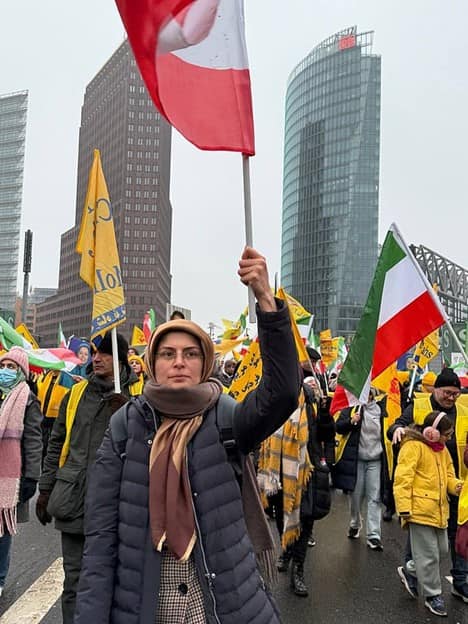

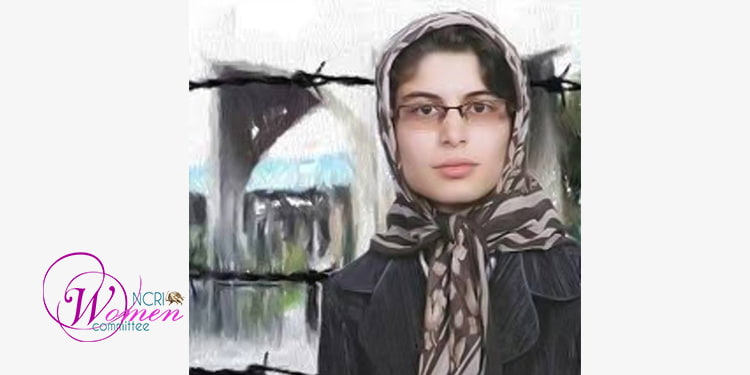
On May 10, 2026, the Daily Mail published an interview with Iranian student Shabnam Madadzadeh, a former political prisoner, member of the Mojahedin-e Khalq Organization, and human rights activist.
The interview was conducted by Eliana Silver, senior foreign news reporter. In this interview, Shabnam Madadzadeh speaks about her experiences in the prisons of the mullahs’ regime and exposes the hidden dimensions of violence, torture, and widespread human rights violations in these prisons.
“I witnessed unimaginable horrors in Iran’s torture dungeons, including the screams of rape victims. Guards threatened to execute my brother in front of me if I did not sign a false confession.”
For 70 days, Iranian student Shabnam Madadzadeh lived alone in a cell measuring roughly three metres by two. The room contained almost nothing apart from three blankets, a thin carpet, and a searing fluorescent light overhead that never switched off. Her watch had been confiscated when she arrived, along with every personal belonging she carried, leaving her with no way to tell whether it was day or night.
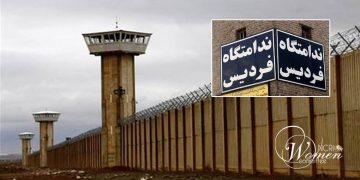
The silence rarely lasted long enough to become comforting. From elsewhere inside Section 209 of Evin Prison, Madadzadeh could hear women screaming from beatings and rape.
“You hear people screaming, crying, begging. Sometimes you imagine the voices are your family members. You think maybe it is your brother or your sister. They want you to hear it and they want you to break,” she recounts.
Then the door would inevitably open, signaling her turn. “We can do anything to you and nobody will hear your voice,” the interrogators told her as they began to beat her.
Madadzadeh was 21 years old when she was arrested in Tehran in 2009 and sentenced to five years in prison for opposing the regime. At the time, she was studying computer science at university and had become involved in Iran’s student protest movement during the presidency of Mahmoud Ahmadinejad.
More than a decade after her release from Iran’s brutal detention system, the 38-year-old still cannot shake the horrors she witnessed in prison, as she shares her detailed account with the Daily Mail.
On the day of her arrest, she was travelling by taxi to meet other activists when intelligence officers stopped the vehicle. “They did not show identification or explain anything,” she says. “At first, I did not even understand I was being arrested. It felt like a kidnapping.”
The officers initially told her she was being detained over minor infractions, suggesting it might be related to dress code violations. It was only later, after she was transferred to the intelligence wing of Evin Prison, that she understood the true reason for her arrest.
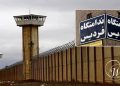
“I was taken to Section 209 of Evin Prison, which is controlled by the intelligence services. It is a very notorious place with many solitary confinement cells. It is where they hold people accused of political activities,” she says.
Madadzadeh says intelligence officers demanded that she confess to links with the MEK, the exiled opposition movement formally known as the Mojahedin-e Khalq, because some of her relatives were associated with the organisation. Interrogators wanted her to denounce the group publicly and participate in a televised confession.
“They wanted me to say whatever they told me to say,” she recalls. “They wanted forced confessions.”
When she refused, she was severely beaten with sticks, chairs, and whips. During interrogations, she was blindfolded and forced to face the wall while up to six guards surrounded her and carried out the assault.
The guards threatened to rape her, taunting that nobody would hear her screams.
One of the most traumatic moments of her imprisonment came during an interrogation involving her brother, who had been arrested alongside her. One day, guards ordered Madadzadeh to remove her blindfold. Her brother was standing in front of her, surrounded by interrogators.
“They forced me to look as they began beating him in front of me,” she says. “They wanted him to make a false confession, and they wanted him to convince me to do the same.”
She says interrogators threatened to execute both of them, saying they would execute her brother first as she watched. “You will see him for the last time,” they taunted.
After that, she stopped sleeping. “Every night I stayed awake, waiting for them to come,” she says. “I wanted to be awake if they came to take me to my execution.”
The constant psychological torture was worse than the beatings, she says, as the men would routinely threaten to arrest and torture other members of her family.
“They told me my parents and friends were already in custody. They said nobody knew where I was and nobody would help me.”
Madadzadeh says she heard repeated accounts from other prisoners who described being raped during interrogations, particularly women held on ordinary criminal charges who lacked outside visibility or political support.
“For ordinary prisoners, nobody hears their voice,” she says. “Many of them were poor women with nobody protecting them.”
One woman she met had been repeatedly raped during interrogations until she signed a confession. “She was a mother of two children,” Madadzadeh says. “She refused to confess at first, but after repeated rape and torture, she finally confessed.”
Inside solitary confinement, she developed routines to maintain her sanity, such as exercising, mentally repeating university lessons, and reciting songs to herself, as she was denied books, pens, and paper.
“I tried to keep my mind active,” she says. “Because if you lose your mind there, you lose everything.”
She also scratched marks into the walls to count the days she was held in the cell. “You lose your sense of reality very quickly,” she says.
Madadzadeh found solace in the memory of those who had survived before her, taking comfort in a cell wall inscription left by a prominent prisoner.
“It is a custom in these prisons for previous inmates to write something on the wall,” she explains. “When I entered the cell, I saw the name Saeed Masouri written there. Seeing his name gave me strength.”
“It reminded me that I am not the first to experience this imprisonment, and I will not be the last, as long as this regime still stands.”
Masouri, Iran’s longest-serving political prisoner, has been on death row for over 25 years.
Madadzadeh left her own message on the wall, inscribing a verse by the 14th-century Persian poet Hafiz Shirazi.
“The earth and the skies could not keep this trust of time. Yet I, poor and restless, was burdened with such fate,” the verse reads.
After 70 days in solitary confinement, she was formally sentenced to five years and transferred between several prisons, including Gohardasht in Karaj and Qarchak Prison in Varamin, where she says conditions deteriorated further.
“The situation in Qarchak was worse than anywhere else,” she says. “The water was not drinkable. Even washing clothes with it damaged them almost immediately.”
Food was rotten and inedible. Prisoners were constantly sick and severely malnourished.
“We practically never had meat,” she says. “Mostly rice and watery stew.”
Basic items had to be purchased from prison shops at inflated prices, leaving poorer inmates dependent on inadequate prison supplies.
“Sometimes there was canned tuna in the shop, maybe once a month,” she says. “But many prisoners could not afford it.”
Meanwhile, medical care inside the prison was nonexistent, and withholding life-saving treatment was another deliberate form of punishment.
“We did not bring you here to pamper you. We brought you here to torture you,” the prison doctor would say when inmates begged for treatment.
“There were prisoners who died because they did not receive care,” she says. “Authorities refused to transfer them to hospitals.”
Despite constant surveillance, Madadzadeh began secretly documenting what she witnessed inside the prison system. She smuggled letters and testimony out through phone calls and family visits.
Some of these accounts later reached international organizations and human rights groups, including Amnesty International, which referenced her case in reports on Iran.
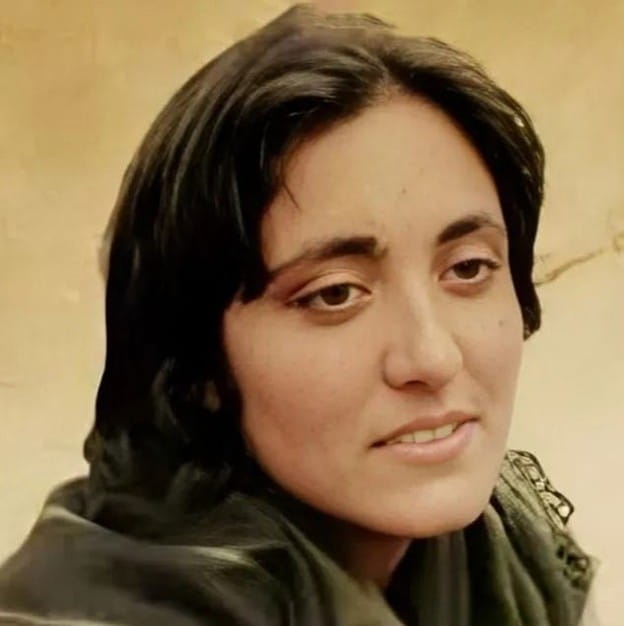
Among the women she met in prison was Shirin Alam-Hooli, a Kurdish political prisoner who became one of her closest friends after they were held in the same cell.
Alam-Holi had not been able to finish her education before prison, so other inmates would gather and teach her history, geography, and other subjects.
Alam-Holi hoped to pass her exams in the future, but that dream was quickly shattered when she was sentenced to death.
“I told her it would not happen,” Madadzadeh says. “I told her that people outside would work to stop her execution.”
“We made plans for the future, imagining that after our release we would travel, go to the mountains near Tabriz, and live freely.”
“She also spoke Turkish, my mother tongue, so we would sing songs together.”
One night, guards came for Alam-Holi, claiming there was an issue with her case paperwork.
“They closed all the prison doors after they took her,” Madadzadeh says. “We understood something was wrong.”
Madadzadeh waited all night for her to return, but she never came back.
That morning, on May 9, 2010, Alam-Holi was executed by hanging alongside four other prisoners.
After surviving five years of abuse, interrogation, and harsh conditions in Iran’s most notorious detention centers, Madadzadeh was finally freed.
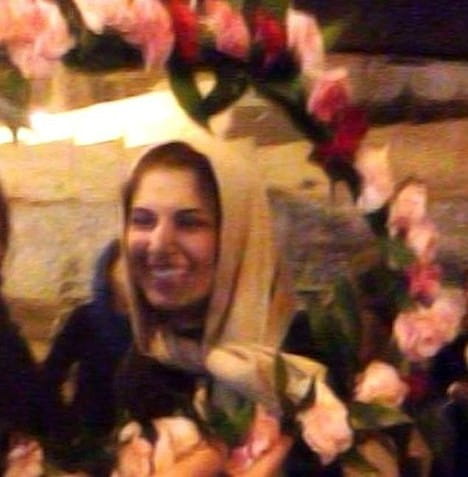
Her release, she says, was bittersweet. “It was very difficult. Leaving prison meant leaving behind so many people I cared about. I remember seeing the families of other prisoners, especially children whose mothers were still inside. That was very hard.”
At the same time, she says she felt a heavy responsibility to continue speaking out against the injustices of the regime, fully aware of the consequences.
“At first, I stayed in Iran and tried to continue my studies and activism. But I was constantly monitored. They would call me and remind me that they knew what I was doing,” she says.
“I felt like I had left prison and entered a new kind of prison. I realized I could not continue like that, so I left Iran. I did not leave for a better life, but to continue my work and speak about what I had seen.”
Madadzadeh now lives in Switzerland, where she works with organizations including the United Nations to raise awareness about human rights abuses in Iran.
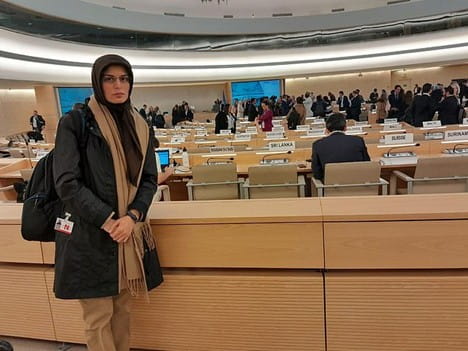
She has almost no contact with her family still inside the country, as they were previously harassed and interrogated for speaking to her.
“It is a sacrifice I am willing to make,” she says. “When I left Iran, it was not for personal freedom or comfort. It was a commitment to continue this work.”
Amid a tense and deadlocked conflict, where Iranian civilians bear the brunt of airstrikes and threats, I asked Madadzadeh whether a domestic revolution is possible, or whether external military action is the only way to depose the regime.
“People are suffering. No one wants their country to be bombed. That idea is not realistic. People want change, but not through the destruction of their own country,” she says.
“Nothing significant has happened in recent months. Some key figures were killed, but the regime remains strong. I believe true change will come from inside Iran, from the people and from organized resistance.”
Madadzadeh calls on the international community to do more in condemning the ongoing executions, arrests, and internet shutdowns in Iran.
“Governments should do more than issue statements. They should take real action to pressure the regime, including economic and diplomatic measures, to stop executions and human rights abuses.”
“They can do much more. They can shut down embassies and cut off their deals with the regime. They should include human rights issues in negotiations.”
“There are many political prisoners currently at risk of execution. Some are very young. We do not even know all their names.”
“I ask people to speak about them and raise awareness, because that can help save lives.”