

A Disturbing Rise in Child Abuse and the Vulnerability of Young Girls
A largely overlooked aspect of systemic violence in Iran is the growing trend of child abuse, especially against young girls.
Available reports show that child abuse is rapidly increasing in Iran and now ranks among the most urgent social crises.
Even the regime’s own media and officials at the Welfare Organization (Behzisti) admitted in 2024 and 2025 that the trend is rising at an alarming pace.
Hassan Mousavi Chalak, deputy head of the Welfare Organization, acknowledged in an interview with Khabar Online that public sensitivity and reaction to social harms, particularly child abuse, have risen sharply. His admission highlights how the real scale of these crimes far exceeds what the misogynistic clerical regime hides in its official statistics.
He added that more than one million calls related to domestic violence were received by the Social Emergency hotline in the past year alone, an alarming figure that reflects unprecedented violence and the deepening desperation of families.
Mousavi Chalak confirmed that girls are more frequently abused than boys, noting that 55% of all reported cases involve girls. (Khabar Online, May 5, 2025)
Local media reports, including from Shahrara News in July 2024, also revealed high levels of child abuse incidents across various provinces, further demonstrating how widespread and severe the crisis has become.
In Razavi Khorasan Province alone, 3,714 cases of child abuse were reported to the Social Emergency within just 11 months. (Tasnim News Agency, January 26, 2025)
And these numbers capture only a fraction of the harsh reality faced by young girls under the rule of the Iranian regime.
Laws That Protect Abusers
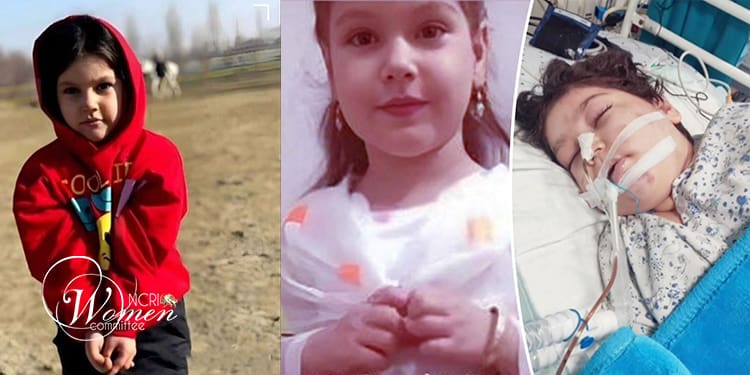
Seven-year-old Niyan Chaliyani from Bukan was taken to the hospital after five months of sexual abuse by her step-mother’s brother, with scars from severe beatings, burns, and internal bleeding. She died the next day, never able to speak about what she endured.
Despite years of domestic violence and knife threats against his wife, Niyan’s father had full, unrestricted custody of her. The mother told the media that he prevented her from seeing Niyan, and judicial and police authorities refused to help locate or rescue her.
Reports indicate that Niyan’s father and accomplices poured boiling water on her body to conceal evidence of sexual abuse.
The clerical regime’s custody laws and judicial practices prioritize the “rights of the father” over the child’s safety. This legal framework directly enabled the violence that ultimately killed Niyan.
In this system, domestic violence and child abuse are not anomalies, they are the predictable result of the laws themselves. Institutions such as the Welfare Organization act mostly as symbolic bodies. Even when abuse cases are reported, they often fail to intervene or protect the victim.
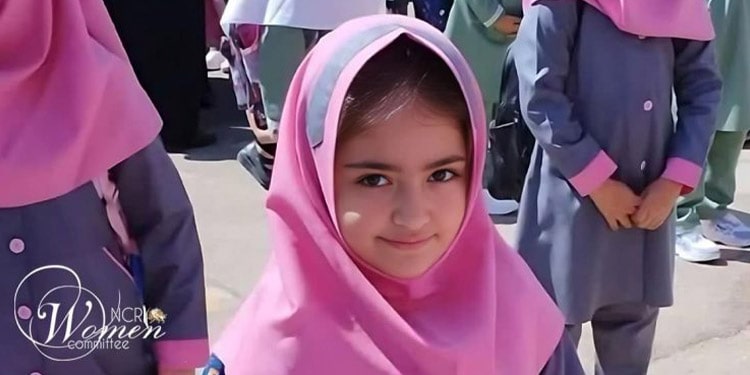
Another tragic case in Zanjan involved Ava Yaragholi, a first-grade student who was brutally murdered by her drug-addicted father. Despite the mother’s financial and moral competence, the regime’s misogynistic laws granted custody to the father, paving the way for the crime.
These cases reflect only a small portion of the widespread and systemic nature of child abuse in Iran, just a handful of examples from a much larger tragedy created by the regime’s laws.
Support Centers Becoming Places of Abuse and Humiliation
Numerous reports from Welfare Organization facilities across Iran reveal recurring mistreatment and abuse of children. Child-rights advocates have repeatedly warned about the lack of independent oversight, yet many have been arrested or forced into silence rather than supported.
Support Centers Becoming Places of Abuse and Humiliation
Numerous reports from Welfare Organization facilities across Iran reveal recurring mistreatment and abuse of children. Child-rights advocates have repeatedly warned about the lack of independent oversight, yet many have been arrested or forced into silence rather than supported.
One of the most harrowing examples is the case of Dorsa, a seven-year-old girl with physical and cognitive disabilities, housed at a so-called supportive center called “Fereshtegan-e Mehr” in Kelardasht.
Dorsa, who used a wheelchair and had limited mobility, was beaten by the director and staff. Her pelvic bone fractured, and she was taken to the hospital only after sustaining serious injuries.
This tragedy demonstrates how, without oversight and legal protection, treatment and care centers can become sites of abuse and humiliation rather than places of safety.
Child Laborers: Exposed to Systematic, Everyday Violence
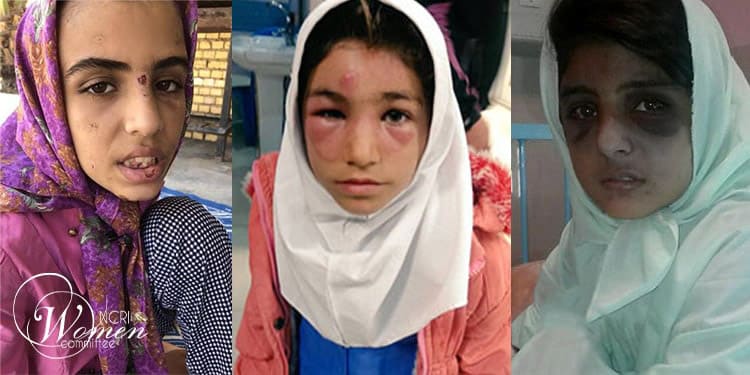
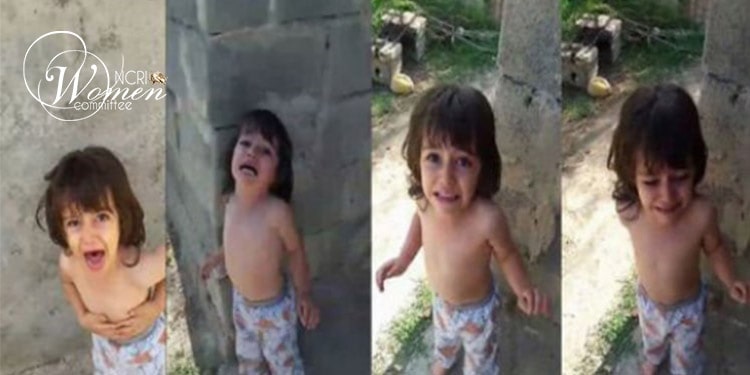
Millions of child laborers populate Iran’s streets, a direct result of expanding poverty under the clerical regime. These children receive no government support; instead, they are subjected to systematic and continual abuse by municipal workers and police. Young girls are especially vulnerable, especially in alleys, suburbs, and along the major highways of large cities.
The newspaper Hamshahri reported on December 3, 2022, that some social activists estimate the number of child laborers to be as high as 7 million. But even eight years earlier, before poverty reached today’s scale, a member of the regime’s parliament, Nahid Tajeddin, said: “Some urban-economy experts estimate the number of child laborers in Iran between 3 to 7 million.” (Tasnim, September 27, 2017)
This indicates that the seven-million figure is likely the minimum and merely the tip of the iceberg.
Hassan Mousavi Chalak also admitted: “One-fourth of all child laborers are girls.” (Tasnim, June 11, 2025)
Child laborers, especially girls, are often subjected to physical and sexual abuse. (ILNA, January 21, 2025) Many cut their hair short like boys to avoid attention and protect themselves. (ISNA, May 3, 2021)
Government Inaction and the Breakdown of Iran’s Social-Support System
The government’s lack of political will and resources has effectively dismantled Iran’s child-protection system. The Social Emergency hotline (123), meant to be the frontline of response, suffers from severe understaffing, insufficient equipment, and chronic budget shortages.
The Welfare Organization announced in 2025 that it needed 1,200 additional staff because only about 5,000 personnel currently work nationwide, most on temporary or contract terms, far too few even for a single province. (IRNA, October 21, 2025)
Infrastructure is outdated and inadequate; the last emergency vehicles were purchased more than a decade ago, and many cities across Iran still lack Social Emergency centers. In this environment, structural government neglect leaves victims without protection and perpetuates violence against children.
The Only Path to Ending Violence Against Women and Girls in Iran
Child abuse has become one of Iran’s most dangerous and pressing social issues. Young girls face both direct violence and legal discrimination.
The regime’s misogynistic laws, including discriminatory custody regulations and limits on legal protections, place girl children at heightened risk. These children lack safety not only in their homes but also in care and treatment centers.
The cases of Niyan in Bukan, Ava in Zanjan, and Dorsa in Kelardasht clearly illustrate the systemic violence inflicted on girls, children who encounter humiliation, violence, and injustice instead of protection. The absence of independent oversight, the shortage of resources, and the collapse of support systems all intensify the cycle of violence. From a medieval regime whose core ideology and laws are rooted in a doctrine of misogyny, nothing else can be expected.
Thus, the only way to end violence against women and girls in Iran is the overthrow of the clerical regime. For this reason, Iranian women have taken up resistance to fulfill this mission and are playing a leading role in it.