
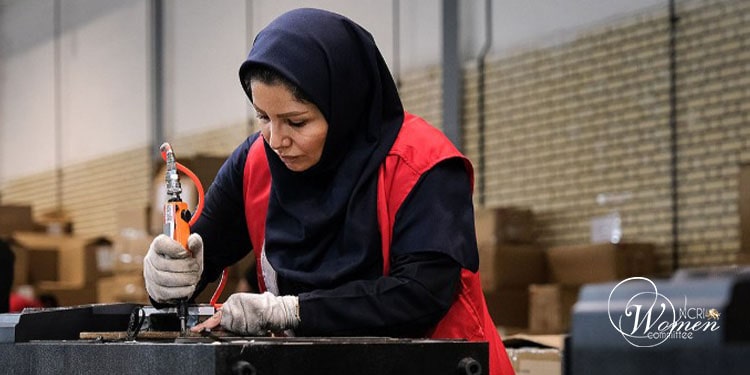
In a fresh wave of regressive reforms, the Iranian regime has significantly tightened the conditions for women’s retirement under the amended Social Security Law.
According to a report by the media outlet Kartaban, the new law, which came into effect on July 24, 2024, introduces harsher requirements in terms of age, years of service, and retirement benefit calculations—effectively making retirement more difficult and less accessible for working women across the country.
Under the revised Article 76 of the Social Security Law, women can now retire at three different ages—42, 45, or 55—but each option is subject to new, more complex requirements that impose additional burdens and delays on women in the workforce.
First Condition: Retirement at Age 45 with 30 Years of Service—Now with Penalties
Previously, women could retire at age 45 with 30 years of work experience. However, under the new legislation, if a woman has not yet completed 30 years of service at the time the law is enacted, she must work two additional months for each missing year. For example, a woman with 24 years of service will now need 30 years and 10 months of credited time to retire at 45.
Second Condition: Retirement at Age 42 Now Limited to Female Laborers
The new law restricts early retirement at age 42 to female laborers only. While the old system allowed retirement with 20 years of service, the new formula demands more: for instance, a woman with 18 years of service must now accumulate 20 years and 8 months before qualifying. Furthermore, the pension will be calculated based on the actual years of service, resulting in reduced benefits.
Third Condition: Retirement at Age 55 with Full Minimum Pension—Now Also Harder to Access
Previously, women were entitled to full minimum pension benefits at age 55 with 20 years of service under Article 111 of the Social Security Law. This route has now been obstructed as well. As with the other conditions, the new law increases the required years of service, delaying or blocking access to this option for many women.

A Gendered Attack on Economic Security
These policy shifts, introduced by the clerical regime under the guise of “reform,” are widely seen as part of a broader pattern of systemic discrimination against women in Iran’s labor and social systems. Instead of easing the economic pressures on working women, the government has opted to impose further restrictions—deepening gender inequality and stripping women of long-fought retirement rights.