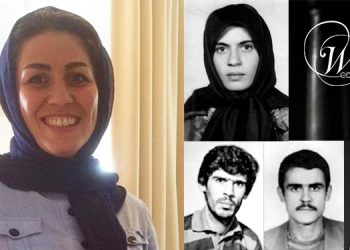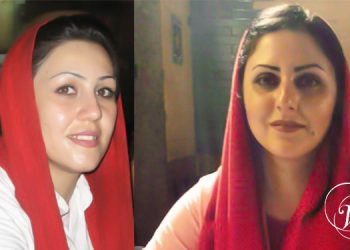
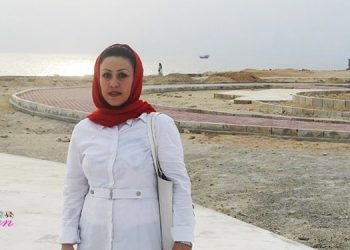
A brief update on the conditions of Maryam Akbari Monfared
A brief update on the conditions of Maryam Akbari Monfared after being exiled from Evin Prison ...
Read moreDetails

Female political prisoners in Iran are victims of an arbitrary legal process.
Ever since the fanatic mullahs’ rise to power in 1979, many dissidents have been facing imprisonment, torture, and execution.
Women made up about one-third of the inmates massacred in 1988 on Khomeini’s Fatwa.
The Iranian regime has continued to clamp down on dissent and incarcerate human rights activists and political opponents since 1980. Many civil activists and human rights defenders are held behind bars.
Since August 2013 until the end of January 2020, 105 women were executed during Hassan Rouhani’s tenure as the mullahs’ president.
The main place were female political prisoners are detained is the women’s ward of Evin Prison in Tehran.
Although living conditions in Evin are horrific and inhumane, it is the only place where detainees are separated according to the category of their offenses.
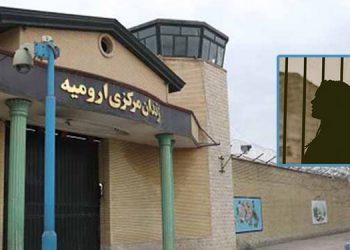
Female political prisoners are also incarcerated in the prisons of Varamin (Qarchak), Urmia, Bukan, Tabriz, Khoy, Kermanshah, Zanjan, Ahvaz, Sanandaj, Kashan, Kerman, Marivan, Mashhad, Mahabad, Yasuj, Yazd, Semnan, and Shiraz, serving their unjust sentences amongst ordinary and often dangerous inmates.
The Universal Declaration of Human Rights highlights the right to freedom of all human beings and specifically the advocacy and freedom of religion and thought.
The declaration’s Article 18 states, “Everyone has the right to freedom of thought, conscience and religion; this right includes freedom to change his religion or belief and freedom, either alone or in community with others and in public or private.”
The International Covenant on Civil and Political Rights also states that no person shall be subjected to arbitrary arrest. Article 9 of the covenant states, “Everyone has the right to liberty and security of person.”
Rule 61 of the United Nations Rules for the Treatment of Women Prisoners and Non-custodial Measures for Women Offenders (the Bangkok Rules) reads, “When sentencing women offenders, courts shall have the power to consider mitigating factors such as lack of criminal history and relative non-severity and nature of the criminal conduct, in the light of women’s caretaking responsibilities and typical backgrounds.”
Clearly, these standards are far from the conduct of the Iranian regime.
The NCRI Women’s Committee has published a comprehensive report, “Women in Pursuit of Justice”, to shed light on the systematic violations of women’s human rights in Iran in the process of arrest and imprisonment and hopes to receive support and attention by human rights advocates, lawyers, and relevant authorities from around the world.
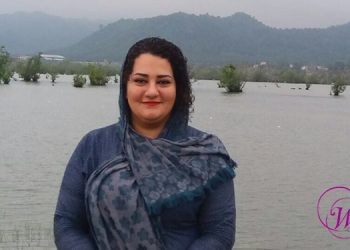
A brief update on the conditions of Maryam Akbari Monfared after being exiled from Evin Prison ...
Read moreDetailsPolitical prisoner Somayyeh Qoraishi has been jailed since 6 months ago without the news of her ...
Read moreDetailsReports from inside the Central Prison of Mashhad indicate that political prisoner Shokouh-oz Zaman Majd has ...
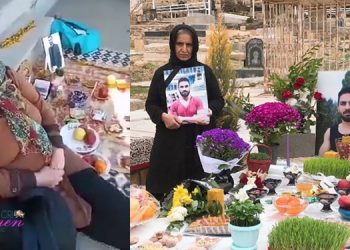
Read moreDetailsIranians began their New Year today on March 20. Mothers of political prisoners and executed political ...
Read moreDetailsInformed sources reported on Wednesday, March 17, that 21 inmates in Qarchak Prison are infected with ...
Read moreDetailsCall for urgent action to stop anti-human pressure on women political prisoners NCRI Women’s Committee strongly ...
Read moreDetailsAtena Daemi banished abruptly to Lakan Prison in Rasht Atena Daemi banished abruptly to Lakan Prison ...
Read moreDetailsDetainees in the Women’s Ward of Evin Prison condemned the banishment of Maryam Akbari Monfared to ...
Read moreDetailsSaba Kord Afshari contracts Covid-19, after being transferred to Ward 6 of Qarchak Prison. Reports on ...
Read moreDetailsThe Secretariat of the National Council of Resistance of Iran issued a statement on March 10, ...
Read moreDetails