
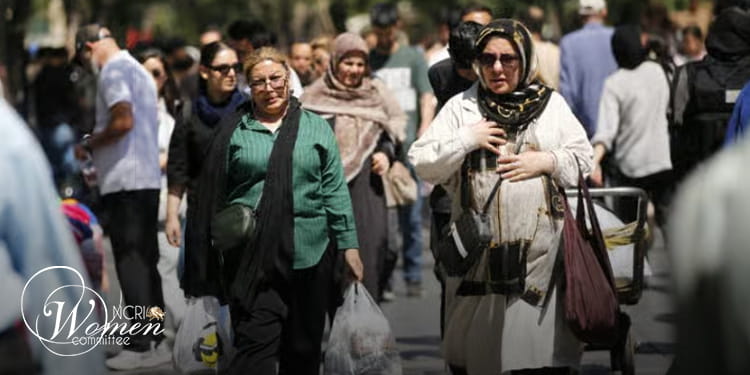
Women Retirement in Iran is becoming increasingly difficult under the regime’s new Social Security law, which requires many women to work longer before qualifying for retirement benefits. The change comes as women continue to face discrimination in employment, higher unemployment rates, job insecurity, and unequal access to economic opportunities throughout the labor market.
Under the new Social Security retirement law, many women must accumulate more years of employment records before becoming eligible for retirement benefits. In some cases, additional months are added to the required years of service, effectively delaying retirement for many working women. (Eghtesaad24, November 13, 2026)
What Has Changed Under the New Law?
Under Article 76 of Iran’s Social Security Law, women have traditionally been able to retire under three different arrangements: at age 45 with 30 years of insurance contributions, at age 42 for female workers with 20 years of work history, or at age 55 with 20 years of contributions and eligibility for a full minimum pension.
The new law, which took effect in August 2024, does not formally raise these retirement ages. Instead, it increases the years of service required to reach them. Women who had not yet completed the required contribution records when the law came into force must now work additional months, and in some cases more than a year, before becoming eligible for retirement. (Eghtesaad24, November 13, 2026)
For example, a woman who previously could retire at age 45 with 30 years of contributions may now be required to complete 30 years and 10 months of service. Female workers who were previously eligible to retire at age 42 with 20 years of work history may now need 20 years and 8 months or more before qualifying. Similar increases have been introduced for women retiring at age 55.
Although retirement ages for women in Iran may appear lower than in many countries, where retirement often occurs in the mid‑60s, the central issue is not the age itself. The real issue is that millions of Iranian women are being required to work longer in a labor market where they already face discrimination, unequal access to jobs, economic insecurity, and limited social protections.
Educated Women, Denied Equal Opportunities
One of the greatest contradictions in Iran’s economy is that women make up a significant share of university students and graduates, yet their educational achievements rarely translate into sustained participation in the labor market.
Official statistics show that women’s economic participation rose only marginally from 13.3 percent in 2021 to 13.4 percent in 2025. During the same period, men’s labor force participation remained close to 68 percent, leaving a gender gap of more than 54 percentage points. (Rouydad24, November 9, 2026)
This enormous gender gap demonstrates that the problem extends far beyond a lack of jobs. Women face structural and discriminatory barriers that continue to limit their access to employment and economic independence.
Discrimination Begins Before Employment
For many women, discrimination starts long before they obtain a job.
Throughout recruitment processes, women continue to face questions about marriage, childbearing, and family responsibilities, issues that are rarely used to evaluate male applicants.
As a result, professional qualifications, experience, and expertise are often overshadowed by gender stereotypes. Young women, especially those of marriage and childbearing age, are more likely to be excluded from employment opportunities.
Many women therefore struggle to secure continuous employment and build stable insurance records. Yet they are now expected to remain longer in a system that has subjected them to discrimination from the outset.
Longer Working Years, Less Job Security
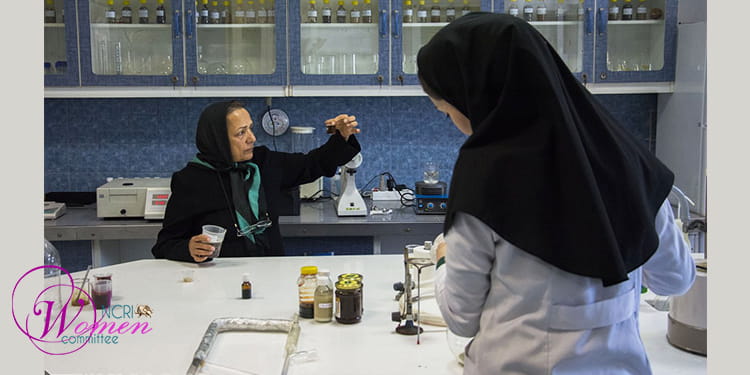
The new retirement law is being implemented in circumstances where women’s job security remains significantly weaker than that of men.
Short-term contracts, the risk of losing employment after pregnancy or maternity leave, and limited access to managerial positions remain common realities for working women in Iran. Even highly educated women often find themselves confined to mid-level positions, with fewer opportunities for advancement.
Extending the years required for retirement places an additional burden on women who are already struggling to maintain employment and achieve economic security.
Women’s Unemployment Remains More Than Double That of Men
Official figures indicate that women’s unemployment rate reached approximately 15 percent in 2025, compared with about 6 percent for men. (Statistical Center of Iran, November 10, 2026)
These figures illustrate that women face greater obstacles not only in keeping jobs but also in finding them. The extension of retirement requirements is therefore being imposed on a population for whom stable employment and uninterrupted insurance coverage are often difficult to obtain.
Female Heads of Household Bear the Greatest Burden
The impact of these policies is likely to be especially severe for women who are heads of household.
Official figures indicate that women head approximately 22.5 percent of households in Iran, while roughly 6.5 million women bear primary responsibility for supporting their families. (IVNA, February 7, 2026; Jam-e Jam, February 23, 2026)
More than 55 percent of these women belong to the country’s poorest income groups. (Jam-e Jam, February 23, 2026)
Many work in informal sectors, including street vending, domestic services, small-scale production, retail work, and home-based employment. Such jobs frequently lack formal contracts, social protection, and insurance coverage. (Eghtesaad24, June 21, 2025)
For these women, extending retirement requirements has a very different meaning, because many are already excluded from comprehensive insurance coverage and social support systems.
Iran Ranked 144th in the World for Gender Equality
The Global Gender Gap Report 2026 reflects the scale of inequality facing women under the clerical regime.
Iran ranks 144th among 145 countries, placing it near the bottom of the global ranking.
The report shows that although women have achieved high levels of educational attainment, their access to employment, management positions, income, and economic decision-making remains severely restricted.
In other words, Iranian women already operate in an environment where economic opportunities are distributed unequally. The new retirement law now requires those same women to spend even more years in that unequal system before becoming eligible for retirement.
The Double Burden on Working Women
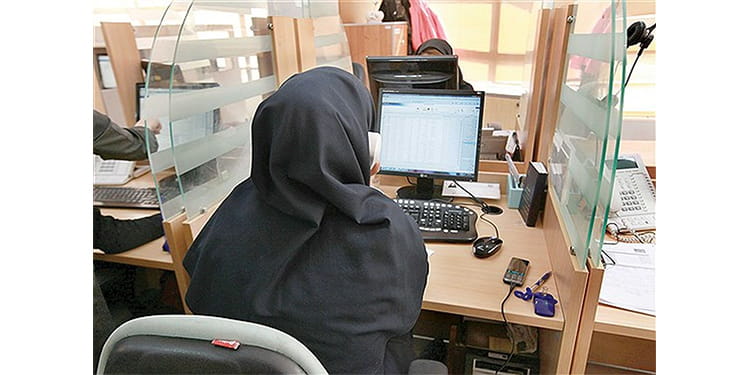
Many Iranian women do not stop working when they leave their workplaces.
They continue their responsibilities at home, caring for children, elderly relatives, managing household duties, and providing unpaid labor essential to family survival.
For female heads of household, the burden is even greater. They function both as primary earners and primary caregivers, performing work that remains largely invisible in official economic calculations.
Under these circumstances, extending retirement requirements means far more than a few additional months or years of employment. It prolongs the physical, emotional, and economic exhaustion experienced by women who have spent years balancing paid work with caregiving responsibilities.
Conclusion
At first glance, the new retirement law seems to be an administrative reform within Iran’s social security system. For millions of women, however, it carries much broader consequences.
The law is being implemented in a country where women already face discrimination in hiring, higher unemployment, limited career opportunities, economic insecurity, and a deep gender gap in access to power and income.
The controversy surrounding the new law is not about lowering or raising retirement age in itself, but about imposing additional requirements on women who already face systematic barriers in employment and economic participation.
The misogynistic clerical regime is requiring women to work longer before reaching retirement while continuing to deny them equal economic opportunities, job security, and adequate social protections.
The central question remains: How can women who already receive a smaller share of employment opportunities, income, and economic power be expected to take a longer path toward retirement?
Until structural discrimination against women in Iran’s labor market is removed, extending retirement requirements will not represent economic reform. Instead, it will place yet another burden on women who have spent years struggling against inequality.