

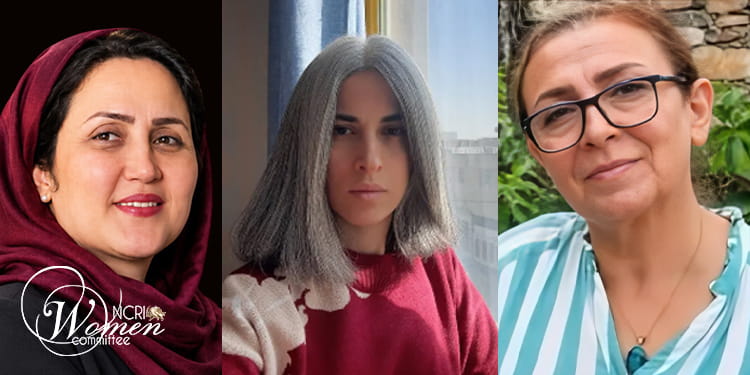
Women activists in Iran continue to face arrests, prison sentences, and increasing judicial pressure. The ongoing detention of labor activist Nahid Khodajou, the summons issued to Fariba Hosseini to begin serving her prison term, and the severe punishment imposed on teacher Roqieh Torabpour highlight a broader pattern of repression targeting women engaged in civic, labor, and social activism.
Nahid Khodajou, a 68-year-old labor activist, has remained in Fardis Prison (a.k.a. Kachouii Prison) in Karaj for more than a month. Despite the passage of weeks since her arrest, no clear information has been made public regarding the charges against her or the status of her case. Khodajou is a well-known figure in Iran’s labor movement and has repeatedly faced security and judicial pressure because of her advocacy for workers’ rights.
Meanwhile, Fariba Hosseini, a 37-year-old dentist living in Shiraz, has been ordered to report for the implementation of a prison sentence. She was previously sentenced by the Revolutionary Court of Shiraz to nine years and nine months in prison in a politically motivated case. The sentence was later reduced on appeal to three years, six months, and one day. Hosseini had previously been detained and later released on bail.
In a separate case, Roqieh Torabpour, a teacher and board member of the Bushehr Teachers’ Trade Association, was sentenced not only to six months’ imprisonment but also to permanent dismissal from public service and confiscation of her electronic devices.
In recent years, women have played a leading role in anti-regime protests in Iran. Their active participation in nationwide uprisings and dissent has been met with increasing arrests, prosecutions, and other forms of state repression.
The continued uncertainty surrounding Nahid Khodajou’s case, the imprisonment order against Fariba Hosseini, and the permanent ban imposed on a female teacher from public employment reflect a continuing pattern in which women activists are subjected to detention, prosecution, and the deprivation of fundamental rights.
For many women engaged in civic and labor activism, the risk of imprisonment, professional exclusion, and prolonged legal pressure has become an increasingly common consequence of peaceful advocacy and public engagement.