
Introduction
Life for the Iranian people under the religious dictatorship is fraught with hardship and peril from every perspective. Whether through the lens of economic deprivation, poverty, and unemployment; the degradation of the environment and infrastructure; crises involving water, electricity, and air pollution; or devastating floods and earthquakes—the current generations of Iranians are experiencing a living hell. This suffering is further compounded by the comprehensive violation of human rights, characterized by suppression, torture, and executions, as well as the squandering of national wealth on nuclear and missile projects and terrorism, which has effectively led to foreign conflict.
Despite these universal hardships, the misogynistic nature of the ruling clerics ensures that women bear a double share of these calamities. Yet, among women, whether in urban centers, rural areas, or marginalized outskirts, there is a growing demographic known as female heads of household, who are considered the most deprived and oppressed members of Iranian society. This is particularly stark given the reality that in present-day Iran, even conventional families where both parents are employed remain incapable of providing the basic necessities for a middle-class household.
In these households, the woman bears the primary responsibility for the family’s livelihood in addition to her traditional caregiving roles. (ISNA, February 23, 2026)
The complexity of women’s poverty under this regime is the result of an intertwining of economic, social, cultural, and psychological factors.
1. Statistical Estimates
Mousavi Chalak, Deputy for Social Health, citing data from the “Iranian Welfare System” in 2025, announced that female heads of household constitute 22.5% of all households in the country; a figure signifying that women lead one out of every 4.5 Iranian households. These statistics indicate a 121% increase in the number of these women compared to 2016. (IVNA, February 7, 2026)
According to information from the Iranian Welfare System, approximately 6.5 million women are registered as heads of household. (Jam-e Jam, February 23, 2026)
These statistics, like all government-issued data, are opaque and unreliable. For instance, on July 13, 2025, the Khabar Online website reported the number of elderly women living alone at 3.5 million individuals. Meanwhile, Shahla Kazemipour, a state-affiliated demographer, stated that the largest group of women living in “permanent celibacy” belongs to the 1980s generation (born in the 1980s), who are currently under 45 years of age. (Jamaran, August 3, 2025)
Previously, the state media outlet Eghtesad-e Jame’eh on December 2, 2024, reported the number of female-headed households as 7 million, while Donya-e-Eghtesad cited the figure as 6 million on May 3, 2025.
Beyond the regime’s statistical deceptions, being a female head of household in Iran represents an abyss of suffering, oppression, and defenselessness that is constantly deepening.
Crucially, out of these at least 5 million women, only about 2 million, less than 25%, are covered by state support institutions. Approximately 285,000 are under the care of the Welfare Organization and 1.5 million under the Relief Foundation; the rest have been abandoned to their fate. This occurs while approximately 55% of these women are classified in the first decile of society, the absolute poorest. (Jam-e Jam, February 23, 2026)
It is worth noting that even the limited number of women covered by the Welfare Organization or the Relief Foundation receive a meager allowance that is exhausted within the first day or two of the month, leaving them empty-handed for the remainder of the period.
2. Poverty and Economic Inequality
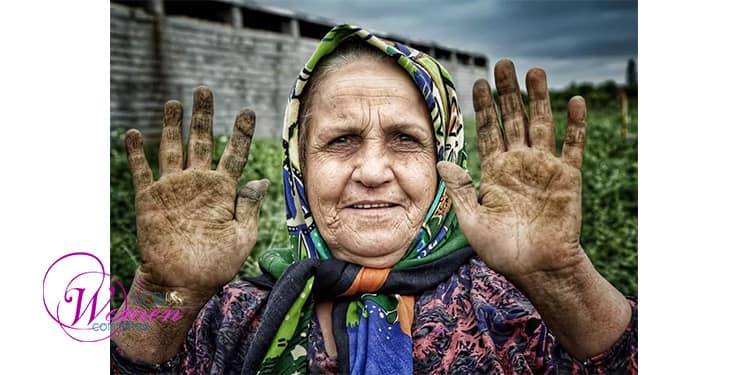
Female heads of household are significantly more impoverished than their male counterparts within the same income decile. Poverty among these women is complex and multi-layered, stemming from pervasive social constraints, diminished access to social capital, and severely restricted employment opportunities.
Regarding access to financial resources, state media frequently touts the availability of low-interest loans, for example, at 14% interest. However, these women are often excluded from such facilities. A primary barrier to entry is the lack of formal guarantor and the absence of established communication networks. (Jam-e Jam, February 23, 2026)
Similarly, government propaganda regarding the establishment of “Job Guarantee Funds for Women” and other such initiatives typically remains confined to the realm of rhetoric. In the few instances where they are implemented, they provide recourse only to a select few with direct ties to the regime.
3. Employment and the Labor Market
While the global economic participation rate for women stands between 47% and 50%, the Iranian labor market maintains a starkly masculine character. The participation rate for men is approximately five times higher than that of women. In Iran, women constitute only one-sixth of the total active population of 27 million; this represents roughly 4.5 million women, accounting for both those currently employed and those seeking work. (Aftab-e-No, February 19, 2026)
Female heads of household are predominantly relegated to low-skill, unstable, and part-time occupations.
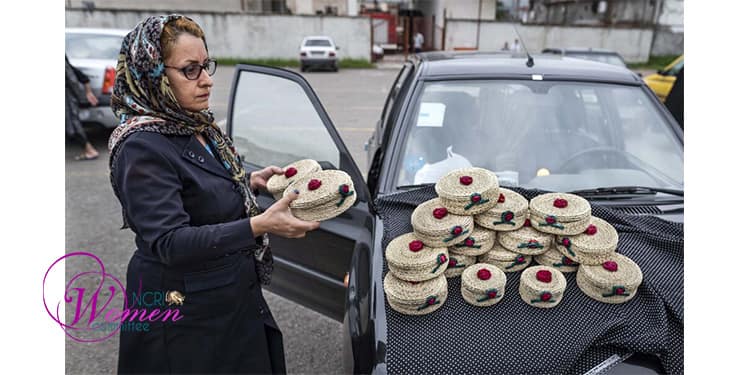
In early 2025, Zahra Behrouz Azar, the Vice President for Women and Family Affairs, noted that the majority of these women are employed in service sectors, manual labor, sales, domestic cleaning, home-based production, or street vending—sectors that are acutely vulnerable. These women generally operate without formal contracts or insurance coverage. Deprived of even minimal job or economic security, they drift closer to the brink of financial collapse each day. Furthermore, many remain unregistered in official systems and lack coverage from any supportive institution. (Eghtesad 24, June 21, 2025)
4. The Double Burden (The Second Shift)
Employed women, and female heads of household, shoulder the full responsibility of domestic labor in addition to their external work. Tasks such as childcare, cleaning, meal preparation, and managing the medical needs of family members consume the remainder of their 24-hour day. Many are also burdened with the care of elderly or disabled family members, further exacerbating the physical and mental exhaustion of their lives.
Behind every weary face is a child waiting for a mother who no longer has the capacity for affection.
This situation leads to chronic exhaustion, heightened levels of anxiety and depression, and a decline in life satisfaction. It inevitably results in the straining of familial relationships, particularly with children and the ill, and ultimately precipitates a multitude of physical health crises for these women. (ISNA, February 23, 2026)
5. Health and Illness
The prevalence of chronic diseases among female heads of household is higher than the societal average. This issue is a direct consequence of excessive physical and psychological pressure. Another contributing factor is that these women often do not prioritize their own health.
In one instance, the screening of 22,000 women revealed that the prevalence of certain diseases—particularly cancer—is higher in this group compared to other women. On one hand, female heads of household neglect medical follow-ups and screenings due to prioritizing their dependents; on the other hand, financial poverty or a lack of awareness prevents them from seeking care. Furthermore, the fear of a diagnosis—driven by the inability to afford treatment costs—leads them to forgo monitoring their health altogether.
Maryam Khakrangin, Director General of the Office of Women and Family at the Social Health Department of the Welfare Organization, has reported the existence of 7,600 female heads of household suffering from special (refractory) diseases. (ILNA, December 29, 2025)
6. The Impact of Crises
Following events such as internet shutdowns due to uprisings, followed by war and rising costs, there have been widespread reports of mass layoffs and increased job insecurity. These conditions primarily target women working in informal and unstable sectors, many of whom are also the sole providers for their households.
As a result of successive crises inflicted upon the Iranian people due to the regime’s anti-people and destabilizing policies, female heads of household have, more than ever, become victims of downsizing and job loss. Their income has become increasingly unstable, and their ability to withstand the economicshocks resulting from these crises has drastically diminished.
- The Impact of War
War has led to an increase in the number of female-headed households, as many men are killed, go missing, or are forced to migrate. This situation has, more than ever, resulted in a surge in poverty, economic instability, and severe psychological pressure among these women.
In wartime conditions, female heads of household face multifaceted crises. Given that the majority of them are engaged in informal and home-based occupations (such as knitting, tailoring, and food production), the war has dealt a direct blow to their family income by closing marketplaces, disrupting supply chains for raw materials, and reducing the purchasing power of customers.
According to a report by one of the state websites, passengers in a Tehran metro carriage, in response to the street vendors’ advertisements, say they have no money. According to this report, the faces of the female vendors are exhausted. Some of them are over sixty years old and plead with people to buy their goods. (Shafaqna, October 6, 2025)
The state-run website ILNA has also detailed the problems of female-headed households through their own accounts:
Zahra, a vendor in the Tehran metro, says: “My sense of loneliness is endless; sometimes I feel as though I have been abandoned in the middle of a deep well without a rescue rope.” She remained in Tehran throughout the twelve days of the war, by the bedside of her elderly mother who is now completely bedridden; they stayed at home without any money. They went nowhere during those days because they had no money for travel.
Sanaz, a woman who makes a living for herself, her young daughter, and part of her mother’s expenses by selling cosmetics and women’s clothing online, lives in an alley off Estakhr Street in Tehranpars. She lives in a 45-square-meter apartment which, as she puts it, they were lucky to inherit from her father; otherwise, they would have had no roof over their heads.
She says: “From June 10th until today, July 6th—nearly a month—I have only earned 2 million Tomans. Even that was from selling cosmetics to the neighbors. My Instagram page was disconnected most days, and now, not even a single message or order…”
“I thought to myself, I should go find a corner to sit and set up a stand (as a street vendor), but then I thought, people have no money. Besides, these days the officers don’t even allow vendors to sit by the side of the road…”
Her mother, as a Social Security pensioner, receives only 10 million Tomans, which barely covers the cost of her own heart and diabetes medications. Now, with the internet shutdowns and market stagnation, the life of this three-woman household has turned into a boiling cauldron of stress and anxiety regarding the future.
Another subway vendor, also named Zahra, is the head of a four-person household and lacks any form of insurance. Her only source of income is street vending, and she rents a small studio apartment in Islamshahr. In the past month, she has earned only about 3 million Tomans—an amount that is less than half of her monthly rent.
She says: “Believe me, during the days of the war, there were times when we couldn’t even find a piece of plain bread to eat…”
Shiva, about 35 years old with a bachelor’s degree in literature, works as an app-based taxi driver. She recently divorced her husband and lives with her two-year-old daughter in a cramped, dark room in her father’s apartment.
Shiva says, “For two or three weeks, business was completely dead; I had zero income for several weeks. I don’t have insurance either; my entire income is just the money I earn driving during the day and take home at night. During this time, I was forced to borrow from my brother. Everyone is struggling, so he gave me 3 million [Tomans] with a grimace. I don’t want to be a burden, but what am I supposed to do?” (ILNA, July 11, 2025)
- The Impact of Internet Shutdowns
In Iran, perhaps more than in any other part of the world, a vast number of women have turned to various forms of online business due to the dearth of traditional employment opportunities. However, even this lifeline is repeatedly severed.
The clerical regime either deliberately disconnects the internet to suppress successive popular uprisings or, as seen in the current climate where policies of nuclear weaponization and the exportation of terrorism have incited foreign conflict, brings the people’s digital commerce to a complete standstill.
Internet shutdowns result in the annihilation of online jobs and remote work opportunities for women, while simultaneously restricting access to essential online education for both them and their children.
The Ministry of Communications has reported daily losses of approximately 3.8 trillion Tomans during periods of internet connectivity failure. This crisis is a dual product of internet restrictions and the broader economic malaise; as the public’s purchasing power diminishes, the volume of orders and transactions has suffered a direct and devastating impact. (Etemad, January 27, 2026)
Economic experts estimate that 12 million jobs are currently at risk. Widespread unemployment, commodity shortages, and the collapse of the national currency have created an increasingly volatile environment for the regime. (Wall Street Journal, April 16, 2026)
According to state media reports, 60 days of internet disruption inflicted 300 trillion Tomans ($4 billion) in damages upon the Iranian economy. (Khabar Online, April 29, 2026)
7. Conclusion
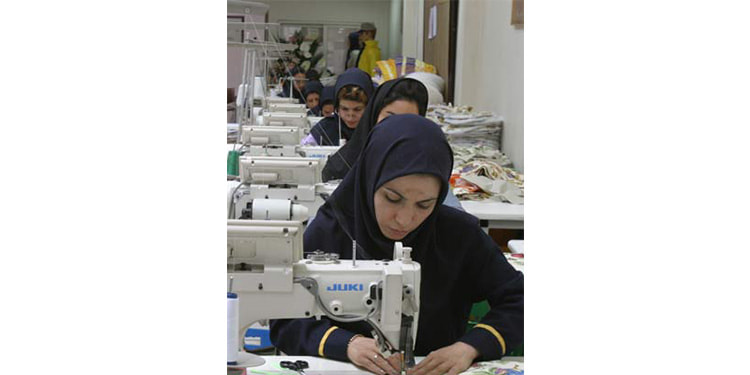
The stagnation of the market during wartime has highlighted a crisis defined as “Female Heads of Household Lacking Legal and Social Support.” Suddenly, an economic foundation that was already precarious and mired in recession crumbled, leaving the most vulnerable to be crushed under the weight of poverty and insolvency.
Ignoring this demographic in wartime planning has led to a silent but widespread catastrophe within the heart of Iranian society—a disaster whose social and economic consequences will persist for years, long after the missiles have been silenced and the fires of war extinguished.
Poverty among female heads of household is not a result of individual incapacity, but rather the consequence of economic structures, social constraints, and the misogynistic laws and policies of the clerical regime. Why, in a country of such immense wealth, have these women been abandoned to their fate? Is it not possible, as in many other nations, to allocate a budget for the support and provision of pensions for female heads of household, and specifically for single mothers?
Contrary to the common image of the “poor and helpless woman,” these women are resisting and navigating incredibly difficult circumstances. These same women stand shoulder-to-shoulder with the country’s youth on the front lines of the opposition. Wherever they find the opportunity, they cry out with clenched fists for the overthrow of the mullahs’ regime and the opening of a horizon of freedom for themselves and their children’s future.
This is a voice that the world must strive to amplify by standing alongside the popular resistance and the Resistance Units of the opposition People’s Mojahedin Organization of Iran (PMOI/MEK). The goal remains the overthrow of this regime and the establishment of a free and democratic Iran, where the “oppressed women” of today will be the primary architects of tomorrow.