Executions and the Silencing of Iran’s Women – Welcome to another episode of podcasts of the Women’s Committee of the National Council of Resistance of Iran. Glad to be here for this one. It’s, it’s a heavy one today. It really is.
Our focus today is on the wave of arrests of protesters after the January 2026 uprising and the execution of protesters, including of women sentenced to death.
Right. I mean, I want you to imagine being charged with enmity against God, which is a crime that’s literally punishable by execution.
Yeah.
And your weapon in this supposedly massive war against the divine, a steering wheel like a car that you used to drive your bleeding neighbor to the hospital.
It’s hard to even process that.
Exactly. So today we are opening up a stack of files that reveal a justice system turned completely upside down. We’re doing a deep dive into on the ground reports, human rights documentation and, you know, news excerpts from outlets like the New York Post. And what all these sources show is this severe, just sweeping wave of arrests and executions of protesters in Iran, specifically following that January 2026 uprising. And there was a very specific chilling focus on how this crackdown is disproportionately targeting women.
Yeah. And the material we’re looking at today really challenges our basic assumptions about, well, what a legal system is even supposed to do. Right. Because normally you expect the law to act as a stabilizing force, right? Like, a way to uncover the truth and deliver some kind of proportional justice.
Sure, yeah.
But these documents detail a scenario where the legal apparatus has been fundamentally repurposed. It is no longer a mechanism for justice.
No, not at all. It’s an instrument of state preservation.
It’s operating on a logic that is incredibly difficult to comprehend if you’re looking at it through a traditional normal lens.
And I think more importantly, the underlying mechanics of how these actions are actually being carried out.
Because when you read the blueprint of this response, I mean, you analyze the sheer volume of actions taken by the state between the winter and spring 2026, a very distinct deliberate pattern emerges.
Yeah.
It’s not just random chaos. It’s, it’s highly calculated.
Okay. Let’s unpack this because the most permanent absolute penalty you can have, the death penalty, is featuring prominently right at the very top of these reports.
Right.
The sources state that between March 19 and April 20, 2026, at least 15 political prisoners were executed.
Fifteen?
Yeah. And seven of those were detained protesters, specifically from the January 2026 uprising. And this brings us to a really harrowing case in the files.
Yes. Bita Hemmati.
According to the reports, she is the first woman due to be hanged in relation to these January demonstrations.
And the details of her case, as they’re laid out in the documents, are stark, and they move incredibly fast.
They really do.
Bita Hemmatti, her 34 year old husband, and two other young men were arrested during the uprising in Tehran. The reports indicate they were subjected to severe interrogation and torture. And they were hastily sentenced to death by a judge named Iman Afshari. This was at Branch 26 of the Tehran Revolutionary Court.
But the sentence didn’t just stop at execution and that’s a detail that really jumped off the page for me.
Right, the property.
Exactly. The sources highlight that the court also ordered the confiscation of all their property. So you’re not just taking their lives, you are systematically erasing their family’s material existence.
Yeah, you’re leaving the survivors with absolutely nothing.
But the reports emphasize how rapidly these sentences were handed down and it’s not an isolated threat either.
No.
There’s mention of unconfirmed reports that seven other women, including two teenagers, have also been sentenced to death.
Which represents just a staggering escalation. I mean the speed of the sentencing and then the addition of the property confiscation. It shows a desire for total annihilation of the individual’s legacy.
Completely.
And it brings us to another case in the file that really illustrates how the legal framework itself is being weaponized, the case of Mahboubeh Shabani.
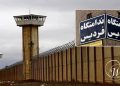
Right. Mahboubeh was born in 1993. The sources note she was violently detained by Ministry of Intelligence Forces on February 2 and she’s currently in Vakilbad Prison in Mashad. The charge against her is Moharebeh, which translates to ‘enmity against God’, which under Iranian law carries the death penalty.
Yeah.
But here is where I genuinely struggle to wrap my head around what we are reading. Yeah. The sources state that this charge of Moharebeh stems entirely from her alleged role in assisting injured protesters, specifically transporting them to medical facilities.
Just driving them to get help.
Right. I just can’t get past this hospital transport detail. I mean, if a ruling system is trying to deter riots, you punish rioters. Punishing an impromptu ambulance driver with execution doesn’t deter crime.
It just creates absolute chaos. Yeah. I look at this and I don’t see a justice system trying to maintain order. I see a blunt instrument designed purely to broadcast terror.
The regime is artificially inflating the cost of even adjacent participation. So the cruelty is the point. Yes. The lack of proportion is exactly what gives it its power. If the rules don’t make sense, you can never feel safe.
It induces a state of learned helplessness across the populace. They are trying to prevent another uprising, not by addressing the root causes of the anger, but by making the sheer terror of any involvement so high that people are paralyzed into inaction.
Wow.
It is about chilling the behavior of millions by making an extreme, almost incomprehensible example out of a few.
So the goal is inescapable terror. But, I mean, if the terror only exists inside your borders, people can just flee.
Well, you would think.
Which explains the really alarming shift in the next section of these documents. The regime realizes that to maintain this paralysis, they had to destroy the illusion of sanctuary anywhere in the world.
That is a critical transition in these reports.
The shift from domestic legal crackdowns to extraterritorial military actions. Yeah. We are talking about the deliberate targeting of female dissidents outside of Iran’s sovereign territory.
The reports outline that on April 17, drone and rocket strikes by the Iranian regime hit Iraq’s Northern Kurdistan region. The Kurdistan Democratic Party of Iran, the KDPI reported three members killed.
Two of them were Kurdish female fighters, Nada Amiri and Samira Allah Yari. Right. And this wasn’t an isolated incident. Just a few days earlier, on April 14, a revolutionary guard corps drone attacked a camp of the Komala party in the Surdash area of Soleimaniyeh Province, also in Iraq. Yeah, that was a brutal attack.
A 19-year-old Peshmerga fighter named Ghazal Mowlan was severely injured and died the next day. Two other fighters were wounded.
When a government utilizes its military apparatus to conduct targeted killings of young female fighters in a foreign country, it is demonstrating a willingness to incur international condemnation Yeah. And potentially spark severe diplomatic or military crises with its neighbors just to maintain grip on power. This isn’t just a local policing issue anymore. No, not at all.
This is why the sources mention urgent calls for the United Nations Security Council to intervene. The implications go far beyond domestic human rights. It’s a matter of regional stability. If one country can just bomb another because it doesn’t like who is living there, the whole system of international relations breaks down.
It really paints a picture of a state apparatus that is operating entirely without boundaries, legal or geographic.
But here’s the thing that really stands out to me in these reports. And it creates this bizarre sort of unsettling contrast.
What’s that?
Well, while we have these high-tech precision military strikes targeting organized fighters across borders back home, there is a completely different kind of operation happening. Right.
The domestic side. Exactly. It’s what I can only describe as a messy, wide reaching domestic crackdown. Here’s where it gets really interesting and dizzying frankly. Yeah.
The sources describe a sharp rise in wartime arrests with people being hit with incredibly heavy charges like collaboration with hostile States. But they aren’t just hunting resistance leaders anymore. They’ve essentially thrown this massive, incredibly heavy dragnet across the entire ocean floor.
That’s good way to put it. Sure.
They wanna catch sharks, but they’re ripping up dolphins, turtles, coral reefs in the process and then punishing the coral just for being in the water.
And they aren’t throwing those catches back either. They are processing them through the exact same punitive machinery we discussed earlier.
Right.
The suspension of due process we are seeing in these everyday cases is profound.
Let’s look at the specifics from the reports to understand who is actually getting caught in this net.
Let’s start with Azar Yahoo. She is 38 years old, arrested on March 5 by the Revolutionary Guards Tharala Unit and currently held in the Vakilbad Prison, the accusation, collaboration with Israel, and the evidence cited in the reports for this massive espionage charge, her social media activity. Wow! Oh wait, hold on, let me just check my notes here to make sure I’m reading this right.
Yes! Furthermore, she was cited for actions against national security simply for dancing in the street following the death of Ali Khamenei.
Unbelievable!
She danced in the street. We are talking about a heavily militarized state apparatus equipped with drones and a massive intelligence network bringing the hammer down on choreography. If it wasn’t actively destroying human lives, it would almost be comical how absurd that is.
It highlights a deep pervasive paranoia. But the tragedy is how indiscriminately that paranoia is applied. The dragnet doesn’t distinguish my age, profession, or the actual threat level of the action.
No, it really doesn’t.
On March 19, Baran Omidyan, who is a Ph.D. Student, was arrested and sent to Qarchak Prison at the exact same time her 17-year-old niece, Dorsa Ayazi, was swept up in the same arrest. Because she is a minor, she was sent to a juvenile center.
Just a kid.
Exactly. And then we have Sima Anbai Fahramani, a 34-year-old theater actor and poet, arrested March 16. She is being held in Vakilabad on charges including links with Israel, assembly and collusion against national security, and insulting the Supreme Leader, a poet and a theater actor.
This raises an important question for you, the listener, as you process this data. How does a society function when its legal system criminalizes the very act of existing and expressing oneself?
Yeah.
What we are witnessing in these documents is the total systemic suspension of due process. Notice the recurring themes and how these individuals are treated once they are taken.
Warrantless raids, the absolute denial of lawyers, the confiscation of communication devices, and the use of undisclosed secret locations.
Right.
These are not the actions of an investigative body trying to solve a crime or seek justice. These are the tactics of a system trying to enforce absolute silence in compliance.
Yeah.
When you deny someone access to legal counsel and you hide their location from their panicked family, you strip away their personhood in the eyes of the law. You turn a living citizen into a ghost.
We spent this entire deep dive looking at the massive, terrifying projection of state power. We’ve looked at hasty, irreversible death sentence.
We’ve analyzed extraterritorial military drone strikes hitting sovereign nations. We’ve examined a domestic intelligence apparatus capable of tracking a woman’s social media and disappearing her and her family in the middle of the night without a warrant.
It certainly projects an image of absolute unshakable control. Like an all seeing eye.
It does. It is designed to look invincible. But I want to leave you with a different perspective to mull over based on the reality of these reports. If a ruling system equipped with all the military might, intelligence networks, and legal machinery of a nation state is fundamentally forced to categorize a 17-year-old girl, an actor writing poetry, or a woman dancing in the street as existential threats to its national security, what does that actually reveal? Wow.
Yeah. It reveals a profound, almost paralyzing paranoia. A system that is truly secure in its legitimacy, a system that actually has the mandate of its people, does not need to drop bombs on teenagers in a neighboring country.
It doesn’t need to execute citizens for providing basic first aid. The sheer scale, the lack of proportion, and the indiscriminate nature of this dragnet crackdown might be designed to show overwhelming strength.
But in reality, it inadvertently exposes the ultimate fragility of that system’s power. They are terrified of the very people they govern.
That is a deeply powerful way to frame it. The legal system as a blunt instrument, the dragnet pulling up everyone in its path, the drone strikes across borders. It’s not the hallmark of stability or confidence. It’s the frantic violent reaction of a structure that feels the ground moving beneath its feet.
Exactly.
And the fact that the focus of that frantic reaction is the women of the nation tells you exactly who holds the real power to change the future.
While we invite you to take action in support of the Iranian people’s resistance and its brave women. We encourage you to donate to the NCRI Women’s Committee to directly contribute to the genuine cause of Iranian women’s struggle.
Please visit our website, wncri.org, for more information.
Thank you so much for joining us on this deep dive, and a warm farewell to you until the next episode.