Tuesday, July 7, 2026
  • English
  • Français
  • فارسی
  • عربى
PODCASTS
NCRI Women Committee Women Resistance Freedom
  • Home
  • NEWS
    • Women’s News
    • Articles
    • Statements
  • PUBLICATIONS
    • Monthlies
    • Documents
    • Reference Library
  • ABOUT US
    • The NCRI Women’s Committee
    • Gender Equality
    • Women’s Platform
  • MARYAM RAJAVI
    • Maryam Rajavi
    • Maryam Rajavi Speeches
    • The Plan on Women’s Rights and Freedoms
    • Ten-Point Plan for the future of Iran
  • VANGUARDS
    • The Fallen for Freedom
    • Heroines in Chain
    • Women of Iranian Resistance
    • Famous Women
    • Women in History
  • EVENTS
    • IWD Conferences
    • Activities
    • IWD Speeches
    • Solidarity
  • VIDEO
    • Videos
    • IWD Videos
  • PODCAST
  • DONATE
  • CONTACT US
No Result
View All Result
NCRI Women Committee Women Resistance Freedom
  • Home
  • NEWS
    • Women’s News
    • Articles
    • Statements
  • PUBLICATIONS
    • Monthlies
    • Documents
    • Reference Library
  • ABOUT US
    • The NCRI Women’s Committee
    • Gender Equality
    • Women’s Platform
  • MARYAM RAJAVI
    • Maryam Rajavi
    • Maryam Rajavi Speeches
    • The Plan on Women’s Rights and Freedoms
    • Ten-Point Plan for the future of Iran
  • VANGUARDS
    • The Fallen for Freedom
    • Heroines in Chain
    • Women of Iranian Resistance
    • Famous Women
    • Women in History
  • EVENTS
    • IWD Conferences
    • Activities
    • IWD Speeches
    • Solidarity
  • VIDEO
    • Videos
    • IWD Videos
  • PODCAST
  • DONATE
  • CONTACT US
No Result
View All Result
NCRI Women Committee
No Result
View All Result
Home Heroines in Chain
Face to Face with the Beast (20)

Face to Face with the Beast (20)

October 4, 2025
in Heroines in Chain

From the memoir by Hengameh Haj Hassan – Part 20

In the previous chapter of the Face to Face with the Beast, Hengameh described the Residential Unit and how its staged betrayals produced psychological breakdowns among prisoners. Here she returns to the general ward after quarantine and recounts the fragile relief, the ruined families, and the long shadow of prison-made trauma.

⚠️ Content warning: contains descriptions of psychological torture, detention, grief, and their mental/emotional effects.

Return to the General Ward

After roughly two months in quarantine, in late summer 1984 they finally put me back in Ward 7 as part of a group of ten. I don’t remember what time of day it was. I was eager to get inside and see my cellmates.

We went in and the others rushed up to meet us — though there were fewer of them. They hugged us and told us that many of the girls had been taken as punishment to Ward 8 and several more had been moved to other wards.

Zahra, one of the girls, came up holding me and crying. “Why are you crying?” I asked. She answered, “Why are you like this?” I looked into a mirror and saw how pale I had become after nine months without sunlight. I’d lost weight, and the tuft of hair at the front had turned white — I don’t know when that happened. The others joked I looked like Indira Gandhi.

Still, we greeted one another, kissed, joked, and tried to be glad for whoever was there. One of the prisoners from Sari said the agents and their gang kept coming around, saying, “Soon you’ll see your resisting friends in interviews,” and spreading rumors that you had broken. They kept trying to undermine you, but we knew you wouldn’t break, and you wouldn’t betray one another.

The turncoats and spies no longer swaggered; they had sunk low. That was because the contradictions and fractures inside the prison administration — fed by the statements of clerics like Ansari — had made them vulnerable. For the moment no one supported them; the regime was putting the blame on them for the mess, and they were left exposed.

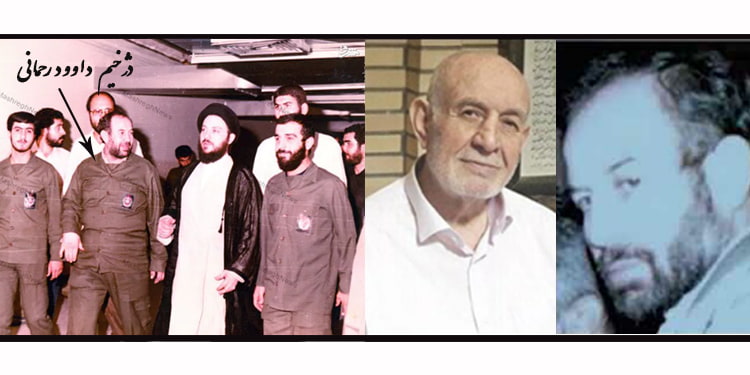
The turncoats had a deeper fear than the guards: they feared the prisoners themselves, because they knew how many lives had been destroyed by their betrayals. Even the interrogators and executioners lived in terror. Haj Davood and Lajevardi barely left the prison; Haj Davood had even brought his wife and children to live there. The interrogators wouldn’t even face prisoners awaiting execution without masks. When those men lived in fear, imagine how the turncoats felt.
Face to Face with the Beast (13)
Haj Davood Rahmani

In Ward 7 my eyes landed on Mother Masoumeh — I wasn’t mistaken; it was Masoumeh Ilkhani herself. She had become much thinner, and her face looked utterly worn and shattered. I went to her and hugged her, and my hand reached instinctively for the braid at the back of her head — there was nothing there but a short, thin plait. “Where’s your hair?” I asked. She looked at me kindly and said, “Never mind. What use is hair when our best are gone?” She looked deeply sad. We didn’t have time to talk more. Night came, and we kept talking with the girls while the security agents watched and monitored us.

While I sat talking with Jamileh, Tavous — that filthy creature who had helped send girls to the “cages,” the “coffins,” and the Residential Unit — came brazenly and sat beside us. “Hello, Hengameh! How are you?” she said.

I knew the agents had sent her to spy. I snapped: “Rot in hell, you bastard! Who told you to come speak to me, you piece of scum? Get lost!” She scurried away like a mouse. Jamileh said, “Hengameh, why did you say that? Tomorrow, they’ll send you to Ward 8.” I answered, “I pray to God they do — Shekar is there.” To be honest, I’d stopped counting consequences; I didn’t care anymore. What worse could they do than what they’d already done?

The next day I went to the yard to see Mother Masoumeh and we talked. As she showed me the photographs she had received during that time, she showed me a picture of her little son, now grown, and said, “This photo was taken a few days before he died.” I thought I’d misheard. “Before what?” I asked. Calmly she said, “Don’t be upset. So many of our best children were executed by them — Kobra, Fati, Afsaneh, Nahid… My son was one of them. His blood is no less red; in effect, Khomeini killed him.”

She then explained — seemingly to spare me — that her son had fallen from a balcony while playing and died. She quickly changed the subject and showed me another photograph. How patient and dignified she was.

A tall, wheat-skinned girl I had not seen before sat near us on the yard steps and asked, “Are you Hengameh?” I said yes. “Were you a nurse?” she asked; I said yes. “How do you know me?” I asked. She said, “I knew you from your speech and the way you move. Shekar used to tell me a lot about you — you are exactly as she described. I’m Mina.”

I was relieved. “You were with Shekar?” I asked. “When? Where?” She said quietly, “Not now — forget it for a while.” I pressed, and she replied, “Look, my condition isn’t good. They watch me closely. For your own sake, don’t talk with me much.” I said, “All right, please — tell me about Shekar.”

Mother Masoumeh cut in sharply and scolded me: “Don’t you understand? You mustn’t be talking! Better to listen!” I had to stop. Mina was the only person I saw from the Residential Unit who seemed at least somewhat steady — not broken — but she was silent and cautious.

That was the last time I saw Mother Masoumeh in that ward. Later I heard she had gone mentally ill in prison. At her final visit she was told the news that her elder son had died. What a cruel fate: her nephew had taken the boy hiking and he fell and died. Both her children were taken from her, one after the other. After hearing about the second son, she fell into silence and never spoke again; with severe depression and total psychological collapse, she was kept in prison for two more years.

When the authorities were finally certain she would never return to normal life, they released her. Mother Masoumeh never went to trial and never received a sentence — she had no crime, nothing the regime’s own laws could properly label — so she was never sent to court. Under captivity she finally went insane, and only then did they release her. A woman whom the Shah’s prisons could not bend was held for four years without charge under Khomeini, and when they could not fabricate a sentence, they destroyed her mind.

Truly, Khomeini’s prisons are like no other. Perhaps only the Nazi death camps are comparable — but in those camps people were killed outright. In Khomeini’s prisons, if someone survived the “cage,” the “coffin,” the Residential Unit — horrors without parallel — and did not lose their mind, they were often later executed in the 1988 massacre after years of torture by the regime’s killers. Only someone who has lived inside those walls can understand. Words in no dictionary can adequately describe it.

To be continued…

Contextual notes

  1. “Agents and their gang” / the “Gestapo”: the prisoners’ term for prison security agents and their collaborators — officers and local informants who ran surveillance, arrests, and interrogations.
  2. Turncoats / Tavvab: prisoners who, under torture or pressure, “repented” and collaborated with interrogators; they often served as informers or intermediaries inside the prison.
  3. Ward 7 / Ward 8: specific sections/wards inside Evin / Ghezel Hesar used for general population (Ward 7) or for punitive isolation and harsher treatment (Ward 8).
  4. Residential Unit: a section used for intensive psychological torture and staged coercion — a place where prisoners were forced into false confessions and turned into tools against their fellow inmates.
  5. “Cages” and “coffins”: small, coffin-like punishment cells where prisoners were forced to sit blindfolded between wooden planks for prolonged periods — part of the system to force “repentance.”
  6. 1988 massacre: the large-scale executions of political prisoners in Iran in 1988; many prisoners mentioned in these memoirs were later killed in that wave.
  7. Shekar / Shekar Mohammadzadeh: Hengameh’s close friend and fellow nurse who appears repeatedly in the memoirs (Shekar was imprisoned and a symbol of resistance).
ShareTweetPinShareSendShare

Related Posts

Iran: 128th Week of Hunger Strike in 57 Prisons Against the Death Penalty

July 7, 2026
Iran: 128th Week of Hunger Strike in 57 Prisons Against the Death Penalty

The "No to Executions Tuesdays" hunger strike campaign continued into its 128th week on Tuesday, July 7, 2026, with political prisoners across 57 prisons in Iran. By maintaining...

Read moreDetails

JINNEWS: An Account of Women Prisoners’ Resistance in Iran Amid Repression and Discrimination

July 7, 2026
JINNEWS: An Account of Women Prisoners’ Resistance in Iran Amid Repression and Discrimination

Turkey’s JINNEWS, one of the region’s well-known news outlets covering women’s issues and human rights, published a report on June 24, 2026, on the situation of women prisoners...

Read moreDetails

Iran: Death and Jail Sentences for Two Women Arrested During January Uprising

July 6, 2026
Iran: Death and Jail Sentences for Two Women Arrested During January Uprising

Mahnaz Chardouli, who was arrested during the January uprising, has been sentenced by the Tehran Revolutionary Court to death and 10 years in prison. Her fiancé, Mehdi Nazer,...

Read moreDetails

June 2026 Report: Working Iranian Women Erased from Labor Market

July 5, 2026
June 2026 Report: Working Iranian Women Erased from Labor Market

New Generation of Working Iranian Women Being Erased from the Labor Market June 2026 Report: Behind macroeconomic indicators and the dry labor market statistics lies the painful reality...

Read moreDetails

Iran: Female Lawyer in Shiraz Sentenced to 6 Years in Jail

July 4, 2026
Female lawyer sentenced to 6 years in Prison Defense Counsel Silenced: Two Human Rights Attorneys Arrested

Another lawyer remains in detention without final disposition of her case Elham Zeraatpisheh, a female lawyer, has been sentenced by Branch 1 of the Revolutionary Court in Shiraz...

Read moreDetails
Next Post
Roya Abbas-zadeh, 25, Executed in the Central Prison of Zanjan

Roya Abbas-zadeh, 25, Executed in the Central Prison of Zanjan

Documents

Crushed by Design: Structural Crises and Inequitable Policies Push Female-Headed Households to the Edge

Crushed by Design: Structural Crises and Inequitable Policies Push Female-Headed Households to the Edge

May 18, 2026

Introduction Life for the Iranian people under the religious dictatorship is fraught with hardship and peril from every perspective. Whether...

A Report to CSW70: Gender-Based Discrimination Under Iranian Law

A Report to CSW70: Gender-Based Discrimination Under Iranian Law

March 8, 2026

Structural Inequality and State-Sanctioned Oppression of Women Gender-Based Discrimination Under Iranian Law” is the title of the NCRI Women’s Committee’s...

Annual Report 2026: From Protests, to Uprising, and the Role of Iranian Women

Annual Report 2026: From Protests, to Uprising, and the Role of Iranian Women

March 3, 2026

On the eve of International Women’s Day 2026, the NCRI Women’s Committee presents its Annual Report 2026, offering a recap...

Monthlies

June 2026 Report: Working Iranian Women Erased from Labor Market
Monthlies

June 2026 Report: Working Iranian Women Erased from Labor Market

July 5, 2026
May 2026 Report: The Enduring Resistance of Iranian Women
Monthlies

May 2026 Report: The Enduring Resistance of Iranian Women

May 31, 2026
April 2026 Report: Mass Arrests of Women: Targeted Repression in Time of Crisis
Monthlies

April 2026 Report: Mass Arrests of Women in Iran

April 30, 2026
March 2026 Report: How Iranian Women Are Shaping the Resistance
Monthlies

March 2026 Report: Courage Under Fire

April 3, 2026

Articles

JINNEWS: An Account of Women Prisoners’ Resistance in Iran Amid Repression and Discrimination

JINNEWS: An Account of Women Prisoners’ Resistance in Iran Amid Repression and Discrimination

July 7, 2026

Turkey’s JINNEWS, one of the region’s well-known news outlets covering women’s issues and human rights, published a report on June...

Iran Water Crisis: Water Mafia and Ecosystem Destruction

Iran’s Escalating Water Crisis: Energy Imbalance, Popular Protests, and the Role of Women

July 1, 2026

The Iran water crisis has transcended a mere climatic challenge, evolving into a structural catastrophe marked by severe ecosystem destruction...

Day 2 of Free Iran 2026: Broad Support for 10-point plan and Criticism of Western Appeasement

Day 2 of Free Iran 2026: Broad Support for 10-point plan and Criticism of Western Appeasement

June 23, 2026

On Sunday, June 21, 2026, the second day of the “Free Iran 2026 – Supporting the Democratic Alternative” conference was...

The Fallen for Freedom

Elham Zeinali A Compassionate Nurse and the Pillar of Her Family
The Fallen for Freedom

Elham Zeinali

July 2, 2026
The Unbroken Smile: How Sara Mokhtar, a Former Airline Executive Became the Vanguard of the Iranian Resistance
The Fallen for Freedom

The Unbroken Smile: How a Former Airline Executive Became the Vanguard of the Iranian Resistance

June 28, 2026
Shilan Salehi: Iran Regime Extorted 150 Million Tomans for Return of Her Body
The Fallen for Freedom

Shilan Salehi: Iran Regime Extorted 150 Million Tomans for Return of Her Body

June 13, 2026
Parnia Shad Bejarkenari: 23-Year-Old Woman Killed for Freedom in Iran
The Fallen for Freedom

Parnia Shad Bejarkenari: 23-Year-Old Woman Killed for Freedom in Iran

June 13, 2026

ABOUT US

NCRI Women Committee

We work extensively with Iranian women outside the country and maintain a permanent contact with women inside Iran. The Women’s Committee is actively involved with many women’s rights organizations and NGO’s and the Iranian diaspora.
The committee is a major source of much of the information received from inside Iran with regards to women. Attending UN Human Rights Council meetings and other international or regional conferences on women’s issues and engaging in a relentless battle against the Iranian regime’s misogyny are part of the activities of members and associates of the committee.

CATEGORIES

  • Activities
  • Articles
  • Documents
  • Famous Women
  • Heroines in Chain
  • IWD Conferences
  • IWD Speeches
  • IWD Videos
  • Maryam Rajavi
  • Maryam Rajavi Speeches
  • Monthlies
  • Podcast
  • Reference Library
  • Solidarity
  • Statements
  • The Fallen for Freedom
  • Videos
  • Women in History
  • Women in Leadership
  • Women of Iranian Resistance
  • Women's News

BROWSE BY TAG

Child marriage coronavirus education execution forced hijab Gender Gap Generation Equality Honor killings Iran Teachers Maryam Akbari Monfared Nurses Plan on Women's Rights and Freedoms Poverty Prisoners Protests rural women Saba Kord Afshari The girl child Violence against women Women's Leadership Women Heads of Household Zeinab Jalalian

The copyright of all the material published on this website has been registered under © 2016 the Women’s Committee of the National Council of Resistance of Iran. To obtain permission to copy, redistribute or publish the material published on this website, you should write to the NCRI Women’s Committee. Please include the link of the original article on our website, women.ncr-iran.org.

Welcome Back!

Login to your account below

Forgotten Password?

Retrieve your password

Please enter your username or email address to reset your password.

Log In

Add New Playlist

No Result
View All Result
  • Home
  • News
    • Women’s News
    • Articles
    • Statements
  • Publications
    • Monthlies
    • Documents
    • Reference Library
  • About Us
    • The NCRI Women’s Committee
    • Gender Equality
    • Women’s Platform
  • Maryam Rajavi
    • Maryam Rajavi
    • Maryam Rajavi Speeches
    • Ten Point Plan for Iran
    • The Plan on Women’s Rights and Freedoms
  • Vanguards
    • The Fallen for Freedom
    • Heroines in Chain
    • Women of Iranian Resistance
    • Famous Women
    • Women in History
  • Events
    • IWD Conferences
    • Activities
    • IWD Speeches
    • Solidarity
  • Video
    • Videos
    • IWD Videos
  • Podcast
  • DONATE
  • Contact us
  • فارسی
  • عربی
  • Français

The copyright of all the material published on this website has been registered under © 2016 the Women’s Committee of the National Council of Resistance of Iran. To obtain permission to copy, redistribute or publish the material published on this website, you should write to the NCRI Women’s Committee. Please include the link of the original article on our website, women.ncr-iran.org.