Beyond the Execution Chamber: Welcome to another episode of podcasts of the Women’s Committee of the National Council of Resistance of Iran. Today, we’re examining some pretty stark new reports from the NCRI.
And just to set the stage here, our mission today is to objectively analyze these findings. We are reporting the documented facts regarding the treatment of women in Iranian prisons just so you can understand what’s actually happening on the ground.
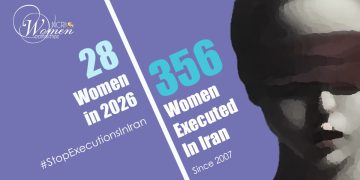
Exactly. And the data we’re pulling from these sources, it really paints a picture of, well, a dual system at work. On one side you have the formal documented punishment. I mean, Amnesty International confirmed 2,159 total executions in Iran in 2025. Oh, wow. Yeah.
And to put that in perspective for you, that is the highest annual execution rate documented globally since 1981. Since 1981.
Okay. Let’s unpack this because that formal system is moving fast. Since our last deep dive on this region back on August 7, the regime has already executed two more young women.
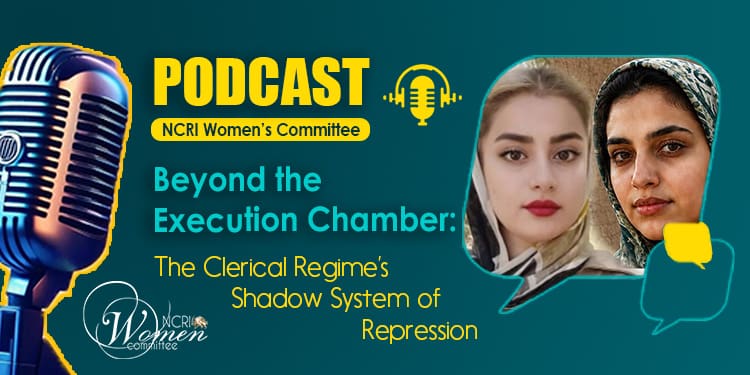
Yeah. It’s tragic. We’re looking at 20-year-old Donya Mohammadi executed on August 19, and the 24-year-old Marzieh Nayyeri on August 8. And the context around Marzieh’s case is particularly grim, right? It really is.
The sources state that she was forced into a child marriage at just 17 and later she claimed self-defense after stabbing her husband during an attempted assault by him and his business partner. But the court just rejected that.
Completely rejected her defense. And that right there, that is the highly visible machinery of the state at work.
But the reports from the NCRI focus heavily on what happens before anyone ever reaches the execution chamber.
Right. They detail this daily reality of intense psychological and biological pressure.
Okay. Wait. I have to stop you there because this is what I really struggled to understand when I was reading through these sources.
Sure.
If the regime is already executing people at record breaking numbers, I mean, if they have absolutely no problem publicly hanging a 24-year-old on the record, why bother with a shadow system of biological pressure inside the prisons?
That’s the crucial question.
Like, why use stealth tactics when you’re already using the ultimate blunt instrument? You’re ignoring the underlying disease of systemic domestic abuse to just treat symptoms with executions. So, why the shadow games?
Well, it really comes down to plausible deniability and you know the specific targets involved. Because executions, they require a formal documented process. Right. It’s paperwork.
Exactly.
But when a system wants to break the morale of political dissidents without generating official execution warrants, they use administrative neglect. They essentially turn the environment itself into a weapon.
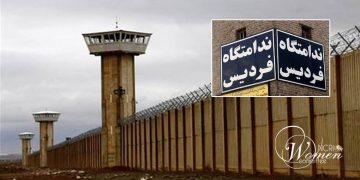
Which brings us to Fardis Prison in Karaj.
Yes.
The reports detail this absolute crisis in Ward 1, where the recreation courtyard is literally flooded with overflowing sewage. It is a massive biological hazard, especially in the summer heat, causing severe outbreaks of diarrhea and vomiting.
It’s awful.
But when inmates protested, officials just refused to fix it. They bizarrely blamed budget deficits, and they told the prisoners they would only fix the plumbing if they received benefactor donations.
Yeah, benefactor donations.
If an official physically strikes a prisoner, you know, that’s documented abuse. But if the plumbing fails and diseases spread, the administration just shrugs. They shrug and blame the budget. And according to the sources, this deliberate inaction is a highly calculated pressure tactic because Ward 1 specifically houses political prisoners, including supporters of the PMOI or MEK which is a major Iranian opposition group.
Oh, I see.
So, the regime uses this infrastructural failure to systematically break their resistance all while keeping their own hands theoretically clean on paper.
It’s weaponized bureaucracy.
Yeah. That’s exactly what it is.
And it doesn’t stop infrastructure either. It extends to just direct psychological terror. Like on August 5 at Yazd Central Prison, judicial officials reportedly entered the women’s ward, targeted women on death row, and just verbally assaulted them.
The sources actually quote officials calling the women filthy like pigs.
And threatening to execute them immediately just to strip away any remaining hope they might have had.
The underlying mechanism there seems to be engineering an environment of just absolute inescapable intimidation.
Yes. And the physical toll of that stress is immediate. Following those threats, one prisoner who is a stroke survivor collapsed from a severe nervous episode and completely lost consciousness.
And the inmates can’t even speak out about it.
Right? Parisa Kamali, another political prisoner, is now facing new charges of propaganda against the regime simply for smuggling out an audio message protesting these exact conditions.
It’s a closed loop of pressure.
It really makes you reflect on the sheer resilience required to survive in there. You’re forced to exist in an environment where your basic human needs like sanitation, health, dignity are actively engineered to break you down day after day.
It’s astounding. And it really leaves you with a final provocative question to ponder on your own. When a legal system bypasses its own formal codes and uses biological hazards and engineered despair as shadow punishments, how must the international community redefine its thresholds for human rights interventions?
Something to really think about.
We want to invite you to take action in support of the Iranian people’s resistance and its brave women who are fighting against these exact legal structures every single day.
We strongly encourage you to donate to the NCRI Women’s Committee to directly contribute to the genuine cause of Iranian women’s struggle for equality and freedom.
You can find out exactly how to do that and access so much more information and reporting on these issues by visiting the website, wncri.org.
That is wncri.org. From both of us, thank you so much for taking the time to listen and for being willing to engage with these difficult, vital human stories. Take care of yourselves, and we will catch you on the next deep dive.
Goodbye.