
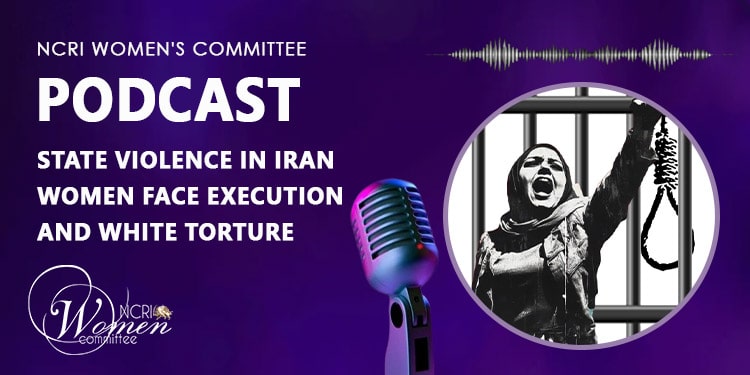

As we approach International Human Rights Day and the final days of the 16 Days of Activism Against Gender-Based Violence, the NCRI Women’s Committee Podcast presents a stark examination of escalating state violence against women.
The discussion centers on two interlocking crises: a shocking spike in executions, including of women, and the systematic torture of female political prisoners through medical neglect.
1. A State-Driven Execution Crisis
- 1,800+ executions in the first 11 months of 2025
- 615 hangings in October and November alone
- 57 women executed, a 70% increase over the previous year
- 32 women executed in just four months (July–November)
These numbers show a deliberate government strategy to terrorize society, particularly women, who are increasingly central to anti-regime resistance.
Political Executions
Women targeted for political opposition face sham trials:
- The most striking case: 67-year-old Zahra Shahbaz Tabari, sentenced to death in a 10-minute online trial with no lawyer, based only on a cloth with the slogan “Woman, Resistance, Freedom” and a short audio clip.
This crackdown echoes warnings from long-term political prisoner Saeed Massouri and is underscored by the regime’s own rhetoric, such as the state-affiliated FARS News praising the 1988 massacre as a “brilliant record.”
Executions of Women from Marginalized Backgrounds
Most women on death row are victims of poverty and systemic violence:
- Marzieh Esmaeili, 39, executed for transporting 600g of drugs for the equivalent of $100.
- Mina Sadoughi, mother of three, executed with her husband and denied a final visit with her children.
These cases reveal a judicial system that punishes the vulnerable rather than addressing the conditions that trap them.
2. “White Execution”: Torture by Medical Neglect
The podcast then examines the slow-acting violence inflicted through denial of medical care, described as a deliberate state policy.
Key Cases
- Maryam Akbari Monfared: 16 years in prison, severe mobility issues, doctors calling for surgery and daily physiotherapy; yet authorities block all hospital transfers.
- Hoda Mehreganfar: urgent risk of internal rupture from recurring endometrioma; transfer denied by order of security agencies.
- Shiva Esmaeili, 60: taken to a hospital but returned to prison because her bank card lacked funds; officers prevented her from contacting family.
- Fatemeh Ziaii, 68: suffers advanced MS, released on medical bail but re-arrested despite being medically unfit for imprisonment.
Inhumane Prison Conditions
In November 2025, over 60 female political prisoners were transferred to:
- a basement ward 40 steps underground
- infested, damp, without heating, beds, or proper sanitation
For prisoners with chronic illness, these conditions accelerate physical decline by design.
3. What Must Happen Now
The NCRI Women’s Committee calls for:
- Immediate UN intervention to release gravely ill political prisoners such as Maryam Akbari Monfared and Fatemeh Ziaii.
- An international fact-finding mission with direct access to Iranian prisons and to female political prisoners themselves.
4. Final Takeaway
Time itself has become a weapon of repression:
- Fast executions—like 10-minute trials—instill fear.
- Slow torture through medical neglect crushes the body and spirit.
Despite this machinery of violence, the extraordinary resilience of imprisoned women whose refusal to submit continues to inspire resistance.