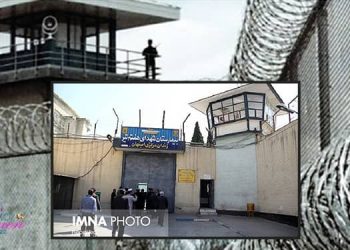

Arghavan Fallahi: 4 Months of Detention in Ward 209 of Evin
Political prisoner Arghavan Fallahi has remained in a state of legal uncertainty for more than four ...
Read moreDetails

Female political prisoners in Iran are victims of an arbitrary legal process.
Ever since the fanatic mullahs’ rise to power in 1979, many dissidents have been facing imprisonment, torture, and execution.
Women made up about one-third of the inmates massacred in 1988 on Khomeini’s Fatwa.
The Iranian regime has continued to clamp down on dissent and incarcerate human rights activists and political opponents since 1980. Many civil activists and human rights defenders are held behind bars.
Since August 2013 until the end of January 2020, 105 women were executed during Hassan Rouhani’s tenure as the mullahs’ president.
The main place were female political prisoners are detained is the women’s ward of Evin Prison in Tehran.
Although living conditions in Evin are horrific and inhumane, it is the only place where detainees are separated according to the category of their offenses.
Female political prisoners are also incarcerated in the prisons of Varamin (Qarchak), Urmia, Bukan, Tabriz, Khoy, Kermanshah, Zanjan, Ahvaz, Sanandaj, Kashan, Kerman, Marivan, Mashhad, Mahabad, Yasuj, Yazd, Semnan, and Shiraz, serving their unjust sentences amongst ordinary and often dangerous inmates.
The Universal Declaration of Human Rights highlights the right to freedom of all human beings and specifically the advocacy and freedom of religion and thought.
The declaration’s Article 18 states, “Everyone has the right to freedom of thought, conscience and religion; this right includes freedom to change his religion or belief and freedom, either alone or in community with others and in public or private.”
The International Covenant on Civil and Political Rights also states that no person shall be subjected to arbitrary arrest. Article 9 of the covenant states, “Everyone has the right to liberty and security of person.”
Rule 61 of the United Nations Rules for the Treatment of Women Prisoners and Non-custodial Measures for Women Offenders (the Bangkok Rules) reads, “When sentencing women offenders, courts shall have the power to consider mitigating factors such as lack of criminal history and relative non-severity and nature of the criminal conduct, in the light of women’s caretaking responsibilities and typical backgrounds.”
Clearly, these standards are far from the conduct of the Iranian regime.
The NCRI Women’s Committee has published a comprehensive report, “Women in Pursuit of Justice”, to shed light on the systematic violations of women’s human rights in Iran in the process of arrest and imprisonment and hopes to receive support and attention by human rights advocates, lawyers, and relevant authorities from around the world.
Political prisoner Arghavan Fallahi has remained in a state of legal uncertainty for more than four ...
Read moreDetailsFollowing the execution of political prisoner Mojahid Kourkour, political prisoners in the women’s ward and Ward ...
Read moreDetailsMore than 50 days have passed since the arrest of Somayeh Rashidi in Tehran, and she ...
Read moreDetailsIn a continued campaign of intensified pressure on political prisoners in Iran, political prisoner Shiva Esmaeli, ...
Read moreDetailsWithin the oppressive walls of Dowlatabad Prison in Isfahan, a harrowing tale of suffering and exploitation ...
Read moreDetailsUpright in Life, Condemned to a Slow Death: Female Political Prisoners Denied Medical Care in Iranian ...
Read moreDetailsMore than 20 days have passed since the arrest of 15-year-old student Elina Validi and her ...
Read moreDetailswomen prisoners: In the 70th week of the nationwide campaign “No to Execution Tuesdays” political prisoners ...
Read moreDetailsSakineh Parvaneh, a political prisoner held in the women’s ward of Evin Prison, has been denied ...
Read moreDetailsNearly four months after the arrest of Ayda Najaflou — a Christian convert and mother of ...
Read moreDetails