
Prison Memoirs of Azam Haj-Heydari from The Price of Being Human —Part Twenty-Five
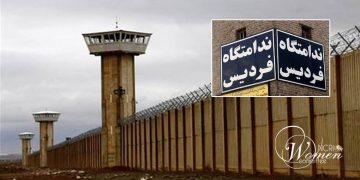
After the brief period of relative calm following the dismantling of the Cage Ward, the pressure on Azam Haj-Heydari and the other imprisoned women soon intensified again. They were transferred from Qezel-Hesar to Evin, where the authorities placed them under renewed surveillance, harassment, and physical abuse, while attempting to use informers and collaborators to provoke conflict among the prisoners.
Yet the women refused to let the prison authorities dictate the terms of their existence. In the midst of beatings, threats, deprivation, and constant humiliation, they found ways to remain united and preserve their sense of dignity and humanity. In this part of her memoir, Azam Haj-Heydari recounts the transfer to Evin, the renewed wave of repression, and the small acts of solidarity and defiance through which the prisoners resisted the regime’s efforts to isolate and break them.
At the time, Azam was a young teacher in her early twenties who had joined the struggle against the Iranian regime. She spent five years imprisoned in the Judiciary’s Temporary Detention Center, Evin, Qezel Hesar, and Gohardasht prisons, where she was subjected to brutal torture by Khomeini’s guards.
The Transfer to Evin and a New Wave of Pressure
Aside from the traitors who constantly prowled around us in Ward 4, trying to gather information about who spent time with whom, who was reading books, or who was saying what, the regime’s outward show of moderation—complete with apologies such as, “We’re sorry, it was a mistake! Don’t blame these things on Islam,” and so on—lasted no more than three months.
Then they brought a number of female Revolutionary Guards into Ward 4, where we were being held. They circulated among us, selecting people to target, and once again it was back to square one. Before long, they reopened the punishment wards, just as they had planned.
Three months after the Cage Ward had been dismantled, they rounded up about seventy of us, including me, from Wards 3, 4, and 7 and took us to the basement of Qezel-Hesar. They kept us there for two or three hours, threatening us and showering us with obscene and degrading abuse. Their filthy language, typical of the clerical regime’s culture, revolved almost entirely around sexual insults.
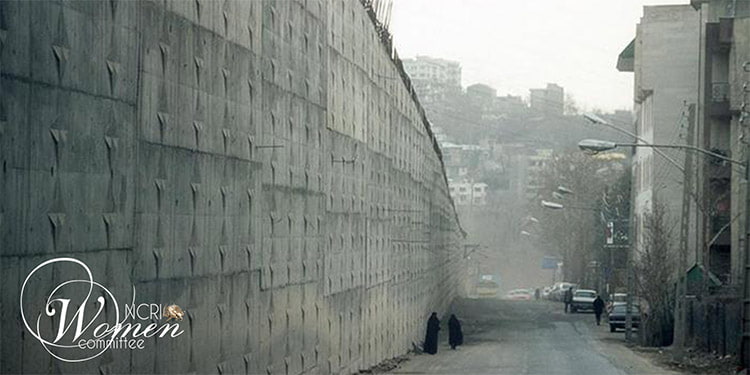
Eventually, they transferred us to Evin and put us in Ward 3, which had been emptied because of its dilapidated condition. Fakour, who was the head of Evin Prison at the time, came to see us. In a tirade filled with insults and abuse, he said, “They’ve collected all the garbage and trash from Qezel-Hesar and dumped it here.”
When we entered the ward, it was empty. Fakour went into the bathroom to inspect it. Suddenly, a lump of filth landed on his head, creating a truly humiliating spectacle. We all burst out laughing. The meaning of our laughter was clear: See? You’re the garbage yourself. Here’s your answer!
Fakour took our laughter very badly. In retaliation, five of us were taken away for interrogation that very first day. Two days later, they brought them back battered and barely recognizable. Mehri and Soheila Rahimi, who were sisters, were among them. I do not remember the names of the others.
From then on, the seventy of us were crammed into three locked rooms. Gradually, more prisoners were brought in from Qezel-Hesar, while relatively long-term prisoners from the various wards of Evin were also transferred into ours.
As far as we were concerned, we were happy to be together again. After several years of being scattered among the cages and different wards, it felt good to have everyone gathered in one place again.
Of course, the executioners had also designated one room for the traitors in order to put additional pressure on us. After everything the regime had done to them over the years, they had truly been stripped of their humanity. They had been turned into creatures like the other guards and torturers. Even their appearance had come to resemble that of the female guards, and they no longer had the slightest affinity with the rest of us.
Following the orders and directives they had been given, they held nothing back in their mistreatment of the other prisoners. Every day they would march around the ward, hurling insults at everyone and looking for confrontation.
The guards opened the doors of the rooms three times a day and took us to the bathroom. They also opened the doors three times a day to bring us food.
We had bitter and sweet days during that period. Although most days were marked by savage attacks from the regime’s thugs and Evin’s riot squad, who would descend on us like Genghis Khan’s army, beating us, smashing things, and dragging people away, we also felt that everything we endured was part of our resistance and our struggle against this inhumane regime. We were defending our humanity through that resistance, and for that reason, even those bitter experiences became meaningful to us.
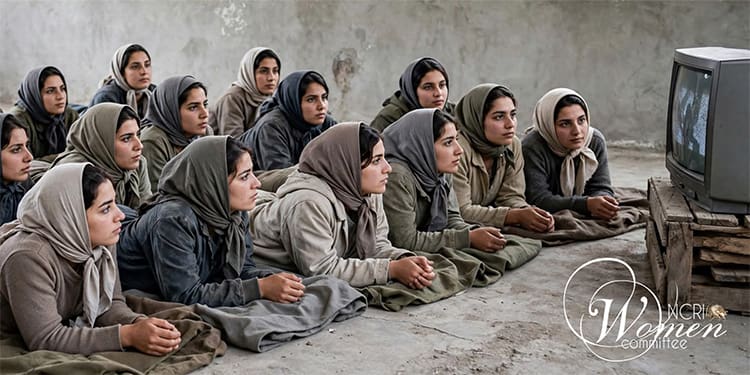
For example, there was a television in the room, but the guards would frequently come and take it away under one pretext or another, deliberately depriving us of both a source of news and a means of entertainment.
I remember that at the time, a historical television series called Sarbedaran was being broadcast on regime television. Because the series dealt with one of the movements of resistance in ancient Iranian history, the girls were very interested in it. The executioners therefore did not want us to watch it and were constantly looking for an excuse to take the television away.
We knew what they were trying to do, so we were careful not to give them any excuse. We also made sure not to get into confrontations with the traitors.
Whenever the series was about to begin, they would come in shouting, “Monafeqin (hypocrites), why have you all gone quiet? What’s going on? What are you afraid of, that you’re sitting there in silence? What happened? Have you suddenly become interested in movies? How come you’ve forgotten all about fighting?”
With every remark, they tried to provoke us into reacting and getting into an argument with them, so they would have an excuse to take the television away. But they failed.
Every Monday night, the series began at nine o’clock. We prepared everything before dinner. We ate, cleared everything away and put it neatly in place, then spread out our blankets, with everyone taking their assigned spot.
As soon as the program began, one of the girls would count, “One, two, three!” The moment she finished counting, we would all dive down together and lie on our sides so we could watch. If everyone simply lay down, however they pleased, there would not have been enough room for all of us. So, this was how we arranged ourselves and waited for the program to begin.
At first glance, this might seem like nothing more than a childish game or a silly little routine. But under those hellish conditions, when the regime wanted the prisoners to live in absolute silence and isolation, we did the exact opposite. We coordinated everything with one another and turned even the most ordinary activities into little sources of amusement, creating moments of happiness, energy, and affection among ourselves.
That was the only way we could withstand those conditions and survive under all that pressure, humiliation, and torture.
The guards, meanwhile, were driven crazy by what we were doing. At exactly nine o’clock, they would open the door and shout, “Monafeqin (hypocrites), go to the bathroom!”
But it was as though they were talking to a wall. No one moved.
They would become furious, curse and insult us, and then threaten us: “You won’t be seeing the bathroom or toilet again until tomorrow morning!” Then they would slam the door shut and leave.
The executioners became so angry about our defiance that, in retaliation, they would delay taking the girls to the bathroom for several hours the following morning, deliberately putting us under even greater pressure.
To be continued…