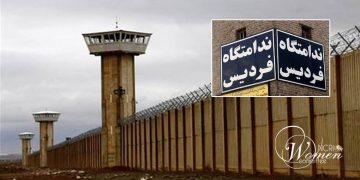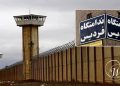

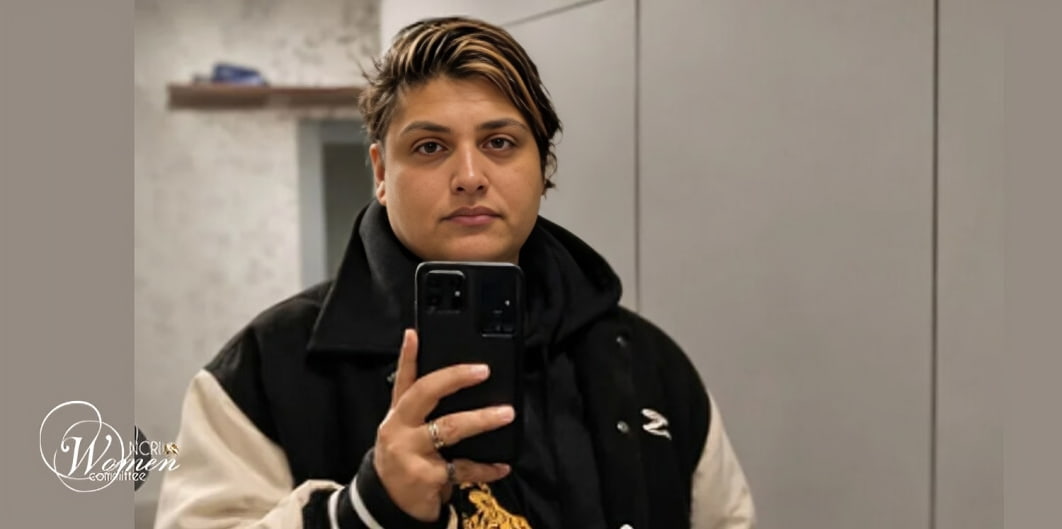
Mahboubeh Shabani, a detainee from the January 2026 protests held in Vakilabad Prison in Mashhad, has gone on a hunger strike to protest deteriorating prison conditions, unresolved judicial status, and denial of medical care. The hunger strike of Mahboubeh Shabani at Vakilabad Prison began on Thursday, August 20.
Social media reports indicate that on the third day of her hunger strike, prison authorities transferred Mahboubeh Shabani to Ward 6 under pressure and threats, severing her telephone access and family visitation rights.
An informed source close to her family confirmed the news regarding Mahboubeh Shabani, stating: “Ms. Shabani went on a hunger strike on Thursday, August 20, 2026, to protest her harsh detention conditions, indefinite judicial status, and the denial of medical treatment for her physical ailments. Currently transferred to Ward 6 of Vakilabad Prison, she has been shuffled at least six times between the ‘Aramesh’ (isolation) ward and quarantine units. Furthermore, she developed a severe skin disease on the back of her neck during detention and has received no proper medical attention.”
Mahboubeh Shabani has remained in judicial limbo without a final verdict for over six months. In mid-July, she was also violently transferred to the quarantine ward of Vakilabad Prison as a punitive measure.
Unsanitary conditions in that ward caused Mahboubeh to contract a skin disease, while her cardiac condition has been left untreated for months without transferring to medical facilities.
Who is Mahboubeh Shabani
Mahboubeh Shabani, born in 1993 and arrested during the January 2026 protests in Mashhad, is currently held in Vakilabad Prison.
She was violently arrested on February 2, 2026, by Ministry of Intelligence agents.
She was violently detained that evening in front of a sports complex at Azadi Square in Mashhad by Intelligence Ministry agents, and her personal motorcycle was confiscated. The primary reason for her arrest was aiding wounded protesters on January 8 and 9; she used her motorcycle to transport injured individuals to medical centers and hospitals. This humanitarian act led to heavy charges against her, including “Moharebeh” (enmity against God). Although the charge of Moharebeh was later removed from the indictment, other severe charges remain open in Branch 1 of the Mashhad Revolutionary Court, keeping the threat of a heavy sentence alive against Mahboubeh Shabani.
January 2026 Uprising
The January 2026 Uprising What began on December 28, 2025, as an economic protest by Tehran bazaar merchants against skyrocketing inflation and the collapse of the Iranian rial quickly transformed into a nationwide political uprising. The movement spread like wildfire across 400 cities and deep into the country’s university campuses.
The heroic uprising of Iranian men and women was met with unrestrained violence. Countless protesters who took to the streets across the nation became targets of mass slaughter.
Women paid the highest price during the crackdown in January. Time and again, they stood ground and resisted before the Revolutionary Guard Corps (IRGC) and other oppressive forces; they faced water cannons, blocked streets, and refused to retreat. For many, the cost of this courage was their lives.
On the direct orders of Ali Khamenei, repressive security forces opened fire with intent to kill. Snipers targeted the heads, hearts, and eyes of demonstrators. From rooftops and pedestrian overpasses, volleys of bullets rained down indiscriminately on defenseless civilians, young and old alike.
By Khamenei’s own admission, “several thousand people” were killed. The People’s Mojahedin Organization of Iran (PMOI/MEK) announced that more than 50,000 individuals were arrested during these nationwide protests.