

Ebrahim Raisi’s Record Marred by Rampant Executions, Brutal Crackdowns on Women and Protesters
In May, the regime executed at least four women before the mass-murdering president, Ebrahim Raisi, met his end in a helicopter crash on May 19.
Raisi was notorious for his role in the massacre of 30,000 political prisoners in 1988. He also oversaw the brutal crackdown on protests, which claimed the lives of 1,500 protesters in November 2019 and at least 750 in the 2022 uprising, along with tens of thousands who were detained and tortured.
Another hallmark of Raisi’s tenure was his ruthless enforcement of the mandatory hijab, resulting in a severe clampdown on Iranian women.
The NCRI Women’s Committee report of May 2024 highlights these issues.
The execution of six women in less than one month, four of them in May
In less than one month, from April 20 to May 19, the clerical Judiciary under Raisi executed six women with four of them occurring in May.
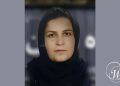
One of these women was Parvin Moussavi, a 53-year-old mother of two, who was battling cancer. She was sentenced to death for possession of drugs, which she had been told was medicine and received only 9 dollars for carrying them.
Another victim was a destitute 33-year-old woman who had killed her own children 8 years earlier, because she could not feed them. She had attempted to take her own life but was saved by her sister to server eight years in jail and be executed after so much suffering.
The total number of women executed in Iran since May 2007 thus reached 239.

Unprecedented rise in executions of women in Iran
The Iranian regime has long held the grim distinction of executing the most women in the world. However, the number of women hanged in prisons across Iran drastically escalated under Ebrahim Raisi’s tenure.
During the 2 years, 9 months, and 2 weeks Raisi was in office, 62 women were executed—averaging nearly two women (1.85) per month, or approximately 22 (22.21) women per year. This is a significant increase compared to the 15 women executed per year under previous presidents.

Breaking down the numbers, 11 women were executed from August to December 2021, 15 women in 2022, 26 women in 2023, and 10 women from January to May 2024. Notably, in 2022, the number of executions was lower due to nationwide protests following the murder of Zhina Mahsa Amini in the custody of the Guidance Patrol (also known as the Morality Police).
In 2023, the regime reached an eight-year high with over 860 executions. This surge continued up to Raisi’s death, with 126 executions in the preceding month alone.
According to Amnesty International’s annual report published on May 29, a total of 1,153 people were known to have been put to death in 16 countries in 2023. Iran alone carried out 74% of those executions. It said the huge spike in recorded executions was primarily down to Iran.
It is no surprise that the people of Iran, especially the families of Raisi’s victims from the 1980s to 2024, celebrated the death of this “mass murderer,” known as the “executioner of 1988” and the “Butcher of Tehran.”

Heavy-handed Treatment of Women who Defied the Compulsory Veil
The brutal crackdown on women defying the compulsory veil is another hallmark of Raisi’s time in office.
Shortly after his inauguration, Raisi launched a campaign to enforce the mandatory veil. He established two major garrisons to train so-called “vice patrols” to warn women who did not fully observe the Hijab in public.
Additionally, he created a school to license these patrols, thereby increasing the number of forces harassing women in the streets and workplaces.
Raisi also issued directives to government offices, public services, and businesses, threatening to shut them down if their female employees or clients did not comply with the mandatory Hijab.
In some cities, women who violated the compulsory Hijab were banned from entering metro stations, banks, museums, and airports.
Meanwhile, State Security Forces and plain-clothes agents made violent arrests as Iranian women and girls staunchly resisted these warnings. Raisi’s policies backfired, encountering extensive resistance from young women and girls.
During this campaign, a student activist opposing the compulsory Hijab was tortured and forced to make false confessions on TV after removing her veil on a bus.
Shortly afterward, Raisi’s guidance patrols violently attacked Zhina Mahsa Amini outside a metro station in Tehran. Despite her objections and resistance, the patrols forcibly threw her into their van. Other women in the van later testified that officers had hit her on the head for not stopping her screams and objections. This explains why she collapsed upon arrival at the detention center, falling into a coma and dying three days later from cerebral hemorrhage.
Amini’s death, the first caused by the vice patrols’ brutality, enraged the public and sparked a nationwide uprising on September 16, 2022.

Brutal Crackdown on Protests, Victimizing Many Young Women and Girls
The suppression of protests sparked by Zhina Mahsa Amini’s death was drastically more vicious than previous crackdowns.
Under Raisi’s supervision, the regime’s suppressive forces and undercover agents employed different tactics than those used in November 2019. Instead of opening fire on protesters in the streets, they identified individuals and surrounded them in large numbers when they were alone.
In numerous instances, protesters were struck on the head with bludgeons and batons, causing fatal injuries. Others were kidnapped, tortured, and subjected to sexual assaults to force them to repent, make televised false confessions, or commit to not participating in future protests.
Dozens of detainees committed suicide after being released from prison, with speculation that they were given injections while incarcerated that mimicked the symptoms of a drug overdose over time.
Security forces also used pellet guns at close range, riddling protesters’ bodies with hundreds of bullets, often resulting in death.
Additionally, shooting protesters in the face was a method used to blind them in one or both eyes.
The UN International Fact-Finding Mission found that many of the regime’s actions during the suppression of the 2022 protests and uprising amounted to crimes against humanity.
Poisoning of School Girls
Raisi’s tenure was also marked by a five-month-long campaign of poisoning schoolgirls who had actively participated in anti-regime protests.
The news of these chemical attacks on young girls initially went unnoticed for nearly a month due to media silence. During this period, relevant officials took no action to find the perpetrators. Instead, they denied the existence of any assailants and downplayed the seriousness of the incidents.
Over five months, more than 700 girls’ schools in over 160 cities across the country were targeted by chemical attacks, resulting in the deaths of at least five students. Raisi’s government, however, failed to account for these incidents.
In a surprising move, the Intelligence Ministry—not the Education or Health Ministries—issued a statement attributing the poisonings to student mischief. The statement also claimed that anyone spreading news of these poisonings was an agent of enemies and foreign services attempting to destabilize the country.

Turning Life into Nightmare for Women who Refused to Give In to Pressure
Under Raisi, the Iranian regime relentlessly imposed restrictions on people’s freedoms. More than a year since the resurgence of their campaign to enforce the compulsory veil on Iranian women following the uprising, they spared no effort to achieve their objective.
In a country where approximately 90 percent of the population struggles to make ends meet, the government allocated millions of dollars to purchase facial recognition technology and install closed-circuit cameras in streets, shopping centers, schools, universities, and elsewhere to identify women who didn’t adhere to the mandatory Hijab.
In April 2023, the three branches of Raisi’s government introduced a new “Hijab and Chastity” bill, hastily passed by the mullahs’ parliament in September 2023, comprising 70 articles for a trial period of three years. Although the bill has not yet been approved by the mullahs’ Guardian Council and the State Exigency Council, Raisi’s Interior Ministry and State Security Force unlawfully enforced it from its proposal stage.
In October 2023, 17-year-old Armita Geravand was killed by Hijab Patrols in a Tehran metro station. The regime’s intelligence services tightly controlled the situation, denying Armita’s parents access to prevent another nationwide uprising.
On March 6, 2024, Amnesty International published a documented report based on testimonies, offering “a frightening glimpse into the daily reality of women and girls” in Iran. The report highlighted Iranian women facing police stops, criminal prosecutions, and other abuses for exercising their rights to bodily autonomy, freedom of expression, religion, and belief through defiance of compulsory veiling laws.
Despite Iranian women’s defiance, resilience, and resistance, the “draconian campaign” persists, with the “Light” campaign producing horrifying scenes of brutal treatment of women on the streets.
Ebrahim Raisi’s Death Must Not Overshadow the Quest for Prosecution of Other Regime Leaders for Committing Crimes Against Humanity in Iran
Ebrahim Raisi, due to his extensive history of execution, repression, and crimes, as well as his absolute obedience to the mullahs’ supreme leader Ali Khamenei, held a special role and position in his strategy of maximum suppression.
While his death marks a heavy and crushing blow in the most sensitive political and social conditions to the Iranian regime, it must not divert attention from the ongoing quest for justice against other regime leaders responsible for crimes against humanity.
His demise does not end the regime’s trend of persecution and human rights abuses.
The international community must urgently address these violations, hold the regime accountable, and ensure that figures like Khamenei are prosecuted.
The dossier of Iran’s human rights abuses should be brought before the United Nations Security Council to catalyze decisive action against the clerical regime.