
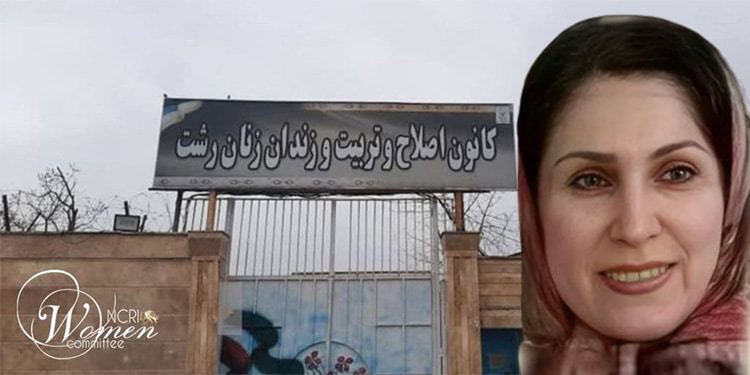

Zahra Tabari, a political prisoner held in Lakan Prison of Rasht, is facing the imminent threat of execution. In a call from the prison, she provides a detailed account of her arrest, interrogation, and trial. Rejecting all security-related charges, Zahra Tabari describes her death sentence as “devoid of any judicial legitimacy” and a clear case of “judicial murder.”
Her testimony once again highlights the severe violations of due process and the systematic use of politicized charges by Iranian authorities to impose harsh sentences on political and civil activists.
At the start of her account, Zahra Tabari says: “The only things they attributed to me were a piece of cloth and a voice note—nothing else. There is nothing more in my file. And according to Article 2 of the Islamic Penal Code, a crime must be defined by law for any punishment to be imposed.”
She explains that the charges against her shifted repeatedly and arbitrarily: “Before all of this, my charge was so-called ‘membership in the Monafeqin grouplet.’ Then suddenly it became ‘membership in the terrorist Monafeqin group.’ Adding the word ‘terrorist’ was simply to enable them to issue the death sentence against me, and that is exactly why I object.”
Monafeqin is a derogatory term used by the clerical regime to refer to its main opposition force, the People’s Mojahedin Organization of Iran (PMOI/MEK).
Sudden Reclassification of Charges and Lack of a Fair Process
Zahra Tabari stresses that from the moment of her arrest through sentencing, not a single element of a fair trial was observed: “My second objection, and the reason this verdict has no legal validity, is that I had no fair procedure at any stage. From the very beginning, when I was arrested, they charged me with bagh-ye (armed rebellion). Although the charge later changed, on May 25, it was reinstated. So, I remained in prison under the same charge of bagh-ye.”
She also describes the conduct of the inspector: “Mr. Bakhshipour, the inspector of Branch 4, honestly, in my view, he is someone sitting there with a noose in his hand, just measuring people’s neck sizes!”
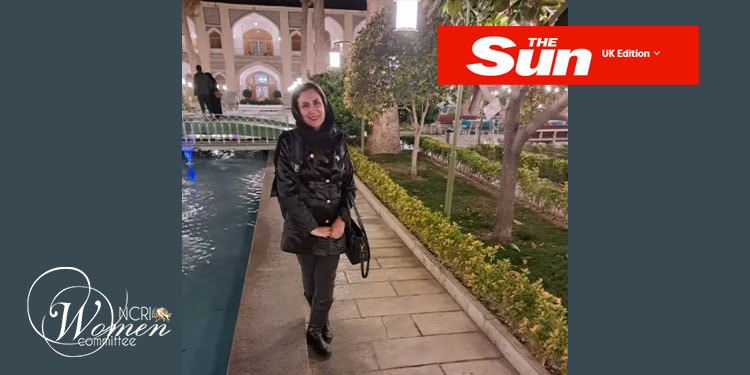
A Trial Lasting Only Minutes, With a Court-Appointed Lawyer on a Screen
Zahra Tabari recounts that she was denied any meaningful opportunity to defend herself: “My court-appointed lawyer appeared on a monitor during the hearing. I saw him for the first time right there. I objected, but no one responded, and I never even heard the lawyer’s voice.”
She continues: “I also objected to the sudden change in charges, which I had not been informed about. I was connected to the courtroom by phone. They asked me only one question: ‘State your final defense.’ I said I had committed no crime defined by law that would make me eligible for punishment, and that they were punishing me solely because of my beliefs.”
Invoking Article 23 of the Constitution, she notes: “According to Article 23, no one can be punished for their beliefs. Yet they have turned what should be a minor 5- or 6-month disciplinary sentence into a criminal charge.”
Social Protest: The Real Reason Behind Her Arrest?
Zahra Tabari explains that her criticisms were grounded in social injustice, not any act that could justify a national security charge: “If the issue is beliefs, then yes, I am a protester. I protest the fact that a woman must bend down into the trash bin just to take out bread to survive.”
She highlights the plight of child laborers: “How can a government tolerate a child standing at intersections begging instead of going to school? These were the issues I protested.”
A Court Record Full of “Errors,” Missing Her Actual Statements
Zahra Tabari says the official court transcript bore little resemblance to what she actually said: “They told me they would send me the minutes of the hearing. My trial was on Tuesday. On Saturday at 9:30 they gave me the transcript. When I read it, I saw how many errors it had; my statements weren’t even there. I did not hear the indictment, at all.”
She adds: “I wrote my objections wherever there was space, on every margin of every page.”
“This Verdict Is Invalid at Its Core”
In her conclusion, Zahra Tabari states: “The verdict issued against me has no legal basis or judicial credibility. Even according to their own laws, it is invalid.”
And she ends with a stark warning: “In my view, this is judicial murder—not a judicial ruling.”
Growing Concern Over Zahra Tabari’s Fate
Zahra Tabari’s testimony from inside Lakan Prison in Rasht paints a detailed picture of security pressure, the absence of basic fair-trial standards, and the arbitrary reshaping of accusations without credible evidence. She emphasizes that she was denied effective legal defense and that her case is riddled with procedural and legal violations.
Her case has become one of the clearest examples of the Iranian authorities’ disregard for due process in the prosecution of political detainees—a case built, as she says, on “a piece of cloth and a voice note,” yet resulting in one of the harshest possible sentences.
