
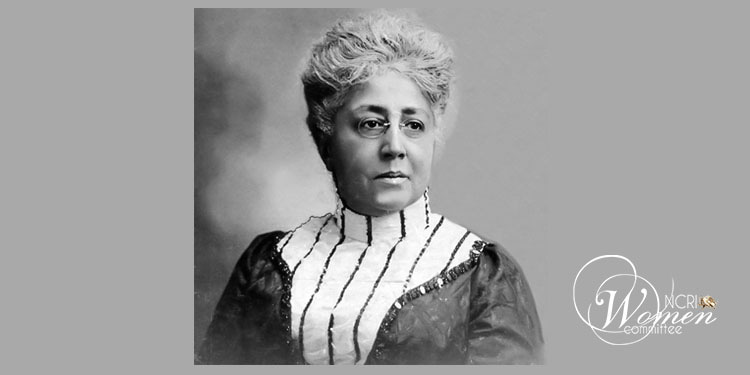
Josephine St. Pierre Ruffin (August 31, 1842 – March 13, 1924) was a trailblazing African American journalist, editor, and civil rights advocate whose work laid the foundation for Black women’s activism in the United States. Born in Boston to a white English mother and a Black father who was one of the city’s first African American property owners, Ruffin was exposed early on to progressive ideas about racial equality and women’s rights.
A passionate writer and reformer, Ruffin founded The Woman’s Era in 1894—the first newspaper published by and for African American women. Through its pages, she advocated for education, suffrage, and social justice, while amplifying the voices of Black women across the country. Her journalism challenged both racism and sexism at a time when speaking out was dangerous and rare for women of color.
In 1895,Josephine Ruffin organized the First National Conference of Colored Women, bringing together leaders from across the U.S. to form the National Federation of Afro-American Women, a precursor to the National Association of Colored Women (NACW). Her leadership helped forge a powerful coalition of Black women dedicated to community service, political advocacy, and racial uplift.

Josephine St. Pierre Ruffin also worked alongside prominent figures such as Frederick Douglass and Susan B. Anthony, bridging the gap between the abolitionist, women’s suffrage, and civil rights movements. Despite being denied membership in white women’s clubs, she never wavered in her commitment to intersectional justice.
A visionary ahead of her time, Ruffin’s legacy lives on in the ongoing struggle for equality and the vibrant tradition of Black women’s leadership in journalism and social reform.